
Palma expects protests: How prepared is the city really?
Palma expects protests: How prepared is the city really?
Protests at the Plaça d'Espanya are announced for Friday. Police, Guardia Civil and the intelligence service have increased their alertness. But how safe are residents, shops and public services really?
Palma expects protests: How prepared is the city really?
Clear guiding question
Key question: Can the authorities in Palma control spontaneous, digitally coordinated protests in a way that protects residents, retailers and public infrastructure without stifling the freedom of assembly?
Critical analysis
On Friday evening at 7:30 pm, people are expected on the Plaça d'Espanya after a call circulated across various channels under the slogan 'Blocus'. The National Police, the Guardia Civil and the state intelligence service have increased their vigilance, reflected in coverage such as Palma gears up: 170 new police officers for Playa de Palma – solution or placebo?. That is a reasonable reaction. However, the situation reveals two main problems: first, the speed of digital mobilization; second, the vulnerability of everyday urban life when information and counter-information race through messaging services and short videos minute by minute.
The recent incidents in a major Spanish city that ended in looting, arson and numerous arrests are still fresh in the minds of many shop owners and employees, as reported in Palma after the Protest: How Freedom of Expression and Everyday Life Can Be Balanced. On Mallorca there are reports of anonymized calls, hints about black clothing and plans to change time and place at short notice. The pattern is clear: decentralized, hard to predict, aimed at confusing surveillance and the police.
What is missing in the public discourse
The debate is often limited to two poles: remove the police or crack down harder. What is missing are pragmatic details: Which specially trained units are designated for de-escalation? How will rescue routes be kept clear? Who informs taxi drivers and bus companies if stops are closed, as happened during Evening Road Closures in Palma: Between the Right to Protest and Traffic Chaos? Which hotline does the city provide for injured passersby and affected business owners? And: is there a plan for how information gaps can be closed quickly and reliably in the hours before an action without fuelling rumors?
An everyday scene from Palma
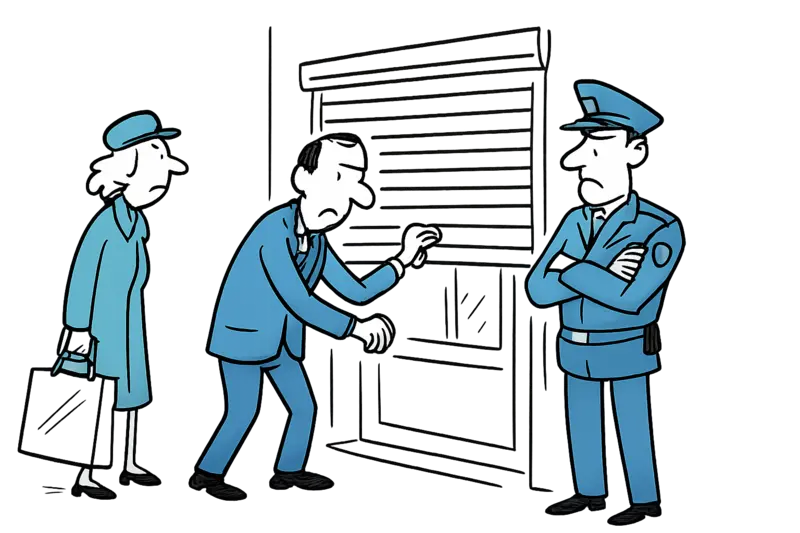
Wednesday morning on the Passeig des Born: cups clink in cafés, an older woman with shopping bags stops in front of a shop window, a shopkeeper thoughtfully pulls down the shutter even though it's only half past eight. The phone numbers in the neighbourhood WhatsApp group are buzzing; someone heard that 'crowds in black clothing' are planned. This worry is real. For business owners a spontaneous incident means not only property damage: hours without revenue, unsettled staff, additional repair costs – and this in a season when many small shops depend on every euro.
Concrete solution approaches
1) Transparent operational plans: The city administration should – without revealing tactical details – clearly communicate which areas will be kept clear for emergency services and which alternative routes are recommended. A simple official SMS or app notification to registered business owners could help.
2) Local coordination teams: Form neighbourhood groups that stay in close contact with police and civil protection. Such teams can secure doors, keep first aid kits ready and accompany injured people.
3) Protection for shops: Short-term measures like temporary bollards, enhanced video surveillance at critical spots or coordinated closing times for particularly vulnerable shop windows. Trade associations need a concrete emergency plan and a common communication line.
4) De-escalation and training: Police forces should receive specialized training in de-escalation and in dealing with digitally organized groups. A visible but calm presence often works differently than martial displays that escalate tensions.
5) Digital counter-strategies: Cooperation between the city, network operators and platforms – faster blocking of clearly criminal calls to action, but also official counter-information campaigns that debunk misinformation.
6) Social offerings: Short-term mediation offers for grievances – such as consultation hours by the education authority or municipal forums – can in the long run prevent protests from forming out of radicalized niches.
What to do now
The authorities are right to be vigilant. But vigilance alone is not enough. Coordinated, transparent measures are needed that protect everyday life without curtailing democratic rights. The city administration must, for example, clearly state how citizens will be informed in an emergency and which contact points exist for those affected. Traders need practical checklists, not generic warnings. And we as neighbours should again more often check on our shop owners in person instead of falling into group-chat hysteria.
Pointed conclusion
Palma is walking a fine line: reacting too laxly risks chaos, reacting too harshly eats away at trust. The better choice is a third way: smart, local preparation, clear communication channels and de-escalation training. If the city now acts soberly and takes the people on the ground seriously – taxi drivers, small shops, bus drivers, residents – Palma can remain open and become safer. If not, we could be facing a panicked neighbourhood on Friday that nobody wanted.
Frequently asked questions
How prepared is Palma for spontaneous, digitally coordinated protests and what does that mean for residents and businesses?
What concrete measures could Palma implement to protect everyday life during protests?
How can Palma neighborhoods coordinate with police to keep streets safe and assist injured people?
What should shop owners in Palma do to prepare for potential protests?
How can residents and visitors stay informed during a protest in Palma without spreading rumors?
Why is digital mobilization a challenge for Palma and how can authorities address it?
What is missing in the public discussion about protests in Palma and what practical details would help?
How can the Palma community support one another to stay safer during protests?
Similar News
Why Thorsten Legat's Involvement at Germania Mallorca Ended So Quickly – A Reality Check
Six matches, high expectations: We ask why co-founder Thorsten Legat's project at FC Germania Mallorca failed after such...

Coaching Explosion at FC Germania Mallorca: What Really Lies Behind Legat's Departure
After just six matches Thorsten Legat is gone. Was it only the poor record — or does the problem run deeper in structure...

Half a Million Passengers: Saarbrücken–Palma Remains a Heartfelt Connection
Since 2017 Eurowings has regularly connected Saarbrücken with Palma: on Friday the 500,000th passenger from Mallorca arr...
Hard braking in Palma: Eight lightly injured after evasive maneuver – time for better onboard safety?
A line 8 bus swerved on Avenida Comte de Sallent. Eight passengers were lightly injured; five were taken to Clinica Rotg...
Who pays when boats run aground? The Port de Pollenca case and the public cost trap
A damaged sailboat lay for nine months on the Tamarells beach in the port of Port de Pollenca, until the municipality re...
More to explore
Discover more interesting content

Can Cap de Bou

Townhouse Lleo 72
