
When the Floodgates Open Again: Why Palma's Floods Aren't a Coincidence
When the Floodgates Open Again: Why Palma's Floods Aren't a Coincidence
A sudden heavy downpour around 5 p.m. brought Palma to a standstill: flooded streets, full basements, panicked commuters. A reality check on warnings, infrastructure and what's missing from the debate.
When the Floodgates Open Again: Why Palma's Floods Aren't a Coincidence
Reality check after the heavy rain: Key question — What went wrong, and how do we prevent scenes like Friday from repeating?
Friday evening, shortly after five: On Passeig Mallorca the rain fell so heavily that pedestrians hurried into shops and under awnings. In the side streets water rose within seconds, cars idled with their lights on, buses filled with soaked passengers. Similar scenes were documented in Sudden Storm in Palma: A Weather Shock and the Question of Protecting Mallorca. In Peguera people rushed from beach bars into cafés because the emergency situation arrived so suddenly. Just a few kilometres away, in Andratx, almost nothing happened — the weather seems arbitrary, but the consequences for people are not.
The facts are sparse: Authorities had downgraded the warning level from orange to yellow at midday. Around 5 p.m. a heavy downpour hit Palma, causing flooded basements, blocked streets and massive traffic jams due to the simultaneous evening rush hour. Taxis were scarce, buses filled up, and people sought shelter in shops. According to AEMET the storm should largely pass by Saturday and the sun will return; local reporting includes Thunderstorms over Mallorca: Streets Flooded, Parks Closed — Are We Prepared?.
Critical analysis: The downgrade of the warning at midday was apparently a misjudgement for parts of the island or an insufficiently localized warning strategy. A general downgrade creates trust in a normal routine for many people — which is dangerous if individual valleys or neighbourhoods can still be extremely affected. In addition, Palma’s urban drainage system was briefly overwhelmed by the volume. Full sewers and cellars situated near street level amplified the damage; this pattern has been detailed in Short and intense: Why a cloudburst paralyzes Palma and what follows.
What is often missing in the public debate is an honest discussion about long-term weaknesses. People talk about warning levels and weather models, but rarely about WHEN the last thorough cleaning of major collector sewers took place, how much rain the historic parts of the city can actually absorb, or how private owners can be held responsible for protecting their basements. Equally rarely is traffic safety during sudden heavy rain discussed: Why are there no simple, quickly communicated alternative routes for the evening commute?
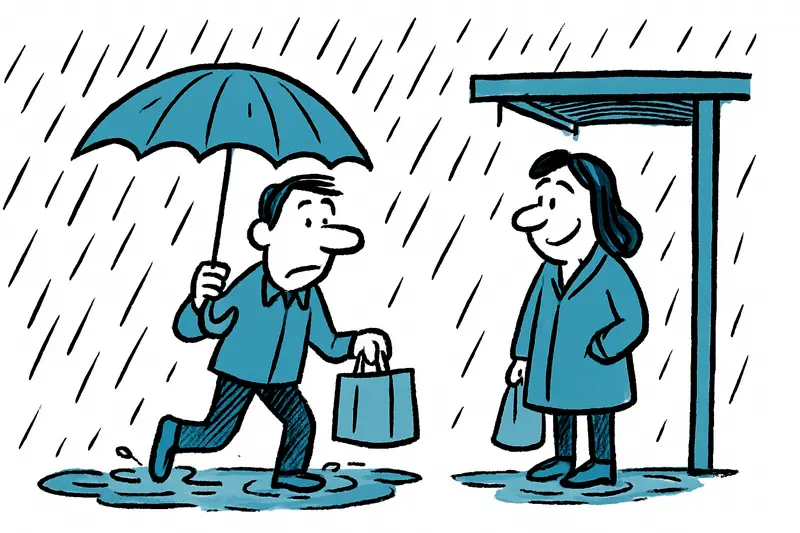
An everyday scene I observed myself: On the Plaça Major a man stands with a few shopping bags, his shoes in a puddle, he forces a laugh and says, "We got lucky again." It is not a real joke. The laugh contains the habit of having to live with sudden downpours — an everyday tolerance that can be dangerous because it means resignation.
Concrete solutions, practical and quick to implement: First, finer, neighbourhood-level warning stages and push notifications via app that cover not only provincial or city level but districts and valleys. Second, a regulated cleaning schedule for the main drains and street gullies in Palma with clear publication of dates; many damages occur because leaves and sediment block flow. Third, temporary flood-protection kits for particularly vulnerable shops and households (sandbags, mobile thresholds) that can be distributed quickly at central points. Fourth, a municipal plan for traffic management during heavy rain: defined collection points and detours, coordinated information on bus and taxi replacement services. Fifth, more green space and retention basins in new build and renovation projects to dampen peak runoff.
The role of companies and small businesses is also important: cafés and shops on promenades need emergency plans — from the placement of electrical equipment to insurance that pays out quickly. And communication: Authorities should disclose why warning levels were changed, which models they use and where uncertainties lie; transparency builds trust and cautious behaviour, not panic, but also not complacency.
Sharp conclusion: Wiping headlines about a "short storm" clean at night is not enough. Anyone who lives or works in Palma knows the unspoken rule: rain is a local tsunami. We need better, more local warnings, visible maintenance of drainage and simple aid packages for those hardest hit. Without that, the next scene — people with soggy shoes seeking shelter in cafés — will be a reprise, not an exception.
Frequently asked questions
Is Mallorca prone to sudden heavy rain, and how should I plan for it?
Why were Palma's rain warnings downgraded, and how should locals receive alerts?
What steps can Palma take to reduce flood damage in areas like Passeig Mallorca?
How should Plaça Major be prepared for heavy rain and crowded evenings?
What should visitors in Peguera do during sudden downpours?
Why did Andratx experience far less disruption than Palma during the same storm, and what does that mean for planning?
What role does drainage maintenance play in Palma's flood risk, and how often should it be done?
How should residents act during the evening rainfall and rush hour in Palma?
Similar News

Surprise over Palma: Saudi aerobatic team draws colorful trails
On Wednesday afternoon jets of the "Saudi Hawks" caused a stir: in white, green and red they flew over Palma and Son San...
Left Alone in Palma: What Lies Behind the Case of the 20-Month-Old Boy?
A 20-month-old child in Palma was reportedly left for hours at a time without food or supervision. Who protects the youn...
Spray Against Guests: Graffiti in El Terreno and What's Missing
An English anti-tourist slogan has been painted on the Boho Corner in El Terreno since Tuesday. Why such actions appear ...
Medicum Mallorca on the Paseo Marítimo: New Medical Centre for an International Audience
A new medical centre in Palma aims to attract international patients: on 400 m² within walking distance of the Auditoriu...
Lost between rocks and beachgoers: Dolphin in Cala Tirant raises question of assistance
A lone dolphin surfaced on Monday in the shallow bay of Cala Tirant. Lifeguards tried to guide the animal into deeper wa...
More to explore
Discover more interesting content

Can Cap de Bou

Townhouse Lleo 72
