
Short and intense: Why a cloudburst paralyzes Palma and what follows
Around 80 interventions after a short but intense band of rain — Palma was particularly affected. Why can a brief shower cause so much disruption and what lessons should municipalities and residents draw now?
Short and intense: One downpour, many questions
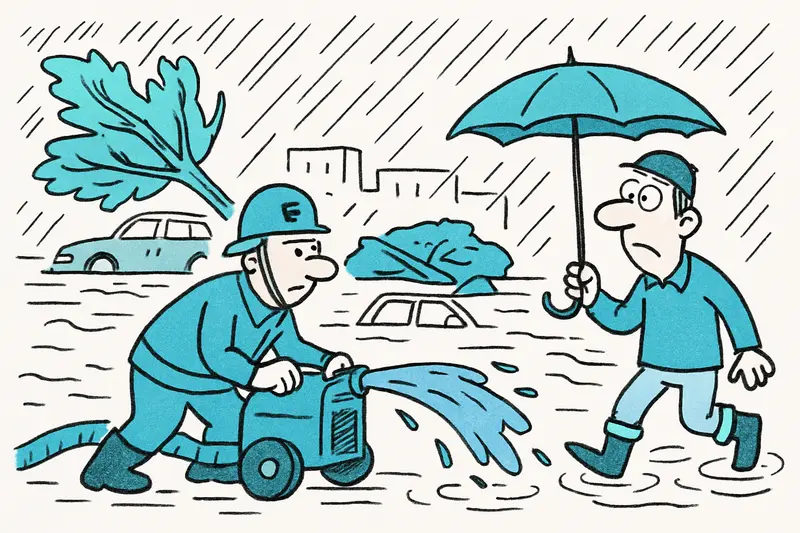
Yesterday afternoon a short, intense band of rain was enough to set the island in motion. Fire brigades and municipal services recorded around 80 interventions by 6 pm, most of them in Palma (41 incidents). I stood around 5:20 pm at the Passeig Marítim, heard the patter on the roofs, smelled the wet asphalt and watched water sweep over the edges of the streets. The impression: in a few minutes normal city noise turned into a concert of pumps, warnings and smartphone cameras.
What exactly happened?
The tally is almost concrete: flooded streets, waterlogged basements and garages, snapped trees and blocked drains. In the hill towns residents reported small landslides, in Calvià garages were affected, in Algaida farm tracks became impassable. On the promenade people were seen with rolled-up trousers and market vendors hurriedly packing up their stalls. The airport reported delays and some cancellations, and a few weekly markets were closed for safety reasons, as detailed in Storm chaos in Palma: Why a thunderstorm disrupts the airport — and how we should plan smarter. Fortunately there were no serious injuries — but the damage to property and businesses is real.
The key question: Why is a short cloudburst enough?
That a short, intense shower can cause so much damage is no coincidence. A number of factors combine to create the problem: inadequate sewer and drainage capacity in older districts, blockages from leaves and rubbish, sealed surfaces without permeability and local terrain slopes that drive water quickly into low-lying areas. Added to this is the meteorological background: in the Mediterranean region there are increasingly convective, highly localized heavy-rain events that bring large volumes of water in a short time, as reported in Finally cooler – Thunderstorms bring relief, but also questions for Mallorca's infrastructure. And not least: backlogs in maintenance and tight municipal budgets that would otherwise fund cleaning and prevention.
What can be done immediately and in the medium term?
For the next few hours: avoid closed roads, don't park in depressions, secure basement belongings and call 112 in an emergency. Document damage with photos and report it quickly to the municipality — important for insurance claims. This approach was recommended after the events described in Morning storm over Palma and Calvià: What the short storm shock revealed. In the medium term, municipalities and emergency services should plan more concretely: regular cleaning of drains, the construction of retention basins at critical points, more permeable surfaces in new developments and targeted tree and green-space maintenance. Technical solutions such as mobile backflow valves for sewer connections or temporary pump stations for markets are pragmatic and relatively quick to implement.
Under the surface: Opportunities instead of just trouble
The positive side of such events: they clearly expose weaknesses and create pressure to act. Funding programs and municipal investments could now flow into sustainable drainage systems, renaturation of streams and public information campaigns. Neighborhoods can also help — organized volunteer groups that provide rapid assistance during storms have proven effective elsewhere. For commerce and tourism this means long-term planning security if markets are better protected and access routes are made more resilient.
Cleanup operations are ongoing; municipal utilities and local crews have been working since the evening. If you have damage: take photos, report it to the municipality and have insurance documents ready. And one final, simple tip from life on an island that can switch quickly from sun to heavy rain: a small pair of rubber boots in the car or a waterproof jacket are often more useful than you might think.
Frequently asked questions
Why can a short cloudburst cause flooding in Mallorca so quickly?
What should I do in Mallorca during a sudden thunderstorm or cloudburst?
How should I document storm damage in Mallorca for insurance?
When is the storm risk highest in Mallorca?
Is it safe to drive in Palma after heavy rain?
Why do some weekly markets in Mallorca close during storms?
What happened in Palma during the recent cloudburst?
What should homeowners in Mallorca do before heavy rain?
Similar News
By Boat Instead of the Road: Palma's Water Bus — a Reality Check
The 'Bus Nàutic' launches in two stages — but questions remain over interim operations, fares and environmental requirem...
Several Days of Rain Approaching: How Well Is Mallorca Prepared?
Aemet says: rain from Thursday until at least Tuesday, especially heavy on Monday. Temperatures remain mild. A reality c...
Nervous Reaction at a Traffic Stop: Why Campos Is Not Just a Sniffer-Dog Problem
At a traffic stop in Campos a 37-year-old German was arrested with a bag full of drugs. Our reality check explains why s...
Cameras Against Illegal Dumping: Porto Cristo Monitors Problem Areas – a Reality Check
Manacor has installed four surveillance cameras at particularly problematic waste spots in Porto Cristo. A local check a...
Reality check: Palma's "white" torrent — harmless salt or neglected warning sign?
White crusts on the Torrent de Sa Riera are causing a stir. Emaya describes them as salt deposits. Our reality check: wh...
More to explore
Discover more interesting content

Can Cap de Bou

Townhouse Lleo 72
