
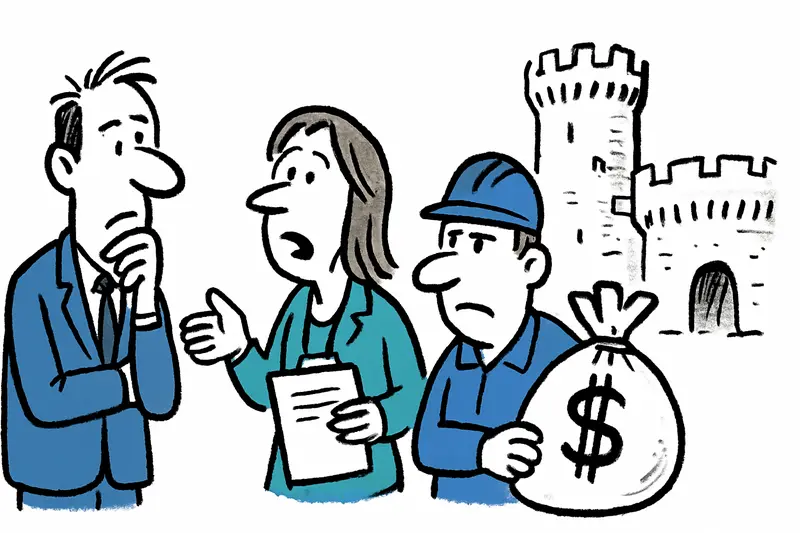
Palma invests at Bellver: Much money, open questions
Palma invests at Bellver: Much money, open questions
The city of Palma plans a €3.18 million project around the Castillo de Bellver. Two million euros come from the tourism tax. What will this really bring for the forest, visitors and residents?
Palma invests at Bellver: Much money, open questions
Main question: Is €3.18 million enough to make the castle, access routes and the forest truly future-proof?
On the hill above the city, where seagulls play in the wind and morning deliveries start for the cafés in Santa Catalina, stands the Castillo de Bellver. The city has now presented a plan: redevelopment work at Playa de Palma and Castillo de Bellver around the castle, in two phases, paths, access roads, parking and fire protection will be renewed, followed by an ecological enhancement of the forest. Estimated cost: about €3.18 million, of which around €2 million comes from the tourism tax. The works could take up to 30 months.
On paper this sounds like a sensible mix of infrastructure and nature protection. In reality, however, the debate quickly centers on practical questions rather than nice concepts. Who pays for parking spaces that are hardly used in the end? How will fire protection be implemented without destroying the pine forest with wide gravel strips? And what exactly does "ecological enhancement" mean in an urban forest already suffering from visitor pressure, root stress and dry summers?
Critical analysis: priorities must be clearer. The first project phase focuses on access roads, parking and paths. That benefits visitors and suppliers, but there is a risk that short-term comfort will cause long-term damage. New surfacing, more parking spaces, wider access roads — all this can attract more cars and make it harder to preserve the forest stand. That two thirds of the funding comes from the tourism tax makes it clear: this is not only about nature conservation, but also about visitor care and image (Palma is raising admission prices at Bellver). That is legitimate, but the order of measures should be reconsidered.
What is missing in public discourse is the everyday life of residents and the forest itself. Conversations with neighbours in the streets around Bellver — Carrer del Castell or Plaça de la Porta de Sant Antoni — show concern about construction noise, rerouted bus lines and lost parking spaces. Forestry experts familiar with the state of the pines report erosion spots, invasive plants and a lack of water supply in dry periods. Both issues barely appear in the argumentation so far: neither the protection of the people who live there daily nor concrete measures against the climate-related stress factors for trees.
A small everyday scene: on a cool January morning an old woman sits with a shopping bag on a bench at the Mirador de Bellver, pulls her scarf tighter and watches joggers, tourists with cameras and a few construction workers unloading boxes from a van. A moped rides up the narrow access road, a child feeds pigeons. Two years of construction mean a noticeable adjustment for such moments — not just for visitors, but for people who take their daily routes here.
Concrete approaches that should complement the planning: First: single-stage prioritization with an ecological neutrality principle. That means: measures for the path network and parking only as far as they do not require additional sealing or widening of traffic areas. Second: an open budget allocation for monitoring — at least 10 percent of the sum for long-term care of the forest and measurements of visitor numbers, soil stability and tree health. Third: a mobility support plan — clearly regulate construction traffic, consider temporary bus lines or shuttles from the city outskirts, promote bicycle parking to reduce private cars. Fourth: citizen participation on site — regular consultation hours at the square to alleviate residents' concerns and find practical solutions. Fifth: a transparent breakdown of how the €2 million from the tourism tax are used and which criteria apply to the "ecological enhancement".
A practical example: instead of creating a large new asphalt parking lot, the city could build modular, permeable parking bays with green joints and introduce a maximum daily capacity through parking management. This reduces soil compaction and keeps car traffic controllable. For fire protection, sensitive solutions are conceivable: firebreaks without heavy clearing, combined with resilient planted strips, instead of bare gravel bands that promote erosion.
Conclusion: The money is there and the goodwill is visible — but without clear ecological guidelines, transparent use of tourism funds and real involvement of users and residents, there is a risk of expansion that creates more problems than it solves. Bellver is not a purely tourist product; it is a piece of urban woodland with a castle that is part of Palma's identity. When the construction sites later fall quiet, the trees should be stronger than before and residents should not feel they have lost their little island in everyday life.
Brief recommendations: More monitoring, less asphalt, clear citizen formats and a binding maintenance budget — then the project will fit better with Bellver, the people who live here and the climate that is increasingly reshuffling the cards.
Frequently asked questions
What is Palma planning to change around Bellver Castle?
How much is Palma spending on the Bellver project?
How long could the Bellver Castle works in Palma take?
Will the Bellver project in Palma add more parking and wider roads?
What does “ecological enhancement” mean for the Bellver forest in Mallorca?
Why are some people in Palma worried about the Bellver redevelopment?
What are the main environmental risks for Bellver Forest in Mallorca?
Is Bellver Castle in Palma still worth visiting during redevelopment work?
Similar News
Released with Conditions: The Plus Ultra Suspicion and a Mallorcan Finca as Residence
A Dutch entrepreneur, sought in connection with the Plus Ultra case, was extradited to Spain after his arrest in Germany...

Haute Nuit in Puerto Portals: Fashion, Art and Indulgence by the Water
On October 2 the Lobster Club in Puerto Portals will be transformed into a stage for curated fashion, art and culinary e...
Magaluf: Watchtower Alarm – Lifeguards Pull Unconscious Beachgoer from the Water
After a drama in the late afternoon, two lifeguards at Magaluf beach rescued an unconscious 44-year-old man. He was stab...
Turquoise in the City: How dangerous is the color play of the Sa Riera?
The Sa Riera in Palma suddenly turned turquoise — a pretty motif, but behind the effect lies a discharge of saline waste...

Jeckliner at Sunnesching: Cologne spirit sets sail from Palma
In September 2027 the Mein Schiff 2 briefly becomes a floating carnival stage: four days with Cologne bands, comedy and ...
More to explore
Discover more interesting content

Can Cap de Bou

Townhouse Lleo 72
