
Palma closed: Paseo Sagrera and parks shut due to storm 'Joseph'
Palma closed: Paseo Sagrera and parks shut due to storm 'Joseph'
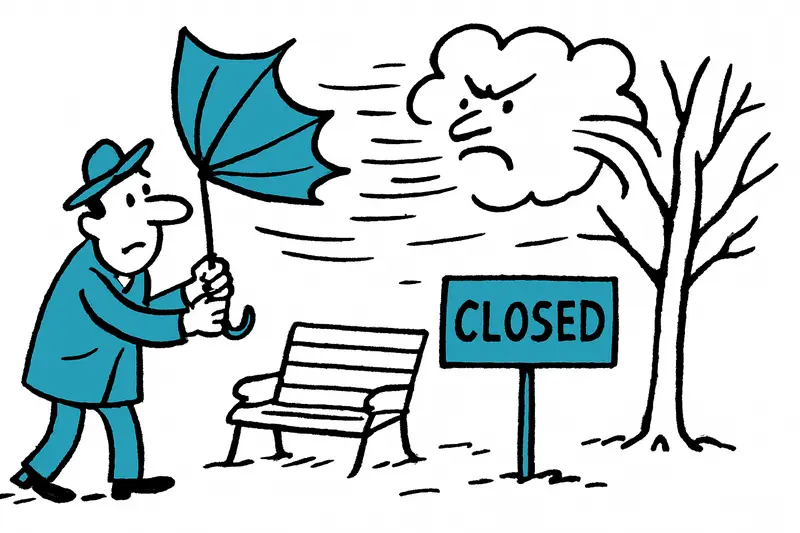
Due to storm 'Joseph' Palma has closed Paseo Sagrera as well as Bellver Park, Can Terrers and Ribera Park until Thursday morning. AEMET warns of strong gusts and high waves.
Palma closed: Paseo Sagrera and parks shut due to storm 'Joseph'
What the closures mean for residents and visitors — and what's missing from the debate
Key question: Are the closures at Paseo Sagrera and the city parks sufficient to reliably protect people and infrastructure?
On January 28 the city of Palma closed Paseo Sagrera and several green spaces as a precaution: among them Bellver Park, Can Terrers and Ribera Park, as reported in Parks in Palma Closed: Was the Closure Timely and Sufficient?. The measure follows warnings from AEMET's official forecasts, which forecast gusts up to 90 km/h on the coast and even up to 120 km/h at higher elevations in the mountains. Waves between 2.5 and 4 meters are possible in the Bay of Palma.
The decision seems correct at first glance: anyone who has stood on Paseo Sagrera while the sea lashes against the breakwater knows that loose items can become dangerous projectiles, a concern underlined by Orange storm cripples Palma: parks closed, markets cancelled – Is the city well prepared?. Early in the morning workers were seen on the promenade putting up barrier tape; some residents secured balcony furniture while seagulls circled in the wind. The pines on the Bellver slope creaked as if to remind of their stability.
Critical analysis: The city relies on temporary closures — this makes sense for acute danger. However it remains unclear how information reaches people who do not regularly check local websites or the AEMET site. Many tourists stroll along Paseo Sagrera unaware that parts are cordoned off. It is also unclear how responsibility for loose items on promenades and parking areas is regulated: who is liable if a tree branch hits a parked car, or if beach equipment is blown away?
What is missing from public discourse: first, practical instructions for those directly affected by the closures — tradespeople, market stalls, boat owners in the harbor. Second, information about alternative routes and safe places in the city. Third, a clear, multilingual warning chain for tourism service workers: cleaning staff, suppliers, taxi and bus drivers often need to react at short notice.
Everyday scene from Palma: On Passeig des Born a baker spoke of his worries: deliveries could fail if trucks cannot reach the old town. In El Molinar fishermen rubbed their hands in surprise, because their boats, normally uneasy in a storm, had been moored early this time. Such observations show: the danger is real and responses are organized differently.
Concrete, pragmatic local solutions:
1) Expand simple warning channels: A short automated SMS system from the city for registered residents and businesses; supplemented by push notifications in multiple languages via the city app or social media channels.
2) Visible, permanent signage: Temporary barriers are not always enough. Permanent signs at heavily affected spots like Paseo Sagrera and access roads to Bellver should clearly indicate the dangers during storms and which routes are safe.
3) Coordination with ports and ferry operators: Early warnings to boat owners and port operators, clear checklists for mooring and protecting small boats.
4) Deployment plans for city staff: Training for park administration staff, municipal gardeners and cleaning crews so trees, loose materials and street equipment can be secured quickly.
5) Information for tourism businesses: Hotels and landlords should receive standardized guidance on how to inform guests (e.g., securing balconies, avoiding stays on the promenade).
Many of these steps can be implemented quickly; they cost little but provide clear safety benefits. It is important that the measures are not just a note in a press release but are visible in the urban landscape and in communication.
Pointed conclusion: The closures at Paseo Sagrera and the parks are the right response to 'Joseph' — but they are only the first step. If warnings reach people faster and more widely during the next event and municipal procedures on site are better coordinated, a storm will lose much of its element of surprise. People who live or work in Palma understand: preparedness is small-scale climate adaptation — not theatrical, but practical neighborhood work.
Frequently asked questions
Why did Palma close Paseo Sagrera and several parks during storm Joseph?
How strong was the wind in Mallorca during storm Joseph?
Was it still safe to walk along Palma's seafront during the storm?
What should residents in Palma do when parks are closed for a storm?
How does storm damage risk affect boats in Palma's harbour?
What is Bellver Park like during strong wind in Mallorca?
How are tourists in Palma supposed to know if a promenade or park is closed?
What kind of weather usually leads to park closures in Mallorca?
Similar News

When the Wallet Becomes a Danger: Attack in Peguera and Lessons for Mallorca
In Peguera, two women are said to have stolen the wallet from a 75-year-old German couple. When the victim intervened, t...
Plata stays Plata: Young people take over, Llonguets remain
A small bar on Carrer de l'Argenteria will continue: Tolo Serra hands the place over to young Mallorcans at the end of t...

Unnoticed in the Luggage Compartment: How a Boy Traveled More Than 100 Kilometers in a Team Bus
A minor traveled in the undercarriage of a team bus for more than 100 kilometers until his cries for help were heard. A ...

Cap Vermell Grand: Second Michelin Key – a Gift for the East
The Cap Vermell Grand in Capdepera has been awarded its second Michelin key. For the region this elevates the luxury off...
Eurowings lets four aircraft carry names – a friendly idea that also reaches Mallorca
Eurowings is launching a campaign: four Airbus A320s are to carry the first names of people who help others in everyday ...
More to explore
Discover more interesting content

Can Cap de Bou

Townhouse Lleo 72
