
The Courtyards That Are Hardly Seen: Palma's Patios Between Oblivion and Breakfast Terraces
The Courtyards That Are Hardly Seen: Palma's Patios Between Oblivion and Breakfast Terraces
Behind heavy gates lie Palma's patios: cool, historic inner courtyards with cisterns and wood paneling. Why are they disappearing, and how can the tradition be saved? A reality check with concrete proposals from everyday life in the old town.
The Courtyards That Are Hardly Seen: Palma's Patios Between Oblivion and Breakfast Terraces
Key question: What future do Palma's historic inner courtyards have if owners, tourism and urban planning continue to work past one another?
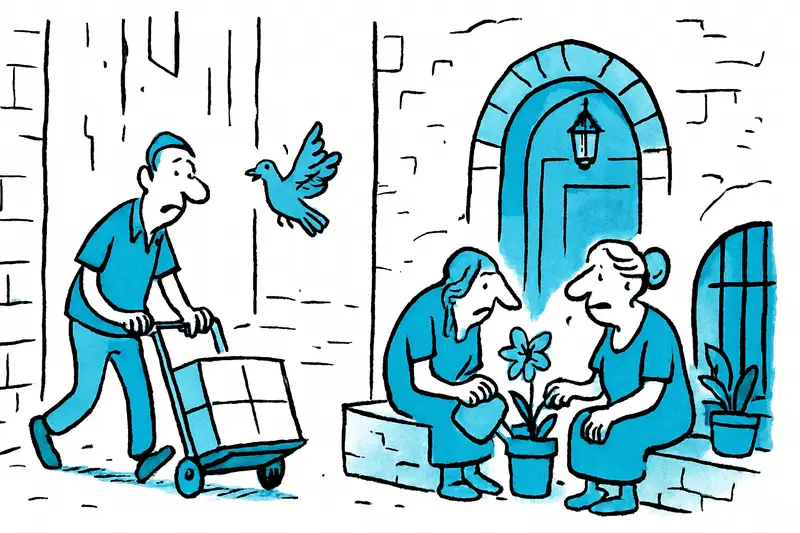
You stand in the narrow Carrer Sant Feliu, the sun beats down on the pale stones, but the passage remains shady. A pigeon flaps its wings nervously, a delivery man pushes a hand truck past, then an old gate rattles shut. Behind it — invisible to most passersby — lie courtyards where oil and wine were once stored, where cisterns collected rain and stairs led up to stately apartments. These inner courtyards, called "patios" in Mallorca, are more than decoration: they are testaments to Roman and Arab building traditions and organized social life for centuries.
Today, when you walk through the neighborhood from Plaça Cort to Passeig del Born, you encounter them only sporadically. Some are open, many remain closed. Breakfast tables gather in front of a few, limousines of guests are parked at others. Still others fall into decay because maintenance costs more than the building itself. This uneven presence echoes other parts of the island described in Between Llaüts and Emptiness: A Critical Walk Through Palma's Forgotten Corners.
Critical analysis
The reasons for the decline are not surprising, but harsh: the original owners used to maintain their city palaces with income from the countryside. Those revenue sources have largely dried up. Large buildings in the middle of the city are expensive to maintain. Many were sold and converted into luxury apartments, hotel rooms or commercial spaces; this trend is reflected in Palma allows the conversion of vacant offices and shops into apartments. Sometimes the reuse saved historical fabric, but often character was lost. Some courtyards turn into breakfast terraces, others into anonymous entrances — or into parking spaces.
On the political side, there have been attempts in the past to at least allow small public glimpses: for example, municipal initiatives to install grilles so pedestrians can look in, and guided tours were offered through Open House Palma: Over 60 Doors Open. But such measures remain piecemeal. There is a lack of a consistent strategy that unites protection, financial incentives and the involvement of the local population.
What is missing from the public discourse
The debate often revolves around monument conservation or tourist numbers — the real issue missing here is usability for city residents. It's not just about stones and stucco, but about spaces that function in everyday life: neighborhood meetings, schoolchildren, small markets, cultural programs. Nor is there a systematic record of how many patios there really are, what condition they are in and who owns them. Without a reliable inventory, every measure remains halfhearted.
There is also a lack of an honest discussion about owners' rights versus the common good: who may decide what when a historic inner courtyard is turned into a boutique hotel? And how does the city ensure that a conversion does not eliminate all historical elements?
An everyday scene from Palma
In the late afternoon, when the heat eases a little, Mrs. Rosa sits on the low wall of an open courtyard near Carrer de Sant Jaume. She waters oleanders, chats with the baker from the side street and lets two tourists look through the grille. “We used to celebrate here, put out tables, the children played,” she says, wiping the sweat from her brow. The gate closes, the neighboring apartment lights a small lantern — the courtyard is still alive, but only because a few residents put time and heart into it.
Concrete solutions
1) Cataloguing and publicly accessible register: The city should mandatorily record how many patios exist, who the owners are and what condition they are in. This data basis is a prerequisite for all further steps.
2) Financial incentives combined with conditions: Tax relief or restoration grants could be tied to requirements that preserve historic features and provide for limited public use — for example, on certain days of the year.
3) Public-private partnerships: Small operators, family-run hotels and neighborhood initiatives can work together to maintain spaces without fully commercializing them, as local examples suggest in Palma's Quiet Favorites: Where Neighborhood Still Comes to the Table. Cultural evenings, local markets or school projects are conceivable.
4) An annual courtyard festival as a pilot project: A temporary format modeled on examples from Andalusia could draw interest — with strict criteria so that not only decorative arrangements but also historical substance are shown.
5) Training and craftsmanship: Restoration expertise is scarce. Scholarships for local craftsmen, training programs in traditional techniques and subsidized access to materials would help in the long term.
Conclusion — to the point
Palma's patios are not a backdrop but part of the urban fabric. If we leave them solely to market forces, we lose spaces that provide climate benefits, identity and community. A combination of an inventory, targeted subsidies, shared-use models and local craft support can change that — but it requires courage from the administration and owners. Otherwise, many courtyards will remain only a view through a grille: pleasant to look at, but without a real place in the life of the city.
Frequently asked questions
What is the best time of year to visit Mallorca for good weather?
What should I pack for a Mallorca trip?
Are Mallorca beaches safe for swimming?
How can I get around Mallorca without a car?
What’s it like staying in Palma as a base for Mallorca trips?
What outdoor experiences should I consider around Sóller and the Tramuntana mountains?
Is Alcúdia good for a day trip from Palma?
Magaluf: what should I know if I’m visiting Mallorca with family or seeking a quieter trip?
Similar News
When the Wallet Becomes a Danger: Attack in Peguera and Lessons for Mallorca
In Peguera, two women are said to have stolen the wallet from a 75-year-old German couple. When the victim intervened, t...
Plata stays Plata: Young people take over, Llonguets remain
A small bar on Carrer de l'Argenteria will continue: Tolo Serra hands the place over to young Mallorcans at the end of t...

Unnoticed in the Luggage Compartment: How a Boy Traveled More Than 100 Kilometers in a Team Bus
A minor traveled in the undercarriage of a team bus for more than 100 kilometers until his cries for help were heard. A ...

Cap Vermell Grand: Second Michelin Key – a Gift for the East
The Cap Vermell Grand in Capdepera has been awarded its second Michelin key. For the region this elevates the luxury off...

Eurowings lets four aircraft carry names – a friendly idea that also reaches Mallorca
Eurowings is launching a campaign: four Airbus A320s are to carry the first names of people who help others in everyday ...
More to explore
Discover more interesting content

Can Cap de Bou

Townhouse Lleo 72
