
Palma Cuts Sunbeds — What Will Happen to Our Beaches?
The city of Palma is reducing the number of sunbeds by around 30 percent and reallocating the concessions. An adjustment to lost sand — but are the measures and the transparency sufficient?
Palma Cuts Sunbeds — What Will Happen to Our Beaches?
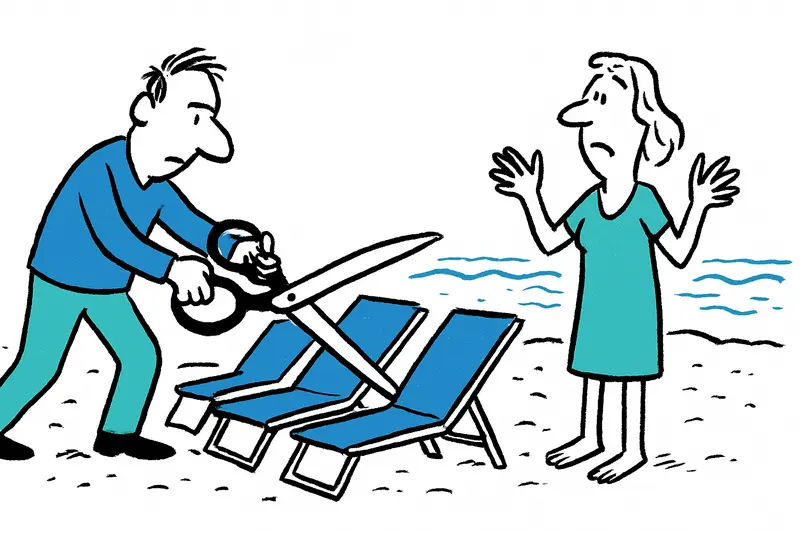
The city administration has decided: for the concession period 2026–2029 there will be significantly fewer sunbeds on Palma's beaches. About 30 percent fewer beach loungers are planned in total; according to the mayor's office, that means up to 1,000 units. The tender is divided into five lots; the largest item is Playa de Palma with an annual starting price of €3.1 million. Other lots: Cala Major almost €150,000, Ciutat Jardí €137,000, Can Pere Antoni €50,000 and Cala Estancia €45,520.
Key question
Is removing sunbeds enough to solve the underlying problem — or is the city simply shifting the question of who still has access to the beach?
Critical analysis
Fewer sunbeds sounds like space for everyone. In reality it is an acknowledgement of a physical fact: beach areas have shrunk. The city therefore wants to reassign quiet zones and is introducing a "premium sunbed". Balinese beds will be banned. Concessionaires who offer a digital booking system are to receive additional points. All of this is a bundle of measures that shows administrative action. But it remains piecemeal: cuts in sunbeds are symptomatic, not causal. The causes of sand loss — ocean currents, coastal development, lack of regular sand replenishment, and the long-term rise in sea level — will not be fixed by reducing the number of loungers.
Moreover, the details contain a tension: premium sunbeds on Arenal and Cala Major as well as digital reservations can further segment use. Those who reserve online get comfort; those who come spontaneously or are not digitally connected may get nothing. Small operators, low-income families and older locals could be disadvantaged.
What is missing in the public discourse
The public debate focuses on numbers and new rules. What is missing, however, is a clear presentation of the measurement data on beach loss, a timeline for possible sand replenishments and statements on who will bear the costs. Also little discussed are the ecological consequences of interventions and how the new concession conditions will be monitored. Who supervises that beige and sand tones are observed? Who verifies the promises on maintenance and sustainability?
An everyday scene
In the early morning, when the Paseo Marítimo still smells of coffee and the seagulls screech over the harbor, a delivery van rolls over the cobblestones toward Can Pere Antoni. A fisherman repairs his nets. Later joggers, parents with strollers and tourists waiting outside the Plaça cafeteria arrive. On the beach section there is less space between the steps and the sea. When the waves are higher, the water sometimes comes almost up to the promenade — this is not an abstract future scenario, you can see it with your own eyes.
Concrete solutions
The municipal response should not only reduce capacity but work on several levels:
1) Transparent monitoring: Regular measurement data on sand volume and beach width, publicly accessible and with maps. A simple app or an info screen at beach access points would help.
2) Immediate measures: Temporary sand barriers, natural dune stabilization with native coastal vegetation and small sand replenishments where technically appropriate.
3) Strategic planning: A long-term coastal strategy with local, regional and national experts, including cost-sharing for permanent beach nourishment or planned retreat in particularly vulnerable areas.
4) Improve concession rules: Make sustainability requirements truly enforceable: mandatory use of natural-looking materials, limits on hardened structures, binding maintenance plans and accessible quotas. The digital booking system must not become a mechanism of exclusion; it must also provide offline alternatives and allocations for walk-up users.
5) Pilot projects and research: Tests with artificial reefs that dampen wave dynamics, as well as cost-benefit analyses for different types of beach interventions.
Conclusion
Reducing sunbeds is a visible first step. It looks tidy, but it is only the easily digestible element of a larger task. Anyone who wants to tackle beach loss in the long term must measure transparently, plan boldly and consider the social dimension: beaches belong to everyone. Otherwise the neatly packaged premium sunbed will only mean that fewer people find space — and that more pay a little extra for comfort.
Frequently asked questions
Will Palma really have fewer sunbeds on its beaches from 2026?
Why is Palma reducing sunbeds on the beaches?
What are the busiest Palma beaches affected by the new sunbed rules?
Will Palma still allow premium sunbeds on the beach?
How will digital booking work for Palma beach sunbeds?
Do fewer sunbeds in Palma solve the problem of beach loss?
Is Can Pere Antoni in Palma becoming tighter on beach space?
What should beachgoers in Mallorca expect from Palma’s new beach concessions?
Similar News

Caro Robens: 15 kilograms lighter — and again in the crossfire of online comments
Bodybuilder Caro Robens, who lives in Mallorca, has lost 15 kilograms. Her success on Instagram was met with applause — ...

Meager Industry in Mallorca: How the Island Can Be More Than Just Tourism
The industrial sector in Mallorca is shrinking, productivity is falling and firms remain tiny. The key question: can the...
Pre-Nit de l'Art: Galerie Mensing invites to a special evening with Tom Boston
Before the big art night, Galerie Mensing opens its doors: pop art, champagne, a DJ and a hand-signed print by Tom Bosto...
Sea view and more seats: Cappuccino Grand Café reopens in Port d'Andratx
After a long renovation, the Cappuccino Grand Café on the Port d'Andratx harbor promenade has quietly reopened. Larger t...

Enric Mas wins the Vuelta – a triumph that resonates in Mallorca
Mallorcan Enric Mas has won the 82nd Vuelta — the first Spanish overall victory since 2014. Cyclists and neighbors on Ma...
More to explore
Discover more interesting content

Can Cap de Bou

Townhouse Lleo 72
