
Ma-4030: Two accidents in one day – why does the drama repeat?
Ma-4030: Two accidents in one day – why does the drama repeat?
On the section of the Ma-4030 between Sant Llorenç and Son Servera there were two serious accidents within 24 hours. Why are crashes accumulating at exactly this spot — and what needs to change?
Ma-4030: Two accidents in one day – why does the drama repeat?
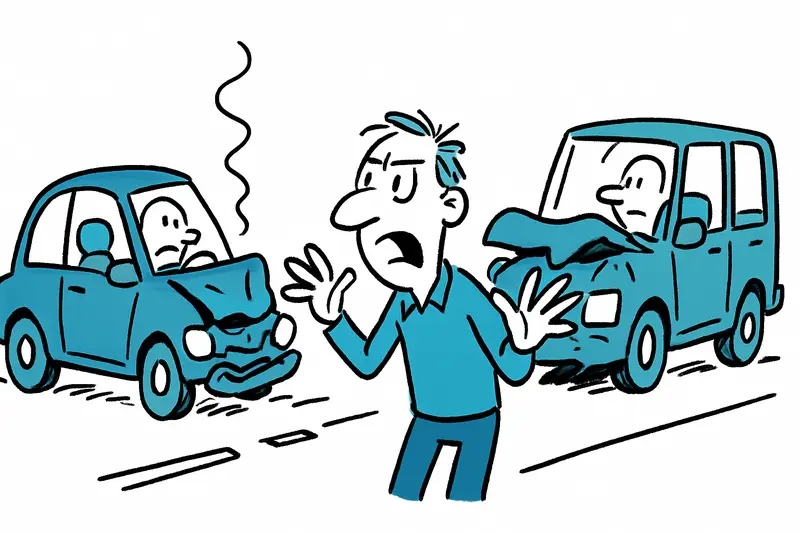
On the Ma-4030, the country road between Sant Llorenç and Son Servera, two serious traffic accidents occurred within less than 24 hours. First, several vehicles collided; seven people were slightly injured. The next day, on the same stretch, two cars collided head-on; three people were injured, one of them seriously. Two accidents so close to each other — this is not a coincidence, it is a warning sign.
Key question
Why do two accidents happen within a day on exactly this section of the Ma-4030, and who bears responsibility for the safety gap?
Critical analysis
The Ma-4030 is a country road that often combines narrow lanes, tight curves, and sections with limited visibility. On Mallorca, tourists with rental cars, commuters, agricultural traffic and cyclists mix here. When you picture the scene — an afternoon sky above the almond groves, the chirring of cicadas, a tractor slowly pulling out from a side road onto the Ma-4030 — it becomes clear: in such places small mistakes are enough to trigger chain reactions. The problem has several levels: road design, traffic monitoring, driver behavior and fast assistance after accidents. Similar patterns have been reported elsewhere on the island, for example in Three serious accidents in one night: What's wrong with Mallorca's country roads?.
What is missing from public debate
Reports name the injured and the accident sites, but lack concrete figures and context: How fast was traffic at the time? Are there recurring accident hotspots along the Ma-4030? Have road markings, guardrails and sightlines been checked? And what about radar-based enforcement or temporary speed limits? Without this information the debate remains superficial — and we risk repeating the same responses instead of fixing root causes.
Typical everyday scene from Mallorca
Late in the morning in front of the bar on the Plaça in Sant Llorenç people discuss the accidents. The bar owner fans himself with the daily paper, a bus driver shakes his head, and in the distance you can hear the hum of a motorcycle on the Ma-4030. Such conversations reflect a mix of concern and resigned pragmatism: "That is the road, things happen there," some say. You notice: the road is part of everyday life — and everyday life needs clear safety rules.
Concrete approaches
There are short-term measures that can have an immediate effect: increased mobile speed checks, more visible road markings, mirrors at particularly narrow exits, provisional signage warning of danger points and a temporary reduction of the speed limit during heavy traffic. In the medium term, technical and infrastructural steps should follow: additional guardrails on curves, inspection and improvement of road edges, widening dangerous narrow sections into safe passing zones as well as targeted mitigation of junctions and side roads.
There also needs to be more prevention: information leaflets for rental drivers, campaigns promoting mutual consideration between locals and tourists, and analysis of accident statistics to systematically eliminate black spots. Rapid responses and coordination are essential, as incidents like Another Crash at MA-13 On-Ramp in Son Cladera: Two Accidents Within 20 Minutes and Series of Accidents on the MA-1 near Palmanova: Hit-and-Run, Alcohol and Unanswered Questions demonstrate.
Who must act?
Road safety is not the responsibility of a single person. The local municipality, the island government, road maintenance services and the Guardia Civil must act in a coordinated way. Citizen initiatives can create pressure — petitions, regular reports of problematic spots and participation in local council meetings bring issues onto the agenda. Landlords and car rental companies could also contribute with simple notices to help reduce risky behavior. Lessons from investigations such as Fatal head-on crash on the PM-401: Why does the road remain dangerous? should inform that coordination.
Concise conclusion
Two accidents at the same location within 24 hours are too many to chalk up to chance. Anyone who lives on Mallorca or passes through it knows the small stress factors: tight curves, mixed traffic, heat and distraction. Now is the time for clear measures, not for formulaic expressions of concern. If we continue to react as before, the Ma-4030 will remain both a postcard idyll and a danger zone. That must not happen.
Frequently asked questions
Why are there so many accidents on the Ma-4030 in Mallorca?
Is the Ma-4030 a dangerous road to drive on in Mallorca?
What should I know before driving rural roads in Mallorca as a tourist?
When is it most important to be extra careful on Mallorca’s country roads?
What safety measures could help on the Ma-4030 in Mallorca?
Who is responsible for road safety on the Ma-4030 in Mallorca?
Why do tourists and locals have different risks on Mallorca roads?
What should I do if I see a traffic accident on a road like the Ma-4030 in Mallorca?
Similar News
Body in the Basin of Port Adriano: Who Protects People During Crossings?
In the morning, just before noon: employees of a luxury marina discovered a floating body in the basin of Port Adriano. ...
Raised from the Sand: A Late Antique Merchant Ship Tells of the Sea off Can Pastilla
A 1,700-year-old Roman merchant ship was raised off Can Pastilla. Finds such as sail fragments and amphorae provide rare...
After the Storm: Why Many Fish Died at Riuet de s'Illot — and What's Still Missing
After the severe storm, numerous dead fish were found in the Riuet de s'Illot wetland. Who is affected, why it may have ...
Fire in Can Picafort: Family Rescued at the Last Minute – a Safety Check for the Promenade
A fire in a sports shop on the Can Picafort seafront forced the evacuation of a mother with four children. How safe are ...
Nine-year-old rescued after cliff fall at Cala Murada — How safe are Mallorca's coastal paths?
A boy fell roughly five meters down the rocks near Cala Murada. The dusk rescue was elaborate; a helper also had to be r...
More to explore
Discover more interesting content

Boat Tour with BBQ along Es Trenc Beach

Private transfer from Mallorca Airport (PMI) to Pollensa
