
Palma's Rental Bike Boom: More Bikes, More People, More City Life
Palma's Rental Bike Boom: More Bikes, More People, More City Life
Since Bicipalma was opened to non-residents, the system has noticeably grown. Students, residents and tourists bring life to Palma's streets — and the city responds with logistics and new stations.
Palma's Rental Bike Boom: More Bikes, More People, More City Life
How a municipal rental system gets the city moving
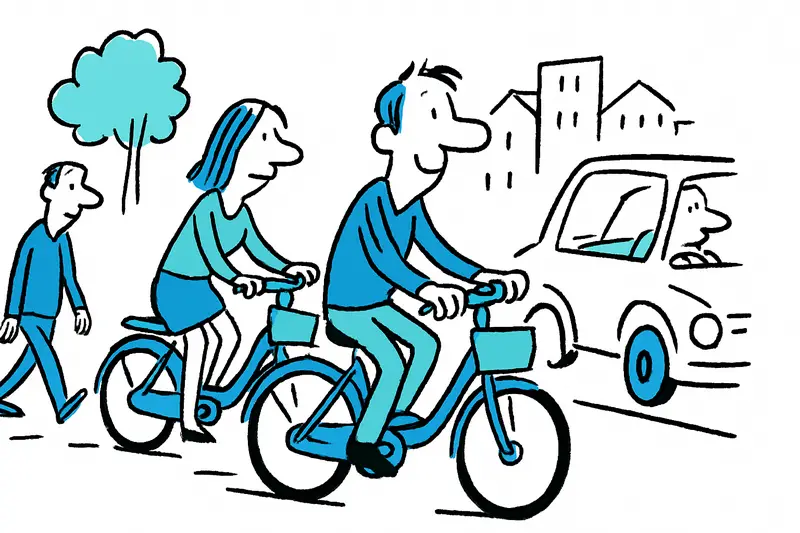
On a late afternoon on the Passeig Mallorca: the rattling of roller suitcases mixes with the clink of coffee cups, and a light breeze carries the smell of fried fish down the street. Between cars and pedestrians you increasingly encounter a pink saddle — Bicipalma bikes that have become part of the capital's everyday traffic.
The figures the city reports show that the service has developed far beyond a niche project. According to the latest reports, around 53,300 people are registered with the rental system, of whom about 31,600 regularly borrow a bike. Compared with 2023 the number of active users is clearly higher — an increase of roughly six in ten users.
One driver of this momentum is the opening of the system: since early 2025 not only residents registered in Palma can rent a bike, but also people with addresses on other islands, from the Spanish mainland and guests with foreign residence. This decision led to more than 30,600 new registrations; around 81 percent of these list an address in the Balearic Islands, just over 5,000 come from other regions of Spain and slightly more than 800 show a foreign home address in their profiles.
That is reflected in usage as well. While there were about 259,000 rentals in 2023, the system recorded almost 1.4 million trips in 2025. On a daily average that meant about 3,930 rentals in 2025; in the current year the daily average so far has been roughly 2,387 rentals. Such fluctuations show how seasonal peaks and everyday mobility coexist.
To prevent the pink bikes from piling up in the same places while other locations run empty, the administration relies on daily redistribution. A logistics team moves around 780 bicycles between stations so that at peak times there is a bike available everywhere.
A particularly visible success is the integration of the Universitat de les Illes Balears. Since May 2025 there have been six rental points on the UIB campus. In the twelve months up to May 2026 more than 13,500 trips were registered there, averaging just over 1,000 per month. Half of these trips stay on campus and connect lecture halls, the cafeteria and the library; a quarter link the university with Palma city center, and almost a fifth run in the opposite direction.
These numbers also tell small everyday stories: a student who zips across Plaça d'Espanya between seminars, tradespeople cycling early in the morning to a construction site on Avinguda de Alexandre Rosselló, a tourist who prefers to reach the bay at Can Pere Antoni by bike instead of by bus or taxi. The city sounds less like engine noise and more like ringing bicycle bells.
For urban planning this means: not only ordering more bikes, but distributing the existing network better. The goal is to organize the supply chain so that at peak times there is at least one bike available at every station. This concerns not only the city center but also suburbs and university feeder lines.
Such changes also have social consequences. A publicly funded mobility service used by locals, commuters and visitors creates meeting points between groups that would otherwise pass each other by. It is a small piece of everyday integration: strangers sit next to each other at the same bike station, discuss routes and exchange tips for quiet side streets.
Of course, there is still work to do: more safe bike lanes, better parking facilities at transport hubs and closer coordination with buses and trains would make the offer more robust. Yet the lived effect is already noticeable: Palma's streets are more lively, and in a way that is quieter than many alternatives.
If you stroll through the old town on a mild evening you notice it immediately. The ringing of bells is no longer a rare sound but part of the soundscape. And that is a remarkable development for an island capital that often faces pressure from cars and tourist traffic in summer.
Outlook: If the city further optimizes redistribution, designates more safe routes and deepens cooperation with the university and neighboring municipalities, the system can become a stable, everyday mobility option — for students, commuters, locals and visitors alike. And who knows: the next short distance from Plaça Major to the harbor might soon be not a walk but a short, pleasant bike ride.
Why this is good for Mallorca: More shared bikes mean less car traffic, less noise, less need for parking space — and more encounters on the street. Quietly, it changes how we use the city.
Frequently asked questions
What is Bicipalma and how does Palma's city bike rental system work?
Who can use Bicipalma and how many people are riding it in Palma?
How many trips have been made and how has usage changed since 2023?
How does Palma ensure bikes are available at stations at peak times?
Where are the Bicipalma rental points, especially at the Universitat de les Illes Balears?
What social and urban effects has Bicipalma had on Palma?
What improvements are still needed to make Palma's bike system more robust?
Is biking in Palma practical year-round, and what should I bring for weather and packing?
Similar News

Arrest at the Port: Three Suspected Pickpockets Left Mallorca After Series of Thefts
The National Police stopped three men at Palma harbour who are accused of several thefts at the airport. How could the g...

Palma–Lyon in Winter: Two Weekly Flights Bring Fresh Momentum
From October Transavia France will connect Palma and Lyon in winter as well: Wednesdays and Saturdays, around 17,000 sea...

Budget holidays in Mallorca: What thriftier tourists really mean
Visitors are spending less: shorter stays, fewer restaurant visits, fewer excursions. A reality check for Mallorca's eco...

Mallorca gets winter link to Lyon: Transavia France flies from October
Transavia France will launch a winter direct connection Palma–Lyon from late October: twice weekly, around 17,000 seats ...

Ses Fontanelles: 1,700 Years Underwater – the Wreck That Makes Mallorca Proud
A Roman merchant ship lay hidden for 1,700 years off Can Pastilla. Now Ses Fontanelles is in the spotlight: salvage, con...
More to explore
Discover more interesting content

Boat Tour with BBQ along Es Trenc Beach
Private transfer from Mallorca Airport (PMI) to Pollensa
