
Palma unveils restored Hostal Términus — café, hall and bunker beneath Plaça d'Espanya
Palma unveils restored Hostal Términus — café, hall and bunker beneath Plaça d'Espanya
The historic Hostal Términus at Plaça d'Espanya is usable again after extensive restoration: offices for the SFM, a café, a cultural space — and underground an air-raid shelter from the Civil War.
Palma unveils restored Hostal Términus — café, hall and bunker beneath Plaça d'Espanya
An old house returns to everyday use, and under the paving stones the voices of history resurface
On a chilly December morning walking along the Plaça d'Espanya you first smell fresh coffee from one of the new cups, then the faint dust of sandstone restoration. The former Hostal Términus, designed around the turn of the century by architect Eusebi Estada, stands again — with its two small turrets, the striking staircase and a façade that, after days of hard work, has become readable once more, as with recent work at Scaffolding removed at Plaça de Santa Eulàlia: Casa de Socorro shows its face again.
The building will not only serve as the headquarters of the railway company SFM — see the Serveis Ferroviaris de Mallorca (SFM) official website — but will also open spaces for everyone: the old café has new seating, you can hear the clinking of dishes and conversations in Mallorcan, Spanish and a few bits of English. A multifunctional hall is planned for readings, concerts and neighborhood meetings. The large windows facing the square let in daylight, and the wrought-iron details on the stair balustrade shine again after careful conservation.
Restorations like this are about more than appearance. Architect Martí Lucena emphasized that original elements should remain tangible: the roof beams in the converted attic, the cast-iron columns and even pieces of the interior fittings from around 1900 — armchairs, little cabinets, a historic conference table — are placed prominently. The table was lifted into the room by crane before the attic conversion, a spectacular moment for craftsmen and passersby.
For residents this is a sign: a building that long looked weathered and was covered in graffiti is again part of the urban community. Conservators uncovered ornaments, cornices and reliefs, cleaned them piece by piece and treated them with a special protective coating. In the evening, when the streetlights on Passeig Mallorca light up, the façade looks calmer, as if it had taken a long breath; similar seafront regeneration is reported in Last corner of the Paseo Marítimo: Palma gets its promenade back.
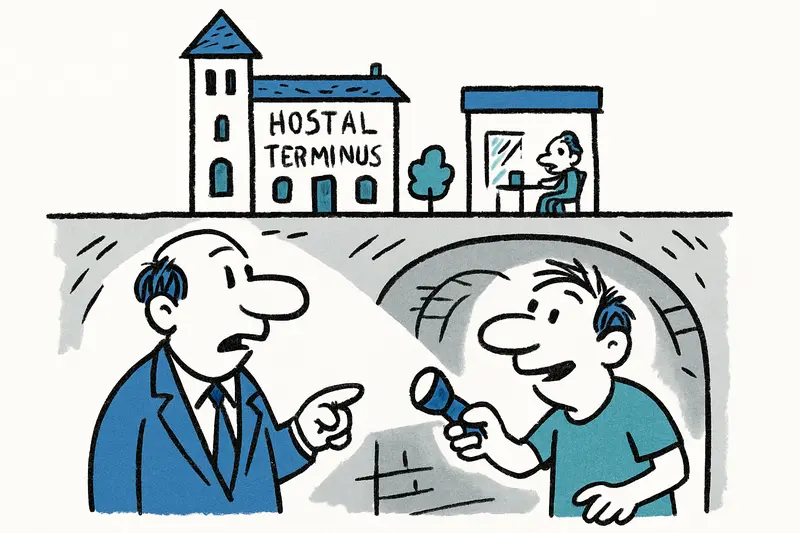
The most surprising news, however, came from below ground. Excavations revealed a branched tunnel system that served as an air-raid shelter during the Spanish Civil War. Archaeologist Maria Antonia Fernández describes passageways that connected the building with the neighboring Andana and possibly with the Sóller train station. Parts had collapsed and had to be carefully stabilized; in one room the teams even found a telephone exchange that was used at the time.
The city is reviewing safety regulations and the required effort before deciding how publicly these areas can be shown. Secured tours or digital reconstructions for school groups and visitors are conceivable, so that no one has to crawl through narrow tunnels without a helmet and safety measures. Such formats would turn the site into a place of learning: history that is not only read but made accessible and responsibly conveyed.
The newly reopened building also brings practical benefits: offices for the SFM, rooms for cultural events and a lively café energize the area around the Plaça. That means foot traffic for nearby shops, new jobs for craftsmen and restaurateurs and a meeting place where neighbors come together again, as discussed in Renovation of the Plaza del Mercat: Between Refurbishment and Fear for Survival. Anyone strolling along the Rambla on a Saturday will soon be able to take a break in this house without traveling far.
It's the small things that make the difference: a repaired mosaic at the entrance, the creak of the old stairs, the soft clatter of coffee cups in the new café. For Palma this is more than a pretty building — it is a piece of everyday life returning that also creates space for memories, including those that lie deep underground.
Visitors to the house should bring an open ear for the city's voices: the tram bell in the morning, conversations from the café, the distant whistle of the Sóller train via the Ferrocarril de Sóller official website. With a bit of luck the Términus will soon be a meeting point for culture and neighborhood — and perhaps a carefully accessible chapter in Palma's eventful history.
Outlook: Workshops, school tours and a digital exhibition about the bunker are possible once safety issues are clarified. Until then the building remains a place where restoration and remembrance come together — and where you can enjoy good coffee.
Frequently asked questions
What is the restored Hostal Términus in Palma used for now?
Can you visit the old bunker under Plaça d'Espanya in Palma?
What can visitors expect at the new café in Hostal Términus, Palma?
Why is the restoration of Hostal Términus in Palma considered important?
What historic features were preserved in the Hostal Términus restoration?
What was found underground during the restoration at Plaça d'Espanya in Palma?
Will the restored Hostal Términus help bring more activity to Plaça d'Espanya in Palma?
What kinds of events could take place at Hostal Términus in Palma?
Similar News

The Painter Who Invented Himself: How a Young Viennese Drew Mallorca
A hundred years ago a 19-year-old draftsman arrived in El Terreno. His diary and sheets, long known under the pseudonym ...

Released with Conditions: The Plus Ultra Suspicion and a Mallorcan Finca as Residence
A Dutch entrepreneur, sought in connection with the Plus Ultra case, was extradited to Spain after his arrest in Germany...

Haute Nuit in Puerto Portals: Fashion, Art and Indulgence by the Water
On October 2 the Lobster Club in Puerto Portals will be transformed into a stage for curated fashion, art and culinary e...

Magaluf: Watchtower Alarm – Lifeguards Pull Unconscious Beachgoer from the Water
After a drama in the late afternoon, two lifeguards at Magaluf beach rescued an unconscious 44-year-old man. He was stab...

Turquoise in the City: How dangerous is the color play of the Sa Riera?
The Sa Riera in Palma suddenly turned turquoise — a pretty motif, but behind the effect lies a discharge of saline waste...
More to explore
Discover more interesting content

Can Cap de Bou

Townhouse Lleo 72
