
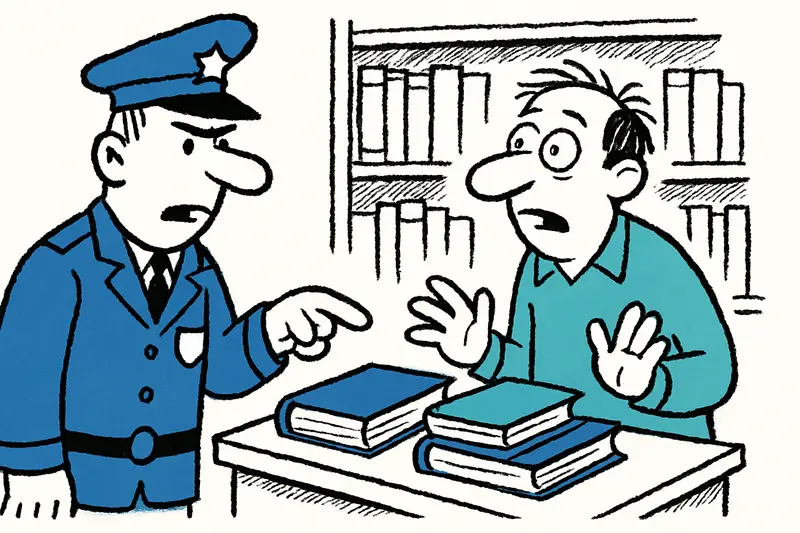
Stolen Collectibles: How a Palma Second-Hand Shop Stirred Up Booksellers
Nine bookshops in Palma reported missing rarities after a parcel with high-quality reprints appeared online. Police are investigating a second-hand shop — and the industry asks: How do we protect our trust and livelihoods?
Restless streets: One book goes missing, mistrust grows
On a clear morning, when the bells of La Seu were still audible across the city and someone poured a Porreres espresso at the corner café, an unobtrusive online listing caught the attention of some booksellers. A parcel with rare reprints, signed copies and limited editions — items that are kept like treasures in Palma’s small shops — was offered at a price that made experts sit up.
The consequence: nine reports filed, Palma: Tienda de segunda mano bajo sospecha — comerciantes denuncian libros robados, and behind the windows of independent booksellers quiet conversations about security and trust. The central question is: how can a city better protect its cultural assets and the people who depend on them without suffocating neighbourhood life with bureaucracy?
More than material value: trust as a commodity
It’s not just about euro amounts. The hurt feelings of the dealers are tangible. Anyone walking past the stalls at Mercat de l’Olivar in the morning rarely hears loud complaints — more often the soft clatter of a till, the laughter of regulars, the turning of pages in a window. These small rituals rest on trust. When signed editions or limited collector’s volumes suddenly "turn up" online, it affects not only the balance sheet but the identity of small shops.
Analytically speaking, the case reveals a larger problem: the interface between analogue trade and the global, anonymous online market. Individual clues — glued price labels, unique protective covers, serial numbers — left a trail in this case. But how often do such hints go unnoticed when books pass through many hands in stacks?
Aspects that receive too little attention
Public discussion tends to focus on perpetrators and crimes. Less attention is paid to how such systems can function at all: is it organised, opportunistic, or the result of carelessness? And what role do online platforms play, which attract international customers and insufficiently vet sellers? Packages Full of Counterfeits: Van with Over 700 Fakes Stopped in Palma illustrates how contraband can circulate and complicate local markets. There is also often a lack of networking among shops. One store notices a gap, another does not — and the information dissipates.
Another hardly discussed point is the vulnerability of small retailers to seasonal fluctuations. In summer a lot of stock arrives, often in boxes, deliveries are piled up and inventories postponed. That is exactly when gaps can open — physically and administratively. A shop owner nearby said resignedly: "In the rush of summer you look twice, but not three times."
Concrete opportunities and solutions
The good news: there are practical approaches that do not crush the atmosphere in Palma’s streets. First, small retailers should consider a simple digital inventory system, for example consulting Shopify's inventory management guide. This does not mean immediately buying expensive solutions, but clear lists with photos, serial numbers or special characteristics — ideally on a shared, password-protected platform for the local trade.
Second, a kind of neighbourhood alert for goods could be established: if a shop sees an unusual item online, it is shared in a local distribution list. Such informal networks already work in Palma for recommendations of craftsmen or suppliers. Why not for books?
Third, cooperation with sales platforms is important: a move towards verified seller profiles, central reporting channels and mandatory details for collector’s items would restrict anonymous trade. And finally: simple physical measures such as waterproof price stickers in unusual places, inconspicuous coding or QR stickers that only dealers can read.
What is happening now — and what will remain
Police have already secured some copies and are questioning sellers and buyers; similar inquiries have appeared in Escándalo de falsificaciones en Palma: ¿Quién protege la obra de nuestros artistas?. Till records and surveillance footage could provide leads. For the booksellers the lesson remains: harbouring mistrust is not a sign of weakness but of readiness to protect. When a warm breeze sweeps the streets in the evening and the last customers go home with bags of books, the next weeks will show whether a stronger, more resilient community grows from the incident.
Practical advice: When buying used books, check dedications, serial numbers and unique protective covers. As a seller, document special copies — with photo and date. And as a neighbour: report anything suspicious. In a city like Palma, mutual vigilance is often the most effective safety net.
The case is still open. Investigations continue and the dealers await answers. One thing remains clear: in Palma’s quiet lanes a single book can do more than make the news — it can strengthen or shake trust. The choice is ours.
Frequently asked questions
Why are second-hand books in Palma sometimes watched so closely by booksellers?
How can buyers in Mallorca tell if a used book is genuine and properly owned?
What can small shops in Palma do to protect rare stock from theft or mix-ups?
Is summer a risky time for small retailers in Mallorca?
What role do online marketplaces play in cases involving suspicious books in Palma?
What is Mercat de l'Olivar like in the morning for local shoppers?
Why do independent bookshops in Palma rely so much on trust?
What should you do in Mallorca if you see a suspicious collectible book for sale?
Similar News
When the Wallet Becomes a Danger: Attack in Peguera and Lessons for Mallorca
In Peguera, two women are said to have stolen the wallet from a 75-year-old German couple. When the victim intervened, t...
Plata stays Plata: Young people take over, Llonguets remain
A small bar on Carrer de l'Argenteria will continue: Tolo Serra hands the place over to young Mallorcans at the end of t...
Unnoticed in the Luggage Compartment: How a Boy Traveled More Than 100 Kilometers in a Team Bus
A minor traveled in the undercarriage of a team bus for more than 100 kilometers until his cries for help were heard. A ...

Cap Vermell Grand: Second Michelin Key – a Gift for the East
The Cap Vermell Grand in Capdepera has been awarded its second Michelin key. For the region this elevates the luxury off...
Eurowings lets four aircraft carry names – a friendly idea that also reaches Mallorca
Eurowings is launching a campaign: four Airbus A320s are to carry the first names of people who help others in everyday ...
More to explore
Discover more interesting content

Can Cap de Bou

Townhouse Lleo 72
