
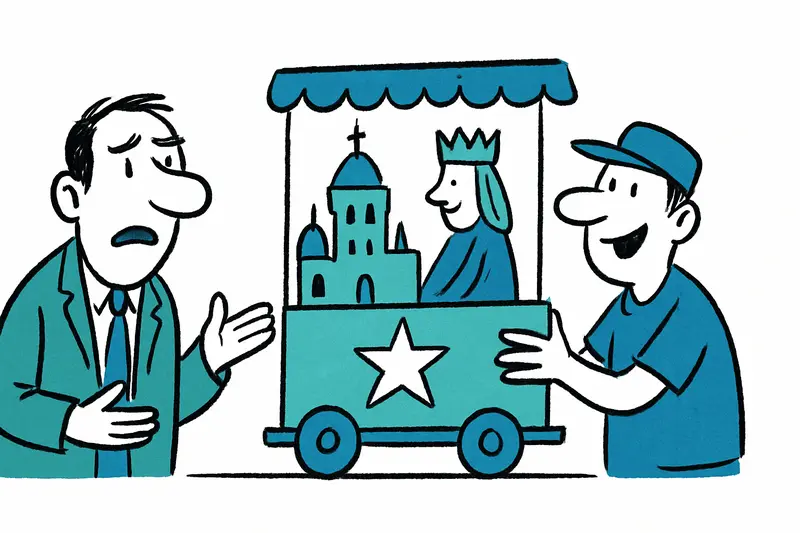
More Floats, More Questions: Palma's Three Kings Parade Redesigned
Palma is commissioning 21 new parade floats for the Three Kings procession — five more than before. €847,000 from the municipal budget is stirring debate: Are the costs justified, how sustainable are the floats, and who truly benefits?
More Floats, More Questions: Palma's Three Kings Parade Redesigned
When the Three Kings parade through Palma's streets again on January 5, the air smells of cold sea, hot churros and pine needles. This year, however, another sound is coming from the craft workshops: the hammer, again and again. The city has decided to have all the floats rebuilt — 21 in total, five more than before. The central question that arises with the rhythm of the hammers is simple: Does Palma need new floats on this scale — and how responsibly will around €847,000 from the city hall's almost €624M investment package be used?
What is planned — and what immediately stands out
The route remains familiar, from the old town to the Plaça de Cort, but the staging is growing: each of the Kings will now have a small entourage with more music, more street theatre and the Christmas lighting switch-on. In Santa Catalina the air currently smells less of carols and more of wood shavings and paint. In a hall near the port, a carpenter shows modularly manufactured figures that can be taken apart and reused. That sounds thoughtful, and modularity is a step in the right direction. But building modularly does not automatically answer questions about costs, storage and lifespan.
Budget, sponsors, transparency
The sum is no small change: €847,000, plus in-kind contributions from municipal companies in the form of floats or materials. So far, the public debate, as with the Patrona festival's municipal cost question, lacks a clear breakdown: How much are the one-off construction costs, what are the annual maintenance and storage costs, and what insurance costs will arise? Are old vehicles being replaced only because they are no longer "Instagram-worthy," or because they actually pose safety risks? And who benefits from the contracts — local craftsmen or external providers?
Aspects that are often overlooked
There are four things that are rarely spoken about loudly but are decisive: First, follow-up costs. New floats need space for storage, regular maintenance and sometimes expensive spare parts. Second, the material question. Polyester, wood, foam — each choice has consequences for the climate balance, disposal and repairability. Third, local value creation. It is positive that craftsmen from the island are involved, but a tender without sustainability and social standards benefits no one in the long run. Fourth, citizen participation. The parade is a communal experience; so why not allow public insight into the workshops before the floats premiere?
Critical guiding principles — and concrete proposals
Criticism alone is easy — constructive proposals are harder but possible. First: a binding life-cycle calculation that breaks down construction, storage, maintenance and disposal over ten to twenty years. That makes the decision transparent and comparable. Second: a transparency portal with short dossiers for each float — materials, cost items, participating businesses and expected lifespan. Third: modular standards, meaning uniform plug-and-fix solutions so that parts can be reused across years and different floats. Fourth: community workshops and open days that involve schools and neighborhoods while also reducing labor costs. Fifth: a sponsorship code that sets clear rules about which companies and products are allowed on the floats so the parade does not turn into a moving billboard.
Why this matters — and what remains
The Three Kings parade is more than an item in the city budget. It is the rosy cheeks of children, the shared waving, the giggles at too much tinsel. With the contract, Palma shows that the city wants to actively maintain traditions. But maintenance has a price — and citizens should be able to understand it. Sustainability does not only mean durability, but also socially responsible production and transparency in financing. If the new floats not only shine at the premiere but remain reliable, repairable and locally rooted for years, the whole city benefits.
If you like, visit the workshops beforehand, drink hot cocoa at a stall on the Carrer and listen to the rhythmic tapping. Sometimes the smell of wood shavings tells the most honest stories about how tradition is made — and financed.
Frequently asked questions
When does the Three Kings parade take place in Palma, Mallorca?
Why is Palma rebuilding the Three Kings parade floats?
How much is Palma spending on the new Three Kings parade floats?
Are the new Three Kings floats in Palma more sustainable?
Where can I see the Three Kings parade workshops in Palma?
What changes are planned for the Three Kings parade in Palma?
What should families expect at the Three Kings parade in Mallorca?
Why is there debate about Palma’s new Three Kings parade floats?
Similar News
After a series of car break-ins at Torre des Verger: Four arrests — and many unanswered questions
After weeks of thefts at a popular parking area near Banyalbufar, four suspects were arrested. How safe are parking area...
Why Spain's housing crisis is driving snap elections — and what Palma must learn
The evacuation of an 87-year-old, failed rent decrees and tent camps in Palma: the housing crisis has escalated national...
Autumn Holidays Begin: Why Suitcases Are Disappearing Again in Mallorca
Just in time for the autumn holidays, lost suitcases are piling up at Palma airport. Who is to blame — the weather, tigh...
Season Opening at the Auditorium: Elgar, Strauss and an Evening for Listening
On October 8 the Orquestra Simfònica de les Illes Balears brings two musical extremes together in Palma: Elgar's intimat...
Ca’n Garrit in Calvià – A Tavern Breathing Since 1905
In the middle of Calvià’s Carrer Mayor 45 stands an establishment that combines tradition and fresh craftsmanship: Ca’n ...
More to explore
Discover more interesting content

Can Cap de Bou

Townhouse Lleo 72
