
The Silent Guardians of Palma: When Protected Trees Are in Danger
Palma's old olives, figs and plane trees are living monuments – but protection doesn't automatically mean safety. Why some of these witnesses still suffer and what should be done.
City trees that tell more than a monument
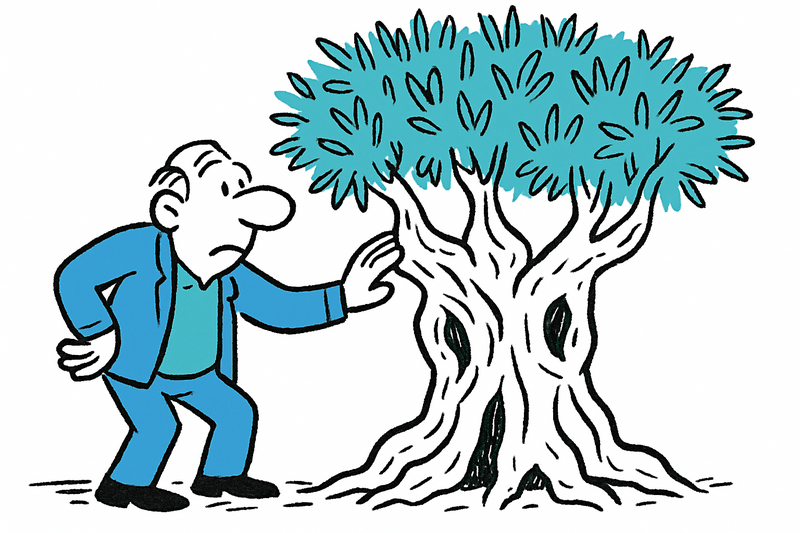
When the church bells ring over the Plaça del Cort and the espresso steams at the corner, there it stands: the thick olive tree in front of the Ajuntament. People gather around it, take photos, lean against its trunk. You feel something that is hard to build into concrete – history. And it is precisely this history that the Balearic registry has tried to preserve since 1991: currently 76 protected trees in the Balearics, 50 on Mallorca, ten in Palma.
Key question: Is official protection really enough to save these trees?
It almost sounds idyllic: an office decides, a tree is placed on the list, and that's it. However, protection is not a static label but an assignment of work. Sometimes the city still loses witnesses. Remember the ombu on the Plaça de la Reina? It had been on the list since 2003 – and split in two in 2019. That shows: an entry alone does not protect against age, disease or sudden storms, as reported in When Palma's Trees Fall Silent: Felled Pines and Lost Trust.
What often gets lost in everyday life: many protected trees stand on private land. The law does require permits for pruning and prescribes special care, but implementation depends on owners, administrative capacity and money. A tree may be protected on paper – in practice it needs maintenance, space for roots and sometimes a new tree pit that is not crushed by a pavement, a reality echoed in Alarm in Palma: Neighborhood Resists Tree Felling on Plaza Llorenç Villalonga.
Aspects we rarely hear
First: soil sealing. Paved areas around a tree, parking spaces, underground utilities – these suffocate roots. Second: climate change and new pests. Longer dry periods and warmer winters change the disease dynamics of fungi and insects. Third: bureaucratic delays. If a huge crown appears acutely at risk of breaking, quick decisions are needed – but approval processes can take weeks, a problem made visible during the Dispute over 17 Ombu Trees on Plaza Llorenç Villalonga: Who Decides on Urban Green?.
And fourth: knowledge and appreciation diverge. Some people see the old rubber tree in the cemetery as just a provider of shade, others as a centuries-old witness. Without public education, there is often little willingness to invest.
Concrete trouble spots in Palma
Notable protagonists include: the sturdy olive at the Ajuntament, the huge fig in the courtyard of La Misericòrdia, the rubber tree at the Cementiri, the Chinese jujube in the Convent de la Concepció and the legendary "Na Capitana" of Son Muntaner. These trees need more than a sign: they require planned watering, regular specialist care, protection zones against compaction and a readiness to act quickly in case of damage.
What would help concretely
First: a local emergency fund for urgent tree care. If a crown changes dramatically, responsibility must not stall in months of administrative rounds. Second: maintenance contracts with specialized arborists and training for municipal gardeners – this is not a luxury but prevention. Third: removing paving around old trunks and flexible pathways instead of straight slabs. Fourth: incentives for private owners to invest in their trees – tax breaks or grants could help.
Technology helps too: tree sensors for moisture and root stress, digital maps where any resident can report damage, and interpretive panels that tell people why one olive is older than their great-grandmother. Such measures strengthen identification and create pressure for protection.
Short-term needs also include pragmatic changes: a procedure for emergency pruning with mandatory subsequent evaluation, faster expert teams and a clear liability rule between owner and municipality. In the long term Palma needs a tree strategy that thinks together climate resilience, biodiversity and the urban landscape.
When you sit under the dense foliage of that fig in the courtyard on hot August days and the city sounds become muffled, you realize how precious that shade is. The trees are not just green: they are archives, air conditioners and silent chroniclers. It would be a pity if they remained merely entries on a form while their needs disappear under asphalt.
The central question remains: do we really want to protect our living monuments – or is it enough for us to feel good about seeing them on a list?
Frequently asked questions
Why are protected trees in Palma still sometimes cut down or damaged?
What makes old trees in Mallorca so vulnerable in cities?
Can you prune a protected tree in Palma without permission?
What are some of the most notable protected trees in Palma?
What is the oldest or most famous tree in Palma?
How does climate change affect trees in Mallorca?
What can Mallorca municipalities do to protect old city trees better?
Why does public awareness matter for protected trees in Palma?
Similar News
After Being Admitted to Hospital Again: Heinz Hoenig and the Questions We Should Ask in Mallorca
Long-time Mallorca resident Heinz Hoenig was admitted to hospital again. A clear “what next?” is missing from the covera...
Yellow Alert: Is Mallorca Prepared for the Next Rain Band?
Aemet has issued a yellow alert for the south, southwest and the island's interior. Thunderstorms and heavy rain are for...
Kegel brothers trial postponed: Why Mallorca must wait for a verdict
The trial of 13 German holidaymakers will not begin until May 2028. The long wait raises questions — for victims, defend...
Chaos on Palma's Runway: Why the Summer at the Airport Was So Disrupted
This summer laid bare where Palma airport is faltering: only just over half of departures were on time and seven percent...
Cocaine Offer on Ham Street: Why the Open Trade Should Ring Alarm Bells
In the middle of Pare Bartomeu Salvà a tourist was offered a packet of cocaine as part of a sunglasses deal. A short int...
More to explore
Discover more interesting content

Can Cap de Bou

Townhouse Lleo 72
