
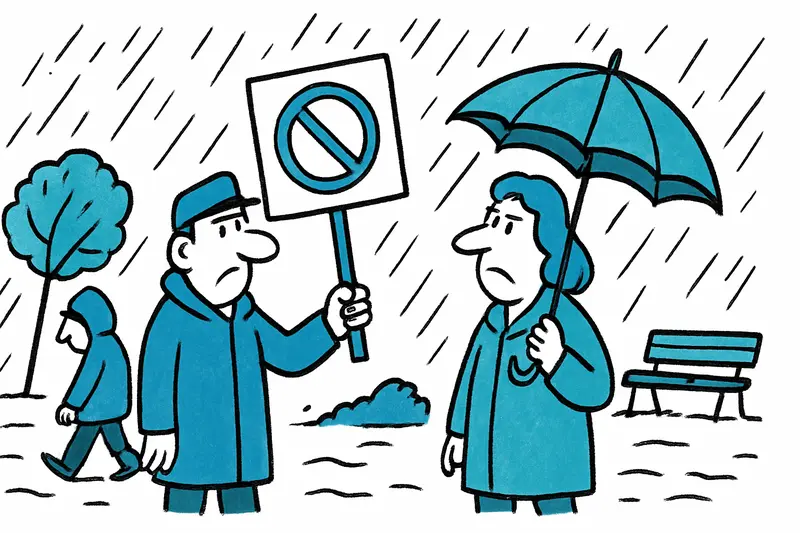
Rain in the Park — Cancellation as a Wake-up Call: How Mallorca Makes Open-Air Events Weather-Proof
The planned park festival in Palma was postponed to November 15 due to rain. Between wet paths, volunteer helpers and fragile equipment, a bigger question emerges: do we protect our events — or keep reacting? Concrete solutions for more resilient gatherings.
Cancellation at the wet entrance: Sa Riera, candles and a wise decision
In the morning I was briefly in Sa Riera park: damp gravel paths, the soft patter of drops on umbrellas and the smell of wet leaves — almost romantic, if it were not for the problem of flashing equipment and burning candles. The organizers therefore decided to postpone today's planned Night of Souls to Saturday, November 15. For some a disappointment, for others a relief: a small festival that brings a larger question into focus, as discussed in When storms crash the party: Lessons for Majorca from the island weekend.
The guiding question: Precautions or sporadic luck?
Have organizers and authorities done enough to make outdoor events resilient, or do we continue to react? The answer is a little of both. On site it did not feel like just short-term bad weather, but like a logistical problem: barrier tape at the entrance, helpers in plastic ponchos, electronic boxes under tarpaulins. The risks are real — wet wood becomes slippery, electricity and moisture do not go together, and candles and wind are not a good mix.
What happened today — and what rarely makes the headlines
In Palma, besides Sa Riera, the parks Sa Ribera and Can Terrers were also closed as a precaution — as reported in Thunderstorms over Mallorca: Streets Flooded, Parks Closed — Are We Prepared?. In Muro the pumpkin festival was affected: stalls stayed in place, open-air programs were cancelled, and the weighing of the largest pumpkin was postponed; similar village responses were documented in Rain and Wind Spoil Autumn Festivals: How Mallorca's Villages Are Responding. Such decisions protect visitors, volunteers and equipment — but they also cost time, money and nerves. What often gets overlooked: the burden on volunteers, wet decorations, questions of insurance and the logistics for guests who are already on their way.
Analytical view: Why postponements are becoming more frequent
Unstable weather is not new, but its frequency and unpredictability are increasing. That means shorter decision windows for organizers, higher costs and more uncertainty for staff and suppliers. On Mallorca many outdoor festivals rely on volunteer work and temporary infrastructure — tents, wooden stages, candles and technical gear that become problematic in the rain. The consequence: not just a cancelled event, but a financial risk for small associations.
Concrete opportunities: What would help immediately
A rethink does not have to be complicated. First, practical steps:
1. Binding checklists and decision processes. Weather criteria, responsibilities and deadlines should be defined in advance. Who decides when to cancel — and according to which plan?
2. Alternative venues and contracts. Prearranged indoor spaces nearby — community halls, school auditoriums, clubhouses — with flexible rental terms reduce uncertainty.
3. Modular canopies and weatherproof technology. Mobile roofs for stages and equipment, waterproof covers for speakers and electronics, raised platforms to avoid puddles.
4. Financial buffers and clear insurance rules. Small reserves, standard ticket clauses and transparent communication ease the burden on volunteers and visitors.
5. Protect volunteers. Fair compensation for expenses, clear duty schedules, spare clothing and rest breaks instead of a fire‑fighter mentality.
6. Better communication. Real-time information via SMS/WhatsApp, clearly visible notices at park entrances and coordinated social media updates save frustrated guests and unnecessary trips.
Technically, closer integration with weather services would also be useful: automated alerts for organizers, local measurement stations and a small dashboard that helps organizers decide when to act.
A local, pragmatic outlook
Postponing to November 15 is sensible. It protects people and equipment — and it gives time to clean up, check and plan better. Perhaps that is the real gain: Mallorca's event scene can develop more resilient habits instead of gasping from one cancellation to the next. The electronics in the transport boxes will stay dry for one more day — and sometimes that is half the battle.
For visitors the advice is: check AEMET weather warnings before leaving, bring sturdy shoes and be ready for Plan B. For those watching the rain from the window today: a cup of coffee, the scratching of drops on the glass and the thought of a better-prepared festival next Saturday — not the worst combination.
Frequently asked questions
Why do outdoor events in Mallorca get postponed when it rains?
What should I check before going to an open-air event in Mallorca during bad weather?
Which parks in Palma were closed because of rain?
What happened to the Night of Souls event in Sa Riera, Mallorca?
How do village festivals in Mallorca usually respond to heavy rain?
Why is rain such a problem for outdoor festivals in Mallorca?
What helps make Mallorca events more weather-proof?
What should organisers in Mallorca do when a weather warning is issued?
Similar News
By Boat Instead of the Road: Palma's Water Bus — a Reality Check
The 'Bus Nàutic' launches in two stages — but questions remain over interim operations, fares and environmental requirem...
Several Days of Rain Approaching: How Well Is Mallorca Prepared?
Aemet says: rain from Thursday until at least Tuesday, especially heavy on Monday. Temperatures remain mild. A reality c...
Nervous Reaction at a Traffic Stop: Why Campos Is Not Just a Sniffer-Dog Problem
At a traffic stop in Campos a 37-year-old German was arrested with a bag full of drugs. Our reality check explains why s...
Cameras Against Illegal Dumping: Porto Cristo Monitors Problem Areas – a Reality Check
Manacor has installed four surveillance cameras at particularly problematic waste spots in Porto Cristo. A local check a...
Reality check: Palma's "white" torrent — harmless salt or neglected warning sign?
White crusts on the Torrent de Sa Riera are causing a stir. Emaya describes them as salt deposits. Our reality check: wh...
More to explore
Discover more interesting content

Can Cap de Bou

Townhouse Lleo 72
