
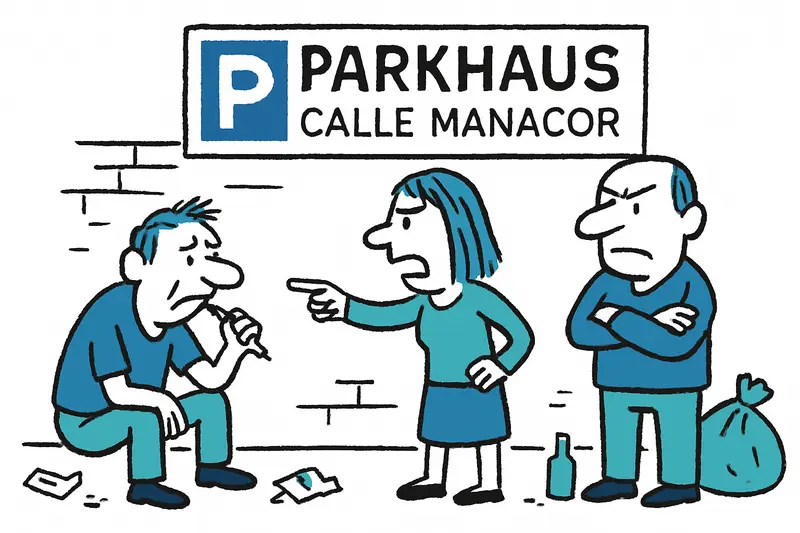
Calle Manacor Parking Garage: Controversy over Drugs, Litter and Surveillance
Calle Manacor Parking Garage: Controversy over Drugs, Litter and Surveillance
Residents complain about drug use, syringes and litter in the Calle Manacor parking garage in Palma. The city has invested €130,000 — is that enough?
Calle Manacor Parking Garage: Controversy over Drugs, Litter and Surveillance
Key question: How can a public space be protected without simply pushing the most vulnerable aside?
On a gray morning on Calle Manacor you can hear the clatter of the parking machines, the drip of leaking pipes and the distant rush of the avenue — and among these sounds a subtle unrest residents have been describing for months. Users of the public parking garage speak of syringes on the floor, crumpled packaging and repeatedly of people who are clearly consuming drugs. On social networks images and short videos circulate showing exactly that: litter and isolated needles in corners where sleeping bags sometimes lie, as documented in Parking Garage on Carrer Manacor: When Fear Becomes Part of the Walk to the Car.
The city administration has already reacted: according to its own statements around €130,000 were spent on technical measures such as new cameras and loudspeaker systems as well as initial cleaning and security measures. That is not a small amount, and it is visible — more lights, sharper surveillance, occasional announcements over loudspeakers.
But here the dilemma begins. Cameras and loudspeakers increase control, but they do not solve the social causes. They can shift places of stay; they can make the scene appear cleaner in the short term; they can also touch on fundamental rights and privacy if it is not clearly regulated who uses the recordings and how long data are stored. Problems will not disappear if they are merely moved from the garage to another corner.
What is often missing in the public debate is a view of the people behind the labels "homeless" or "drug use": How many are there? Do they have access to counseling centers, medical care, safe needle disposal? Where do they sleep at night, and what paths exist for them to reach help? As long as answers to these questions remain unclear, solutions remain incomplete.
From everyday life: on a late evening one can see in front of the garage a cleaning worker with a broom and rubber gloves, picking up trash at random. An older resident complains about being constantly woken by loud quarrels. A delivery driver parks briefly, looks suspiciously into the garage, collects his packages and drives on. These scenes show how much a lost public space affects daily life — not only for those directly affected, but for all users of the area.
Concrete approaches must connect several levels: first, low-threshold services directly on site or in the immediate vicinity — for example outreach teams that regularly visit the garage to mediate help, treat wounds and provide clean needles. Clean needle distribution points with secure disposal containers reduce infection risks and have been tried in many European cities.
Second, more frequent cleaning and firmly established maintenance plans: a clean place has a de-escalating effect, as seen in Cala Major: Parking lot turns into a litter and problem zone – who will clean up?. Third, coordination between police, social services and healthcare with clear case numbers and transparency — instead of merely staging technical measures. Fourth, attention to longer-term housing options: emergency shelters, supported transitional housing and programs that open up prospects prevent people from ending up permanently in such in-between zones.
Technical means still have their place — but accompanied: cameras that are used only for prevention, clear rules on data processing, regular evaluations and independent oversight. Loudspeaker announcements help in the short term, but they do not replace personal contact by social workers.
Communication with residents is also important. General demands for "clearing" often create more problems than they solve. Factual dialogues about concrete measures, with timelines and measurable criteria, would build trust. Equally necessary is transparency about expenditures like the mentioned €130,000: what exactly was it spent on, what effect tests exist, and what further steps are planned?
Conclusion: The parking garage on Calle Manacor is a small piece of a larger problem known to Palma, highlighted for example in Parc de la Mar neglected: Who will save Palma's living room at the foot of the cathedral?, and many other cities: the restriction of public spaces due to social hardship combined with drug use. Cameras and loudspeakers act quickly, but they do not heal. Effective responses require committed social work on site, medical harm-reduction services, regular cleaning and clear, transparent coordination between the administration, police and aid organizations. Without this multiplier the garage will at best look cleaner from the outside — the causes, however, remain.
A final thought: when we walk past Calle Manacor, we should not only count the litter, but ask how many people in our city could reach real help through a stable access point. That would be an answer that lasts longer than a new camera.
Frequently asked questions
Why has the Calle Manacor parking garage in Palma become a concern for residents?
Are cameras and loudspeakers enough to solve problems in Mallorca parking garages?
What should Mallorca residents do if they find syringes or drug paraphernalia in a public garage?
When is a parking garage in Palma most likely to feel unsafe?
How can Mallorca handle homelessness around public parking areas without simply moving the problem elsewhere?
Is the Calle Manacor parking garage in Palma being cleaned more often now?
Why do some Mallorca cities use needle disposal points and outreach teams?
What kind of long-term solution does Palma need for places like Calle Manacor?
Similar News
Injured captain, big plans: Germania Mallorca before the away match in Consell
The newly founded FC Germania Mallorca travels to Consell on Saturday. Captain Bastian Müller is out injured, but coach ...
Palma, Palma de Mallorca, Palma‑Mallorca: What is it really about?
The debate over the city's name is more than grammar: it concerns identity, law and branding policy. A sober reality che...

Warning to Bathers: Nipping Fish in Cala Major and Other Coves — a Reality Check
In Cala Major and several beaches around Mallorca, bathers report painful “nips”. Who are the animals, why are they gett...
Rental Car Theft in El Arenal: What This Incident Reveals About Our Gaps
A teenager steals a running rental car in El Arenal, flees on foot, climbs over walls and is caught by the Guardia Civil...
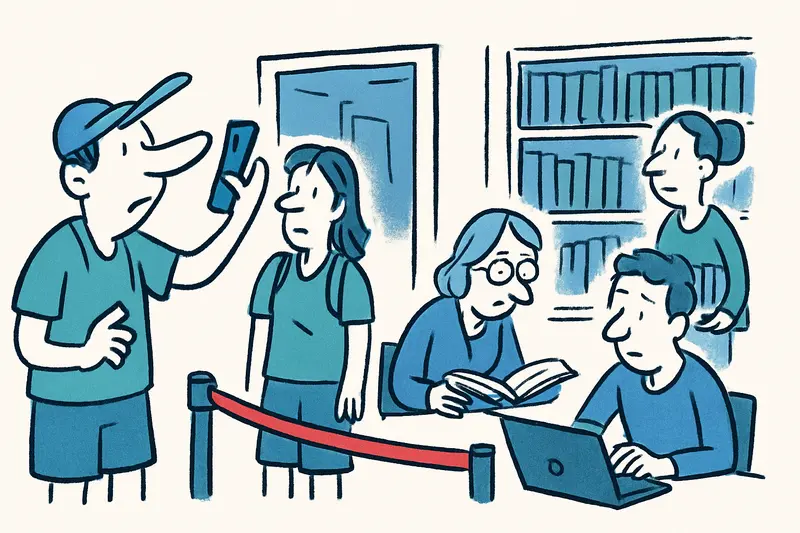
Red Rope in Palma's Library: What Helps Against Selfie Tourism — and What's Missing
Palma's city library cordoned off an area with a red rope to keep selfie tourism away from reading and working activitie...
More to explore
Discover more interesting content

Can Cap de Bou

Townhouse Lleo 72
