
Why Parliament Said No — and What Mallorca Now Needs to Tackle the Housing Shortage
Why Parliament Said No — and What Mallorca Now Needs to Tackle the Housing Shortage
The Balearic Parliament stopped a move to make it harder for non-residents to buy housing. A reality check: what is missing in the debate, which tools remain — and which solutions are practically implementable?
Why Parliament Said No — and What Mallorca Now Needs to Tackle the Housing Shortage
Main question: Can Mallorca reduce pressure on the housing market in a legally secure and effective way — without violating constitutional and EU law?
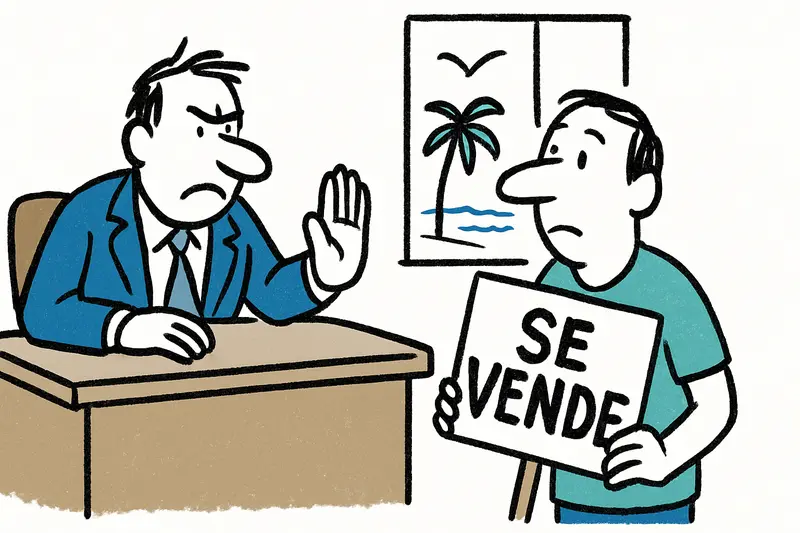
On the Paseo Marítimo, when the ferries rock in the harbor and the seagulls cry over the cafés, "Se Vende" signs still cling to windows. The Balearic Parliament recently blocked a bill from the Més party aimed at restricting property purchases by non-residents: PP and Vox prevented it from being taken up for discussion. The facts presented by Més sound drastic — in recent years 82 percent of newly built flats were not primary residences; in some places up to 30 percent stand empty, and over 40 percent are used for tourism, a pattern detailed in Balearic Islands in the Price Squeeze: Who Can Still Afford Mallorca?. At the same time the European Commission warns: restrictions are only possible in exceptional cases and must be proportionate.
Critical analysis: the failure of the proposal shows two things. First: legal limits are real. The conservative majority in parliament emphasizes property rights and EU law and makes clear that a general ban on purchases touches private disposal rights. Second: political instruments were not drafted in a way that would clearly meet legal requirements. EU responses do mention exceptions for exceptional situations — but they demand proportionality, time limits and non-discrimination. That is exactly where the gap apparently opened between political intent and legal practicability.
What is often missing in public debate is the view of implementation. Who should check whether a buyer actually uses their new property as a primary residence? Is the empadronamiento, i.e. registration in the population register, sufficient as a verification mechanism? What sanctions apply in cases of false statements? And: how do you prevent simple rules from leading to workarounds — for example via shell companies or purchases through third countries? Detailed proposals and market analysis are summarised in Why Mallorca's Real Estate Market Suddenly Slid in September — Analysis and Possible Remedies, which underlines the need for implementable measures.
Everyday scene: On the Carrer de Sant Miquel I often see couples leafing through estate agents' brochures. The agent slides new portfolios across the counter without a care, while the church bells of the Plaça Major strike. As long as property can be sold as an object of speculation, construction firms' coffers will ring; for many locals only the waiting list for social housing remains, an issue examined in More social housing from 2026: What the Balearic Islands are really planning — and what's missing.
Concrete approaches (practical and legally oriented): 1. Focus on publicly subsidized housing: Restrictions and occupancy obligations are legally the cleanest to enforce here. Contracts and funding conditions can include usage requirements that trigger repayments or retransfer in case of violations. 2. Time-limited, proportionate measures: Every measure must have an end date and clear indicators (e.g. vacancy rate > X, ratio of sales/primary residence < Y). This corresponds to the European Commission's requirements. 3. Improved transparency and registers: A public register for tourist rentals and mandatory reporting when registering at the empadronamiento would ease enforcement. Sanctions should be graduated: fines, occupancy obligations, tax surcharges. 4. Fiscal instruments: A targeted, time-limited second-home tax or a higher tax on vacancy can dampen demand without imposing purchase bans. 5. Strengthen municipal tools: Municipalities need staff and digital resources to carry out controls. Collective solutions — cooperatives, municipal purchase pools — should be promoted.
What is still insufficiently addressed in the discourse: the role of mortgage financing and banks that influence lending, as well as the responsibility of large developers who plan land. In addition, too little is said about the social connections: schools, health centres and small shops suffer when housing is turned into holiday accommodation, a dynamic explored in Sky-high prices, tents, empty promises: Why Mallorca's housing crisis is no longer a marginal issue.
Pithy conclusion: the "no" in parliament is not a blank cheque for the status quo, but a wake-up call. Those who want change must now deliver legally sound, locally anchored measures — time-limited, transparent and enforceable. This is tedious detailed work, not a gesture for election posters. And a piece of advice to politicians: if you still want to hear the church bells on the Passeig Mallorca, focus less on symbolic bans and more on workable rules, verifiable data and municipal enforcement capacity.
Frequently asked questions
Why is Mallorca’s housing shortage getting worse?
Can Mallorca legally restrict property purchases by non-residents?
What housing measures could actually work in Mallorca?
How can Mallorca check if a buyer really lives in the property?
Would a second-home tax help Mallorca’s housing market?
Why does tourism affect housing in Mallorca so much?
What does the housing crisis mean for everyday life in Palma and Mallorca?
What is happening with social housing in Mallorca?
Similar News

"Expensive chaos" and many open questions: What clients can do when a lawyer suddenly stops responding
Several clients complain that a well-known German lawyer in Mallorca has been unreachable for months. Key question: What...

TV tip: 'The Last Problem' — Mallorca as the setting of a classic crime
A classic whodunit on Mallorca: A new miniseries set in spring 1959 brings storm, an isolated hotel and a dense web of s...

Nipping Sea Creatures: Why Bathers in Cala Major and Elsewhere Should Be Cautious
In Cala Major, bathers have reported being nipped by small fish. What is behind it, how can problems be avoided — and wh...
Forced eviction in Santa Catalina: When a 65-year-old slept in her car and showered on the beach — a question of responsibility
The story of Pilar López from Santa Catalina represents a problem affecting many Mallorcans: How can an island with a bo...
New traffic rules from October 1: What Mallorca visitors and locals need to know
From October 1, 2026, Spain will implement far-reaching changes to traffic regulations. Important for Mallorca: greater ...
More to explore
Discover more interesting content

Can Cap de Bou

Townhouse Lleo 72
