
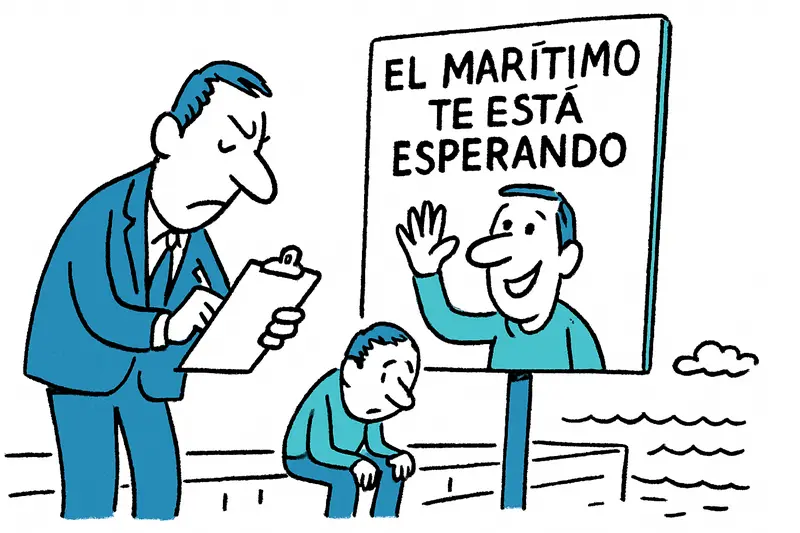
Reality check: Can an image campaign really save the Paseo Marítimo?
Abone launches the campaign 'El Marítimo te está esperando'. But is advertising enough? A reality check with everyday scenes, analysis, and concrete proposals.
Reality check: Can an image campaign really save the Paseo Marítimo?
Why marketing alone won't magically fix the promenade's problems
Main question: Is Abone's new campaign ('El Marítimo te está esperando. Brindamos por lo que vuelve') enough to bring people back permanently to Palma's Paseo Marítimo — or does it only address the surface?
In the late afternoon, when the lights at the Club Náutico slowly come on, joggers do their rounds, an older woman feeds pigeons near Moll Vell, and in the background a delivery scooter rattles across the cobblestones. That's how the Paseo looks on good days: mixed use, some visitors, but also many vacancies and too many 'closed' signs on shop windows that used to be buzzing past midnight.
The initiative from the association of bar and nightclub operators (Abone), supported by the employers' association CAEB, deliberately uses digital imagery from morning to night: sport, walks, culture, gastronomy, nightlife — a comprehensive picture meant to appeal to different groups. That's sensible, because the neighborhood can indeed be more than just partying. But advertising does not explain why it has become emptier.
The situation is not new: businesses suffered after the pandemic, then long construction phases took place along the waterfront — Who is Palma's new waterfront boulevard really for? — visitor flows changed and operating costs rose. All of this is present, but in the discussion it is often treated as a footnote. A campaign can spark curiosity and bring events — but it does not automatically fix business models.
What is often missing in the public debate: concrete data and timeframes. How many venues have actually closed permanently? Which spaces are vacant, which have been converted into apartments or offices for good? Without such figures the discussion remains an emotional topic — and emotions are hard to monetize.
Another blind spot is the neighborhood perspective. Local residents experience the Paseo differently than tourists: sidewalks, waste collection, nighttime noise and parking pressure are everyday issues, and residents around the Paseo Marítimo have demanded quick, visible measures. If marketing ignores these conflicts, there will be resistance — and that is counterproductive.
Practical measures that go beyond posting pretty pictures could look like this: temporary occupation of vacant spaces with pop-up cafés or cultural formats, coordinated traffic concepts for delivery vehicles, designated contacts for noise and waste issues, and tiered subsidies for small businesses that want to restart after a long dry spell.
Creating a digital calendar with a reliable program could also help: exercise classes, morning markets, film nights or early-evening concerts — times of day that attract visitors without violating nighttime quiet. Coordination between operators, the city and the police is not a luxury, but a basic prerequisite.
Economic incentives must not be limited to discount coupons. Tax relief for small business owners, discounts for renovations or grants for energy upgrades would be more effective in the long term than a short-term advertising push.
An everyday example: if on a Saturday morning the Paseo is full of cyclists, parents with strollers and older couples, visits often linger: a coffee, a short stroll, a purchase. That means: expand the daytime economy, not just promote the night economy. If that succeeds, bars and clubs will automatically benefit from continuous activation into the evening.
Transparency and measurability must be part of the campaign. Which indicators should increase — pedestrian numbers, revenues, number of open businesses? Who measures this, and how long will the evaluation run? Without such goals the action remains a nice slogan on social media posts.
The image campaign is an important building block. It can bring attention and short-term visitor flows. But it must not become a fig leaf behind which structural problems fade: high operating costs, vacancies, lack of long-term strategies for day- and night-time use, and insufficient involvement of residents.
Concrete roadmap: short term (3–6 months) pop-ups, weekly calendar and targeted resident dialogues; medium term (6–18 months) coordinated traffic and waste concepts, support measures for small businesses; long term urban integration of the Paseo into a 24-hour usage model with verified metrics.
Conclusion: Advertising is necessary, but not enough. If Abone and CAEB use the campaign as a starting point and at the same time agree on binding, transparent measures with the city and residents, then the Paseo Marítimo has a chance to become more visible and diverse. Otherwise the slogan may remain just a nice photo — and the promenade will stay too quiet for what it once was.
Frequently asked questions
Can a marketing campaign really bring people back to Palma's Paseo Marítimo?
Why has Palma's Paseo Marítimo become quieter in recent years?
What kind of changes would help the Paseo Marítimo in Mallorca long term?
What do residents around Palma's Paseo Marítimo complain about most?
Is Palma's Paseo Marítimo only a nightlife area?
What is the best time of day to visit Palma's Paseo Marítimo?
What events could help bring life back to the Paseo Marítimo in Mallorca?
What should people know before opening a business on Palma's Paseo Marítimo?
Similar News

More water than last year: Mallorca's reservoirs breathe easier
September rain refilled the Tramuntana's reserves: overall fill around 35 percent, Cúber at 40.42 percent, Gorg Blau at ...
Three Luxury Hotels in Banyalbufar: Lots of Money, Many Questions
A Danish investor plans three exclusive accommodations in Banyalbufar — including the historic Son Valentí. The announce...
2.1 tonnes of cocaine on sailing yacht off Spain's coast – a reality check for the coastguard
A 14-metre yacht was seized with 2.1 tonnes of cocaine. Who monitors the ports, how does the international hunt succeed ...

Heat Bonus in Mallorca: 100 Euros Extra for Outdoor Staff at MarSenses
MarSenses pays employees who worked outdoors in August an extra €100 as recognition. Lighter uniforms, reduced hours for...
Renovating in Mallorca: What You Really Can Do Without Neighbour Consent
Many think they can do whatever they want in their apartment. That's partly true — but only as long as structural elemen...
More to explore
Discover more interesting content

Can Cap de Bou

Townhouse Lleo 72
