
Why the Paseo Marítimo is deserted at night — and what Palma could do now
Why the Paseo Marítimo is deserted at night — and what Palma could do now
After the redesign the Paseo Marítimo often feels quieter in the evening than before. Relaxing rules alone won't solve the problem — it needs transport concepts, concrete help for businesses and more ideas for the night.
Why the Paseo Marítimo is deserted at night — and what Palma could do now
Guiding question: Can the Paseo Marítimo regain its nightlife without undermining the new municipal goals?
If you stroll along the promenade on a warm late-summer evening you notice it immediately: the trees are dense, the bike lanes are freshly marked, and yet the atmosphere sounds different from ten years ago. Instead of booming bass and groups of people, you now hear occasional voices, the clinking of glasses and, far off, the whir of a motorcycle. Some venues glow alone; others offer free shots just to lure guests inside.
The facts are known: During the redesign of the waterfront boulevard many parking spaces were removed — the number mentioned here is in the range of thousands of parking spots — and the space was oriented more towards pedestrians and cyclists. Buses and taxis run less regularly along the boulevard. The result: accessibility has suffered, and bars and clubs feel it directly. Some businesses have already closed, others report significantly lower revenues.
At the same time, just a few minutes away something else is happening: Santa Catalina is pulsing. The streets around Plaça del Pont and Carrer Sant Magí are full, Irish pubs like the Shamrock or Hogan’s have guests again, and along Andrea Doria people stroll while cars roll slowly by — often much pricier vehicles than before. This picture is not only a displacement effect; it also tells of a changed clientele and places that have repositioned themselves.
Critical analysis: There are three interwoven causes. First: accessibility. When parking disappears and public transport, taxis or night shuttles do not keep up, a large share of spontaneous visitors is lost. Second: offer and atmosphere. Smaller, traditional night venues cannot always keep up with the changed expectations of younger and wealthier guests. Third: economic pressure. Shorter opening hours, tourist spending declines and rising operating costs force operators into a dilemma.
What is often missing in the public debate: reliable numbers. How many businesses have actually closed? Which revenue losses are seasonal and which are permanent? Also rarely discussed: coordinated night transport offers, support packages for affected businesses and the question of what role municipal noise and licensing regulations still play. Where are the concrete plans from the city administration to bring the new quality of public space together with a lively, responsible night economy?
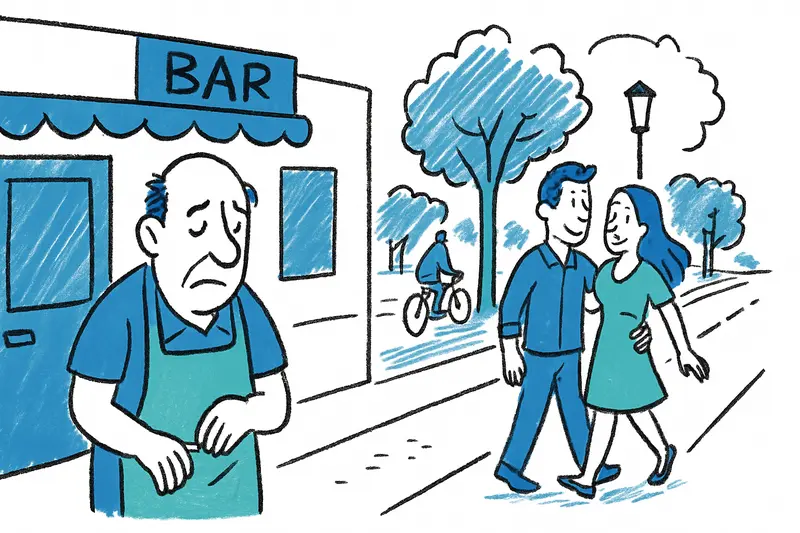
A small scene that makes the problem tangible: It is shortly after midnight, the promenade is lit green, in front of the bar Thalassa Juan stands and fiddles with his apron. 'We notice it,' he says bluntly. Cars park farther away, guests no longer bring their friends spontaneously — you have to plan, fetch someone. A few corners away, in Santa Catalina, is a postcard image: couples on the square, young people in designer shirts, waitstaff hurrying with full plates.
Concrete solution approaches that can be tested quickly: 1) Extend night lines and shuttle services targeted for weekend nights and link them to stops near key venues; 2) temporary parking zones nearby, for example staggered short-term parking spaces; 3) joint marketing actions for the Paseo with late-opening events, open-air concepts and sensitive sound rules; 4) financial incentives or flexible rental models for operators during transition phases; 5) coordinated taxi and ride-hailing stands as well as better lighting and signage for late visitors; 6) a round table of urban planning, businesses and neighborhoods that defines clear indicators for success or failure.
Some measures require no millions in investment, only coordination. Others need political courage: rethinking parking space, but also creating compensation. It is important that political decisions do not remain isolated — pedestrian zones and climate protection are valuable, but they must be manageable for the people who depend on the night economy.
Punchy conclusion: The Paseo Marítimo is not dead, it is undergoing change. Those who only count the trees and cut parking without rethinking accessibility and incentives should not be surprised if life moves elsewhere. Palma can be both: a beautiful, green promenade by day and a lively place at night. That requires pragmatic transport solutions, targeted support for operators and above all the willingness to experiment — before the memory of loud nights is anchored permanently somewhere else.
Frequently asked questions
Why does Palma's Paseo Marítimo feel quieter at night?
What changes to the Paseo Marítimo affect nightlife accessibility?
Where is nightlife most active near Palma’s waterfront right now?
What quick measures could help revive night life along the Paseo Marítimo?
Are there plans to improve night transport to the Paseo Marítimo?
How can Palma balance a green, pedestrian-friendly promenade with a lively night economy?
When is the best time to visit the Paseo Marítimo for a pleasant evening?
What safety and signage improvements are suggested for late-night visitors to Palma's waterfront?
Similar News
A Spanish Evening at the Auditorium: Guitar, Colors and the Sea in Palma
Rodrigo, Ravel, Albéniz — and a new work by the guitarist: the second subscription concert brings Spanish music in a lar...

When Palma Becomes a Zombie Zone: 'Mallorca Z', AI and the Thought Experiment with Side Effects
A Mallorcan lawyer built a strategy game over a weekend using AI that treats the island as the scene of a zombie crisis....

Learning to Wait: How Leisure Is Making Space Again on Mallorca
Waiting doesn't have to be lost time. A mild October day in Palma shows how small pauses slow down our lives — and what ...
Cala en Brut: Body in the Sea — a Fatal Autumn Day and What’s Missing
In Cala en Brut (Ciutadella) a man's body was recovered during storm Dana "Adam". Why do autumn storms in the Balearics ...
When the road is gone: Port de Valldemossa cut off after storm 'Adam'
After heavy rains a retaining wall gave way and two sections of mountain road MA-1131 became impassable. Why are rural p...
More to explore
Discover more interesting content

Can Cap de Bou

Townhouse Lleo 72
