
Labor dispute in medical transport: Eleven disciplinary proceedings after driver refusals
Labor dispute in medical transport: Eleven disciplinary proceedings after driver refusals
Drivers in patient transport refuse to operate new ambulances because these often require a C1 driving license. The Balearic Health Authority has initiated eleven disciplinary proceedings. Who will pay the price for decisions about vehicles and contracts?
Labor dispute in medical transport: Eleven disciplinary proceedings after driver refusals
Who bears responsibility when ambulances are heavier than the contracts?
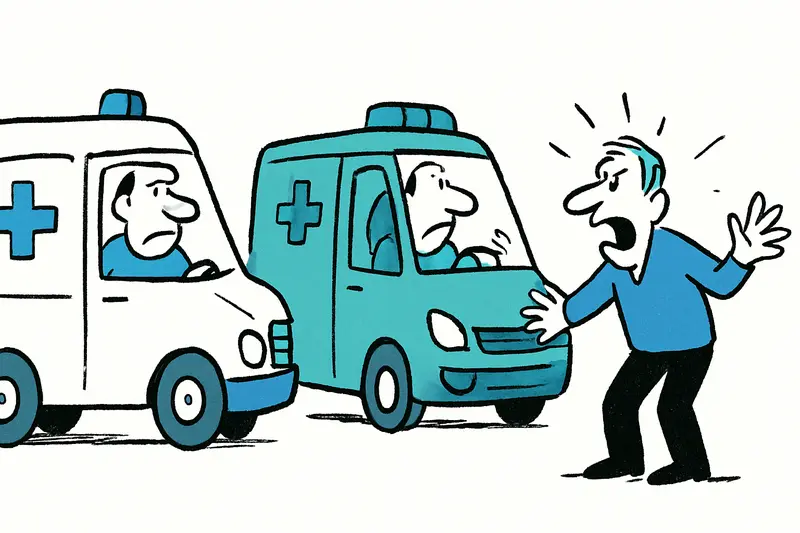
The situation appears banal at first glance: new ambulances stand in a depot, engines hum, blue lights gleam — and several drivers do not get in. The Balearic Health Authority has now opened eleven disciplinary proceedings against employees after many drivers announced they would not drive the new vehicles, a situation detailed in When new ambulances become obstacles: Who pays the price in Mallorca?.
Key question: Was the procurement of the new vehicles planned sufficiently to take personnel qualifications, contracts and occupational safety into account? Or was a technical decision simply made over the heads of those who transport people on the road every day?
The question is more than academic. In practice it means: Are there enough drivers with a C1 license on the island, how flexible are the duty rosters, and how does an authority react that opens disciplinary proceedings against employees who, from the drivers' point of view, are only defending their own safety and contractual rights? An authority can impose sanctions, but that does not solve the problem that emergency medical transport only works if drivers, vehicles and working conditions match each other, a challenge described in New ambulances, empty seats: How a drivers license shortage is slowing Mallorca's emergency services.
Critical analysis: The situation reveals a lack of coordination between procurement, personnel management and wage policy. Technical specifications appear to have been ordered without sufficient impact assessment: weight, equipment and the associated driving license requirements are fundamental factors for operational capability. On the other hand there is a rigid employment contract that apparently does not foresee that new vehicle types may require additional qualifications in the future. Responding with disciplinary measures now signals that the administration prefers conflict with the personal situation of employees instead of pragmatic solutions.
What is missing in the public debate: The discussion usually revolves around buzzwords like 'disciplinary proceedings' or 'strike', terms explored in Agreement in Medical Transport: Calm, but No Lasting Solution, but rarely about the technical details of the vehicles, the training gaps, the concrete strain on crews during night shifts or alternative concepts such as retraining, shift-based car pools or temporary allocation of lighter vehicles. Equally invisible is how the contracts are structured: Who pays for a C1 license, who organizes the refresher courses, and how quickly could such measures be implemented?
Everyday scene from Mallorca: On a cool December morning in Palma an older driver in his jacket stands next to a new white ambulance. The smell of diesel mixes with the sound of passers-by in the street. He looks at the paperwork and does not say much; colleagues discuss excitedly by the gate. It is not a dramatic protest with drums, but a sober, waiting group that wants to know: What changes for me today if I am called out to a job tomorrow?
Concrete solutions that should be discussed: First, a short-term personnel contingent of drivers who already hold a C1 license to bridge the gap. Second, a mandatory but financially supported training plan: employers or the administration should cover costs and time for refresher training. Third, examine technical measures: Can vehicles be modified or parts reconfigured to reduce weight, or are alternative models with similar equipment but lower weight available? Fourth, an independent mediator between unions and the health authority to set binding deadlines for negotiations and concrete interim steps. And fifth: transparent communication to the public — people who understand why an ambulance is not being used react more calmly than when faced with vague hints of 'strike' or 'sanctions'.
Pointed conclusion: Disciplinary measures are a political and administrative club, not a repair method. On Mallorca we must not allow bureaucratic severity to replace practical solutions. It is not just about vehicles and driving licenses, but about the reliability of emergency care. Quick, pragmatic steps — retraining, technical adjustments, clear responsibilities — would be more sensible now than a lengthy legal dispute. Otherwise what is at stake is not only an image, but whether a patient in the middle of the night will really get a suitable driver.
Frequently asked questions
Why is there a dispute over ambulance drivers in Mallorca?
Do ambulance drivers in Mallorca need a C1 licence for the new vehicles?
Can disciplinary proceedings solve the ambulance problem in Mallorca?
What would help Mallorca’s emergency transport service right now?
How does the ambulance dispute affect patients in Mallorca?
Was the new ambulance fleet in Mallorca planned properly?
What is the situation in Palma’s ambulance depots?
Why are Mallorca health authorities under pressure over ambulance staff?
Similar News
Released with Conditions: The Plus Ultra Suspicion and a Mallorcan Finca as Residence
A Dutch entrepreneur, sought in connection with the Plus Ultra case, was extradited to Spain after his arrest in Germany...

Haute Nuit in Puerto Portals: Fashion, Art and Indulgence by the Water
On October 2 the Lobster Club in Puerto Portals will be transformed into a stage for curated fashion, art and culinary e...
Magaluf: Watchtower Alarm – Lifeguards Pull Unconscious Beachgoer from the Water
After a drama in the late afternoon, two lifeguards at Magaluf beach rescued an unconscious 44-year-old man. He was stab...

Turquoise in the City: How dangerous is the color play of the Sa Riera?
The Sa Riera in Palma suddenly turned turquoise — a pretty motif, but behind the effect lies a discharge of saline waste...

Jeckliner at Sunnesching: Cologne spirit sets sail from Palma
In September 2027 the Mein Schiff 2 briefly becomes a floating carnival stage: four days with Cologne bands, comedy and ...
More to explore
Discover more interesting content

Can Cap de Bou

Townhouse Lleo 72
