
Pearl oyster off Mallorca's coasts: How the warm sea is changing the island
Pearl oyster off Mallorca's coasts: How the warm sea is changing the island
The pearl oyster Pinctada radiata from the Red Sea is spreading further into the western Mediterranean. A study by IATS found larvae at 132 sampling points in eight countries. What does this mean for Mallorca's coastal life — and what steps are needed now?
Pearl oyster off Mallorca's coasts: How the warming sea is changing the island
The question we must ask: Is the arrival of a small oyster harming our marine life more than we want to admit?
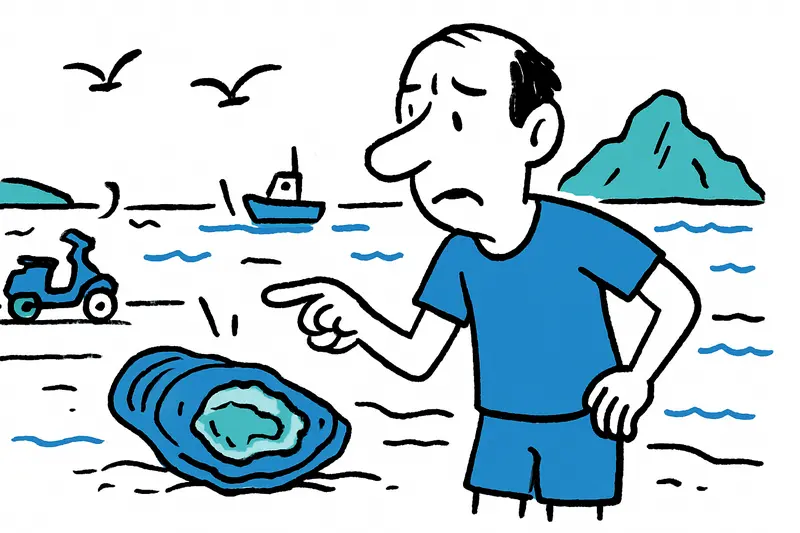
At Palma's Paseo Marítimo, where scooters hum through the heat and seagulls circle above the fishing boats, you notice in only a few places that something fundamental is changing beneath the surface. The water is warmer, dives are shorter, conversations with the fisherman on the quay are briefer — he says the shellfish are different, the catches thinner. Such everyday scenes set the tone for the question climate and marine biologists have been asking for years: How does a warmer Mediterranean influence the composition of our coastal fauna?
What it is specifically about: the pearl oyster Pinctada radiata, originally native to the Red Sea, found access to the Mediterranean via the Suez Canal already in the 19th century. New measurements from the Instituto de Acuicultura Torre de la Sal (IATS) now show that larvae of this species were detected at 132 sampling points in eight Mediterranean countries. The institute describes a system that can detect the presence of these larvae years in advance — an early-warning tool we should take seriously.
Why this is relevant for Mallorca? The western Mediterranean, which includes the Balearic Islands, is warming significantly faster than the global average. Local temperature peaks of up to 33 °C have already been recorded, for example around the island of Sa Dragonera. Such conditions favor warm-loving species — including the pearl oyster. Where it establishes itself, it competes with native mollusks, colonizes shells and rock surfaces, and can alter habitats that are important for juvenile fish and seagrass beds.
Critical analysis: the IATS data are a warning sign, but they do not provide a complete picture of the consequences. The detection of larvae indicates that a species has entered the system — not necessarily how strongly it will establish itself ecologically. Missing information in the public discourse includes: How do dense settlements of Pinctada radiata practically affect shrimp, sea urchin, or mussel stocks? What roles do ship traffic, aquaculture, and marine currents play as transport pathways? And: what costs arise when shellfish encrust structures, nets, or boat hulls?
Another blind spot: local political responses. On the beaches of Cala Mayor or Port de Sóller, bathers tend to discuss sun umbrellas rather than biological invasions. Authorities often react only when visible colonizations cause problems. Preventive concepts — from ballast-water-free regulations to targeted support for monitoring popular bathing spots — are missing or insufficiently funded.
Concrete solutions that make sense now: First: expand monitoring networks along Mallorca's coasts and integrate the data into the existing IATS system so that larval spread can be detected early. Second: tighten controls on ballast water and fouling on cargo ships that regularly travel between the Suez region and the Mediterranean. Third: local citizen-science programs — divers, fishers, and boat operators can systematically report observations; such information is often the fastest early warning.
Fourth: targeted ecological interventions where dense colonies form — removing oysters from artificial structures without causing further damage. Fifth: long-term measures against warming itself, which go far beyond the island: energy efficiency, reduced CO₂ emissions, and also regional measures such as coastal greening and protection of seagrass meadows, which can help stabilize ecosystems.
What is often missing in public debate: clear priorities and responsibilities. Research results must be translated directly into actionable packages for municipalities, port authorities, and conservation agencies. Otherwise it remains headlines — and we only notice the impacts when nets are overgrown or local shellfish industries suffer.
Everyday example: on a morning round at the Santa Catalina fish market it is striking how little the topic is discussed. Sellers complain about variable catches, holidaymakers ask about sunbathing spots. Visible information work — boards at harbors, concise notices in tourist centers — could help sharpen understanding and improve reporting of sightings.
Conclusion, pointed: the pearl oyster is not a singular curiosity to be ignored. Its advance is a symptom of a changing sea — an indicator telling us that temperature, traffic, and protection measures interact. Those who love Mallorca's beaches, coves, and harbors should not only think about sun umbrellas, but about a connected, forward-looking coastal management. Otherwise not only will the water be warmer soon — the problem will be bigger, too.
Frequently asked questions
How is the warming Mediterranean affecting Mallorca's marine life?
What is the pearl oyster Pinctada radiata and why is it appearing around Mallorca?
Could pearl oysters affect Mallorca’s native shellfish and habitats?
What role do monitoring and early warning play in managing pearl oysters around Mallorca?
What steps can Mallorca take to prepare for oyster invasions?
How can residents and visitors help track pearl oysters around Mallorca?
Are there specific Mallorca beaches where oyster invasions are discussed by locals?
What should travelers know about Mallorca's sea conditions in a warming climate?
Similar News
After Storm in Santa Ponsa: Four Boats Damaged — Who Protects Our Coast?
Overnight, strong gusts in Santa Ponsa damaged or sank four boats. The incident reveals gaps in inspections, a risk of m...

Demolition or Opportunity? The Casetas on the Costa des Teatre — What Palma Really Must Decide
The city plans to redesign Plaça Major — but the small wooden huts on the Costa des Teatre are at stake. An inventory wi...

Douglas scion shakes up Deià's short film festival — behind the camera
Dylan Douglas worked in Deià on a one-minute short film about the solar eclipse and handled the editing. For the island ...

He disappeared after a bike tour near Campos: A reality check on the case of Hans Peter Harke
Since 31 July there has been no trace of 72‑year‑old Hans Peter Harke. Drones and a helicopter searched unsuccessfully a...

Morning Light and Half-Shadow: Partial Lunar Eclipse over Mallorca on 28 August
In the early hours of 28 August the Earth moves in front of the full moon: a partial lunar eclipse will be visible from ...
More to explore
Discover more interesting content

Boat Tour with BBQ along Es Trenc Beach

Private transfer from Mallorca Airport (PMI) to Pollensa
