
Excavators, Terraces and Construction Noise: Peguera Between Renewal and Patience
Excavators, Terraces and Construction Noise: Peguera Between Renewal and Patience
Peguera awakens: cafés and shops reopen, but excavators and jackhammers shape daily life. How much construction can the resort tolerate — and who bears the burden?
Excavators, Terraces and Construction Noise: Peguera Between Renewal and Patience
How much construction can a holiday resort tolerate before the season suffers?
On Peguera's boulevard the sound of espresso machines is once again mixed with the rattle of diesel generators and the high-pitched clatter of jackhammers. Early guests sit on terraces, cups clink, waiters put chairs in the sun. At the same time, barriers line the promenade and construction vehicles work on the road — visible signs that the municipality is investing heavily in the town's fabric this year.
The facts are clear: according to a municipal statement, Calvià has allocated around €3.25 million for renovation and beautification measures in Peguera. The goal is a more modern boulevard, better access to the coves and, in parts, renewed infrastructure. On paper this sounds good to employees in shops and many entrepreneurs, a point covered in Renovation in Peguera: The Boulevard Gets New Life. In reality it initially means construction sites, dust and restricted walkways.
The central question is simple and uncomfortable: who pays the price for the improvement — the guests who expect a brief period of quiet, or the people who live and work in Peguera? With hotels already opening and shopkeepers ending their winter break earlier, expectations collide. Some businesses, such as the Dream Boutique on the boulevard, have already put goods in their windows and opened their doors; others still sit under a canopy of tarps and tools. Earlier reporting described the phased works and timelines in Peguera between construction dust and hope: Can the boulevard really be finished by April?.
The construction work is being carried out in sections, the town hall says, and is supposed to pause during peak times. This local push is part of a wider building trend on the islands discussed in Construction Boom in the Balearic Islands: Opportunities, Noise and the Tricky Road Ahead. That's a good approach, but it's not automatically enough. During my site visit I noticed that information for passersby is only sporadic — a yellow construction fence, a small sign with a deadline, but hardly any concrete wayfinding for pedestrians or audible notices about when particularly noisy work will take place. People with prams or bicycles divert onto the street or take detours.
What is missing from the public debate are the small practical problems: how deliveries for cafés should be organized when loading zones are absent; how older residents can access shops; how the promenade's cleanliness will be maintained during the works. Also little discussed are noise protection measures and compensation for businesses when a terrace is barely usable over a weekend because of construction.
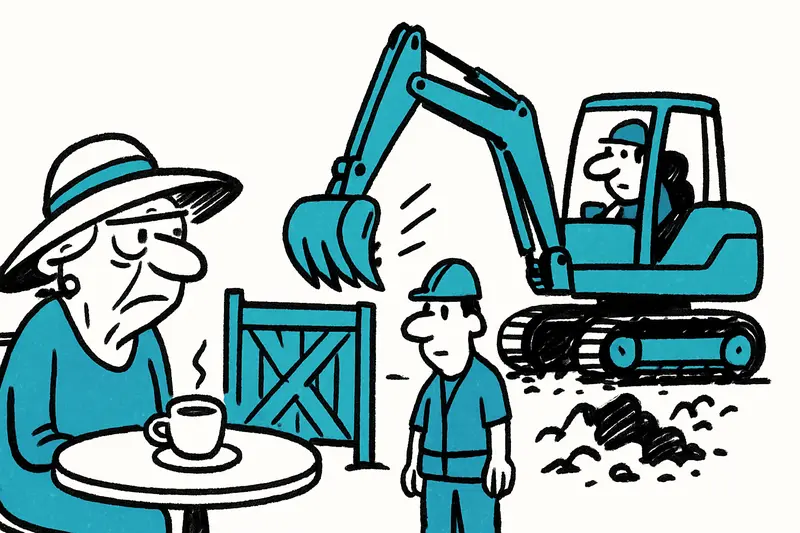
An everyday scene: in the morning in front of Café Pacific Bay an older woman in a sun hat sits with a small notebook on her lap. She turns the pages, takes a sip of coffee and looks toward Playa Palmira, where the former fish restaurant S’Oblada stands empty and space for a new beach club has been announced. Machines can be heard in the distance; at the counter of the adjacent bar a young employee is arranging cakes in the display case. Moments like these show how contradictory renewal and disturbance can coexist.
If Peguera wants to make the work sensible, there are concrete approaches that achieve more than just pause schedules. First: a publicly accessible construction phase plan — published online and posted at central points in town — with clear information on working hours and expected noise peaks. Second: restrict the loudest activities to set time windows on weekdays to protect weekends and afternoons when guests want to sit outside.
Third: visible noise barriers and temporary pedestrian routes instead of improvised detours. Fourth measure: a municipal contact person available daily as a liaison for businesses and residents, and short-term compensatory measures for enterprises that lose revenue due to construction phases — for example discounted parking or supported advertising during the pre- and high season.
Technically sensible steps should not be missing: regular wet sweeping to bind dust, fixed delivery times coordinated with hotel arrivals, and coordinated construction logistics so that multiple heavy machines are not working loudly on adjacent sections at the same time. Small measures, big effect: a mobile scent dispenser in front of open cafés? No, that's not a joke — well-placed green plants and clean swept entrances give visitors a good feeling despite the construction.
Another point rarely mentioned: transparency toward guests. Many vacationers understand construction noise if they know a quiet period is scheduled in the afternoon or that quieter sections are guaranteed on weekends. A simple information sheet in hotels or a notice at reception can reduce tensions.
In the end it matters less how fast the excavators run than how the burden is distributed and mitigated. Peguera has the chance to present a more attractive image after the season — provided the town hall, businesses and construction companies better coordinate facilities, times and communication. Without this coordination effort the impression threatens to be that the investments mainly brought one thing: more noise.
Conclusion: construction sites are part of renewal. What matters is organizing them in a socially acceptable way. Those who push the pace now must also explain, compensate and show consideration. Otherwise the spring will be remembered only for the rattle of machines, instead of the scent of freshly brewed coffee on the promenade.
Frequently asked questions
Is Peguera noisy because of construction work this season?
How are the boulevard works in Peguera affecting cafés, terraces and pedestrians?
What is being renovated in Peguera, Mallorca?
When is the best time to visit Peguera if you want to avoid construction disruption?
Are the beaches and coves in Peguera still easy to reach during the works?
How can hotels and businesses in Peguera deal with construction season?
Are there noise protection or compensation measures for businesses in Peguera?
What should visitors know before staying near Playa Palmira in Peguera?
Similar News

Magaluf: Watchtower Alarm – Lifeguards Pull Unconscious Beachgoer from the Water
After a drama in the late afternoon, two lifeguards at Magaluf beach rescued an unconscious 44-year-old man. He was stab...

Turquoise in the City: How dangerous is the color play of the Sa Riera?
The Sa Riera in Palma suddenly turned turquoise — a pretty motif, but behind the effect lies a discharge of saline waste...

Jeckliner at Sunnesching: Cologne spirit sets sail from Palma
In September 2027 the Mein Schiff 2 briefly becomes a floating carnival stage: four days with Cologne bands, comedy and ...
Finally Home: Mike and Leyla Heiter Buy Villa with Sea View in Mallorca
The reality TV couple Mike and Leyla Heiter have bought a house in Mallorca with a roof terrace and sea view. An Instagr...

Arrest after series in Palma: Who protects apartments from repeat offenders?
The National Police arrested a man in Palma who investigators say may have broken into several apartments. In one incide...
More to explore
Discover more interesting content

Can Cap de Bou

Townhouse Lleo 72
