
When a Beach Stroll Becomes Risky: Pickpocketing in Sóller and Port de Sóller Under Scrutiny
When a Beach Stroll Becomes Risky: Pickpocketing in Sóller and Port de Sóller Under Scrutiny
In Sóller and Port de Sóller, pickpocketing incidents are increasing — even in broad daylight. A critical assessment with practical protective measures for locals and visitors.
When a Beach Stroll Becomes Risky: Pickpocketing in Sóller and Port de Sóller Under Scrutiny
Key question: Why do guests and locals in Sóller increasingly feel watched — and how large is the problem in reality?
Anyone who gets off at the Port de Sóller harbor in the morning hears the tram bell, smells fresh coffee from the bar across the way and already sees the first market stalls being set up. In precisely those places where people gather — the terminus, the fishermen's quay, market alleys — visitors are increasingly reporting incidents: pickpocketing, brazen attempts to snatch bags and subtler tricks that use distraction. In a recent case, a woman on the promenade was attacked when two men tried to pull her handbag away; the scene ended with the perpetrators fleeing swiftly as passersby reacted to the cries.
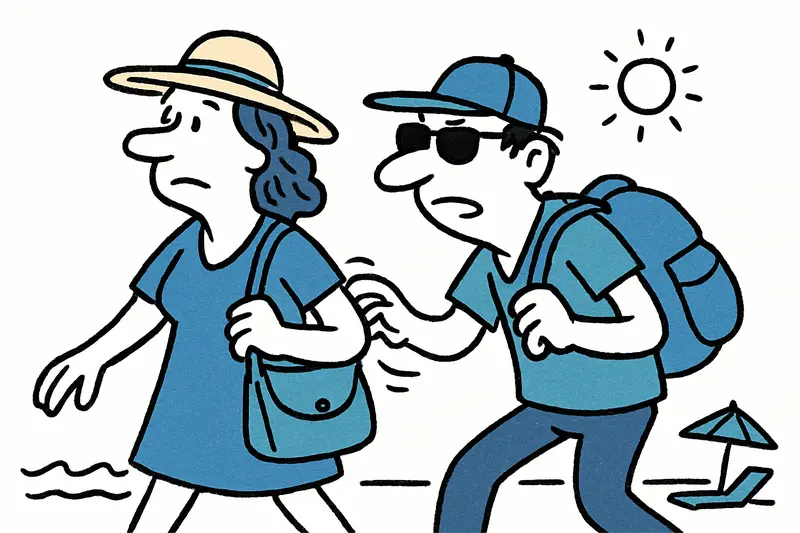
Concrete observation: These are not just isolated, aimless thieves. Several eyewitness accounts and reports from shopkeepers speak of well-organized groups that operate specifically on market days and at tourist hubs, similar to pickpockets stopped in Port d’Andratx. Notably, perpetrators often blend in as visitors — wearing backpacks, sunglasses, beach towels — which makes it easier for them to merge into crowds. The local police regularly remind people to be cautious, especially on the market days described, as illustrated by the Guardia Civil intervening on the promenade in Porto Cristo.
Critical analysis: Public debate often focuses on individual incidents, but too rarely on systemic questions. We hear indications of organized gangs, yet there is a lack of transparency about whether targeted investigations and cross-border cooperation are underway, as highlighted by arrests and deportation in Porto Cristo. Prevention is also handled inconsistently: information signs exist, but often only in Spanish or Catalan; in an area with ever-changing tourist groups, multilingual notices would be more useful. And: a more visible presence of law enforcement at critical points is missing on many days.
What is missing in the discourse: The debate narrows to travel safety tips. Far more important would be an open discussion of recurring patterns — who is behind the gangs, how do perpetrators arrive in the towns, and how effective are case follow-ups and prosecutions? Another rarely discussed topic is victim support. Many victims describe losing documents, long paperwork and the feeling of being left alone.
Everyday scene on the island: A Thursday morning at Plaça de la Constitució in Sóller — market tables with olives, fresh oranges, the clatter of wooden crates, retirees playing cards, families with prams. In these moments a short shove, an excuse from behind, and the wallet is gone. Such scenes are small, quick — and have far-reaching consequences for those affected.
Concrete solutions: First: targeted patrols on market and harbor days, visible and in plain clothes — this deters gangs and helps identify patterns. Second: information campaigns in multiple languages at the most important points (train stations, ferries, hotels), combined with simple graphics that show protective behaviors, a concern echoed by vendors warning of recurring pickpocketing in s'Hort del Rei. Third: cooperation among shopkeepers, tourism providers and the municipality — for example, an emergency reporting network for restaurateurs and shop owners to report suspicious people. Fourth: secure lap straps or lockable storage at busy spots where day visitors briefly set down their bags. Fifth: better data — public figures on offenses and clearance rates would help evaluate measures.
Practical tips for walkers: wear bags at the front, keep money in inner pockets or money belts, turn backpack zippers toward the body, do not leave valuables visible on the beach. And: be suspicious of sudden offers of help — many distraction maneuvers begin politely.
A restaurateur in the old town reports guests arriving with empty wallets on market days; another regular says he has been coming for years and enjoys the area but wants authorities and the municipality to take stronger action against organized groups. Such voices show that the balance between hospitality and safety is a local issue that requires practical solutions.
Pointed conclusion: Sóller remains charming, but normality must not lead to blindness. Not only travelers must take care — institutions are also called upon: multilingual prevention, visible presence and thorough investigations. Only then can a string of unfortunate individual cases become a safe place again for locals and visitors.
Frequently asked questions
Is pickpocketing a real problem in Sóller and Port de Sóller?
Which areas in Mallorca are most exposed to pickpocketing in Sóller?
When is the risk of pickpocketing higher in Sóller and Port de Sóller?
How can I protect my bag and wallet in Mallorca’s busy tourist areas?
What should I do if my wallet is stolen in Sóller?
Are there police patrols in Port de Sóller on busy days?
Why do pickpockets blend in so easily at Mallorca markets?
Is Sóller still worth visiting despite the pickpocketing reports?
Similar News

More water than last year: Mallorca's reservoirs breathe easier
September rain refilled the Tramuntana's reserves: overall fill around 35 percent, Cúber at 40.42 percent, Gorg Blau at ...

Three Luxury Hotels in Banyalbufar: Lots of Money, Many Questions
A Danish investor plans three exclusive accommodations in Banyalbufar — including the historic Son Valentí. The announce...
2.1 tonnes of cocaine on sailing yacht off Spain's coast – a reality check for the coastguard
A 14-metre yacht was seized with 2.1 tonnes of cocaine. Who monitors the ports, how does the international hunt succeed ...

Heat Bonus in Mallorca: 100 Euros Extra for Outdoor Staff at MarSenses
MarSenses pays employees who worked outdoors in August an extra €100 as recognition. Lighter uniforms, reduced hours for...
Renovating in Mallorca: What You Really Can Do Without Neighbour Consent
Many think they can do whatever they want in their apartment. That's partly true — but only as long as structural elemen...
More to explore
Discover more interesting content

Can Cap de Bou

Townhouse Lleo 72
