
Pilot fell ill over the sea: Why the return to Liverpool raises more questions than answers
Pilot fell ill over the sea: Why the return to Liverpool raises more questions than answers
An EasyJet flight bound for Fuerteventura turned back minutes after departure when a pilot suddenly fell ill. What happened, how safe is the system, and what is missing from the discussion?
Pilot fell ill over the sea: Why the return to Liverpool raises more questions than answers
Key question: Was the quick turnaround simply good pilot practice — or does the incident reveal gaps in crew health management and passenger information?
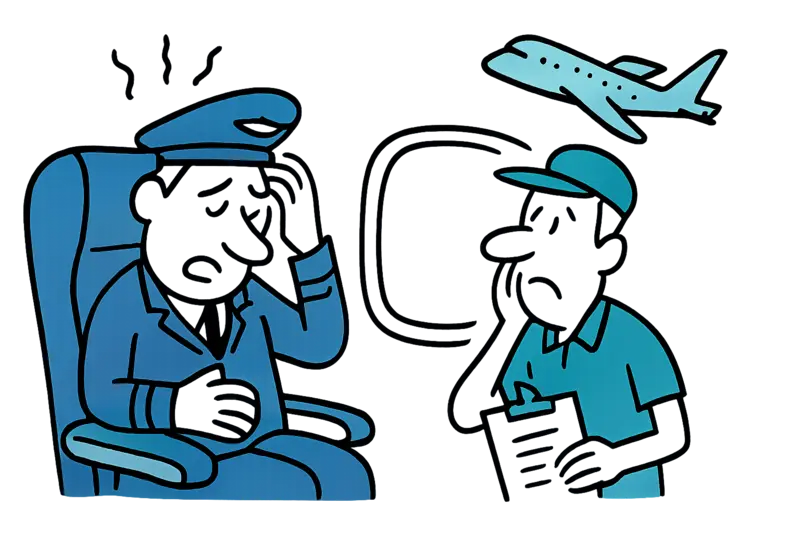
On a cool morning in early October, a holiday flight departed for the Canary Islands — and turned back shortly after takeoff. According to available flight data, it was an EasyJet charter with a flight number in the U23385 series; the departure was from Liverpool and the destination was Fuerteventura. At roughly 10,360 meters altitude, one of the two pilots suddenly reported health problems. The remaining pilot decided, he says, to return to the departure airport. The aircraft touched back down about 45 minutes after takeoff; a few hours later the flight was able to continue. Passengers reached the island about two hours late.
First of all: a plane turning back when crew members are incapacitated is not a scandal but a safety mechanism. News coverage of incidents, such as an aborted takeoff in Basel, shows how situations play out for passengers.
Let’s start with the obvious: on the island, at Son Sant Joan airport in Palma, the routine at the gate is often the same. Rolling suitcases clatter, coffee machines gurgle, ground crews push trolleys by. Families speak quietly around the departure boards when flights are diverted or delayed, as in a Eurowings go-around in Palma. Scenes like this show that a flight turning back is abrupt and stressful for passengers — connecting flights are missed, holidays start late. Here on Mallorca, many fans of the island expect two things from such announcements: clear information and reliable support.
Technically the procedure is clearly regulated: a two-person cockpit crew is standard for routine flights. If one member is unable to continue, whether due to illness or other reasons, the remaining crew must weigh up the situation, flight time and alternate airports. The priority is clear: safety over punctuality. Nevertheless, incidents like this show that practice becomes more complicated when it comes to prevention and transparency.
What is often missing from the public debate is a sober look at causes and what could be prevented. Do airlines invest enough in their employees' health? How are duty rosters structured — do tight schedules and long shifts increase risks? In addition, airlines’ reporting policies are patchy: passengers rarely find out whether a return was motivated by medical, technical or organisational reasons. The information gap is filled by the internet with speculation; for example, reports about an alleged fake captain on wet-lease flights have undermined trust and created unnecessary fears.
Practical suggestions that could have immediate effect are obvious: first, regular independent health checks for cockpit and cabin crew tailored to shift work and long-term stress. Second, more flexible staffing plans that enable or simplify on-site backup personnel — especially at hubs and during peak times. Third, transparent information obligations: airlines should publish standard protocols for how passengers are informed and looked after in the event of crew failures. Fourth, improved cooperation between airports and airlines so that medical care, replacement crew assignment and transfer information can be handled more quickly.
From Mallorca’s perspective: we have airports here that handle many short- and medium-haul flights every day. A functioning emergency management system at airport level means fewer cancelled connections, fewer families waiting at the gates in Palma or Son Sant Joan and less stress in cafés where travellers discuss their delayed plans. Small example: if the screen read “Departure delayed — crew medical,” staff at the gate could immediately provide information, childcare facilities or meal vouchers could be organised more quickly.
In the long term, working conditions in aviation need scrutiny. Staff shortages in recent years have forced airlines to operate with particularly thin crews during peak seasons. Regulation cannot concern only technical safety; it must also include working and health conditions. Authorities could set mandatory rest periods, health screenings and reporting duties — accompanied by sanctions for systematic breaches.
Another point: training and simulation. Captains train for handling crew incapacitation, but real situations are emotionally stressful. Frequent exercises with realistic procedures, including communication with passengers and the media, would help reduce uncertainty. For Mallorca visitors that would be noticeable: better informed crews who explain clearly and empathetically what is happening and what options exist.
Conclusion: the return to Liverpool was plausible from a safety perspective. Yet the incident is a reminder that aviation is not only about technology but a social system with people who work, fall ill and must make decisions. We need better prevention, more open communication and pragmatic procedures on the ground. For the people who order their coffee at Palma airport in the morning and hope to get to the sea on time, that makes the difference between an annoying delay and real holiday stress.
In short: the decision was sound, but preparation was not good enough. Those who start or land in Mallorca should be able to expect from the parties involved that in crew emergencies there is not only immediate action, but also transparent explanations and humane care.
Frequently asked questions
What happens if a pilot falls ill during a flight?
Are flights to Mallorca ever turned back due to crew health problems?
How can delays or turn-backs be made less stressful for Mallorca travelers?
How should airlines inform passengers when crew issues cause delays or changes?
Do Mallorca's airports have emergency management for crew illnesses?
What long-term measures could improve aviation safety and working conditions affecting Mallorca flights?
What should travelers do to prepare for delays when visiting Mallorca?
How is crew training designed to handle incapacitation and communicate with passengers?
Similar News

O'zapft is! Island Oktoberfest in Santa Ponca: Ten Days of Bavaria on Mallorca
From October 23 to November 1, Santa Ponca will turn blue and white again: Hofbräu beer, Schuhplatteln, a dirndl contest...
Sudden end at the gate: A 70-year-old dies at Palma airport — what now?
A 70-year-old French tourist collapsed at the gate of Palma airport and died despite resuscitation. Who is responsible f...

Rafa Nadal brings tennis greats to dinner in Port Verd – an evening at Sa Punta
For the anniversary of his academy, Rafa Nadal invited international tennis stars to his favourite restaurant on the eas...

Affordable Haircut on Vacation: Why More Germans Are Going to the Hairdresser in Mallorca
A salon visit in your suitcase: low prices and high quality attract holidaymakers to the island – a small boost for loca...

Eight Years After the Torrentada: Can the New Bypass Really Protect Sant Llorenç?
Work on the Sant Llorenç bypass is half finished. Are the measures — larger culverts, 200 metres of walls, 500 tonnes/s ...
More to explore
Discover more interesting content

Can Cap de Bou

Townhouse Lleo 72
