
Who will bake the bread tomorrow? Ca'n Xiscos, Pina and the question of the village center
Who will bake the bread tomorrow? Ca'n Xiscos, Pina and the question of the village center
Pina's only bakery is up for sale. For many residents it is more than a shop — it is a meeting place and a social network. Who will take over, and what would need to happen to keep bread in the village?
Who will bake the bread tomorrow? Ca'n Xiscos, Pina and the question of the village center
Guiding question: Who will ensure that people in Pina continue to get fresh bread every day — and will the place remain a meeting point for older neighbours?
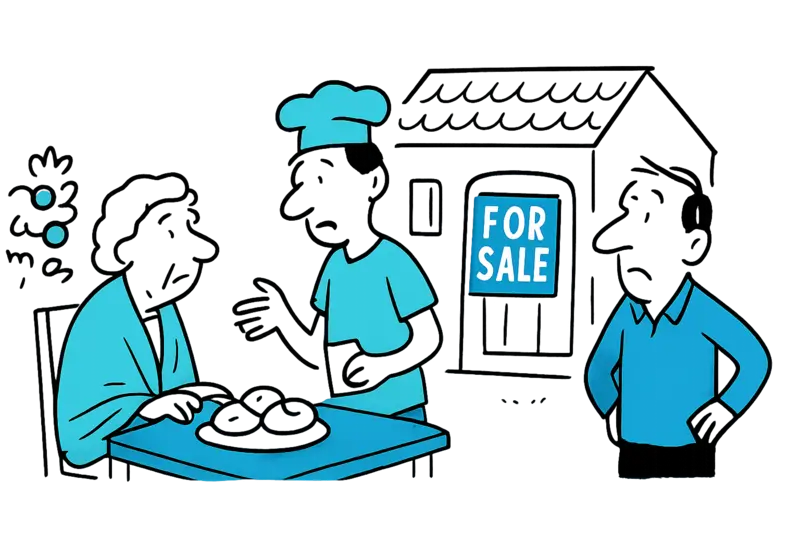
On a morning in front of Pina's small church the bells ring over the square, a tractor drives along the dusty Carrer Major, and behind the orange trees you can smell freshly baked bread. That is a normal day in the village — as long as Ca'n Xiscos is open. The establishment, which has an obvious notice on the plaza looking for a new operator, is appreciated by many residents not only as a bakery but as a social meeting point.
The facts are simple: a sign on the façade advertises the transfer of the business, the price is noted (29,000 euros), and interested parties can find a phone number. People have been baking bread here for Pina since 1910; more recently the café with its terrace has become a place for games of truc, small concerts and community events, as in Staying Instead of Returning: How Anett Keeps Playa de Palma Together with Her Sun Bakery. Operator Biel Sastre currently runs the business and complains about high charges and rising costs — an issue explored in When Rent Eats More Than Profit: Palma's Small Shops on the Brink — he has decided to sell the place.
Critical analysis: The problem is not a personal failure of a single hostelry but the convergence of several structural factors. In Pina, as in many small communities, the population is aging, fixed costs for businesses are rising, and regulatory and fiscal burdens weigh heavily on small entrepreneurs. Added to this is the centralization of services: supermarkets and large bakeries in the surrounding area are often more efficient and push small providers out of the market.
What is often missing in public debate is the perspective on the function of such shops as infrastructure: a bakery in a tiny village is not just a commercial enterprise, it fulfills supply duties. It is a point of contact for older people without a car, a meeting place after a doctor's appointment, a spot for a short chat — and thus part of the social fabric. Discussions usually concentrate on tourism, construction projects or tax revenue, and less on how to secure basic services in the island's interior.
An everyday scene: on a cool morning Maria, 78, sits with a blanket over her knees on the terrace of Ca'n Xiscos and orders two ensaimadas. She tells the young baker apprentice about the old days, the farmer next door brings fresh oranges, and two men loudly discuss the outcome of yesterday's truc tournament. If the café closes, such routines disappear — and with them a measure of stability in village life.
Concrete solutions that could be tested in Pina: 1) Cooperative model: residents or local businesses take over jointly and secure wage costs through volunteer work or shared shifts. 2) Municipal interim use: the municipality or island council can take on the business temporarily until a long-term buyer is found. 3) Support package for rural suppliers: tax relief, simplified accounting for small hospitality businesses and subsidies for energy and goods costs. 4) Mobile baking stations: a small oven on a delivery van for certain days — not a replacement, but a bridge. 5) Partnerships with bakeries in Algaida: supply contracts with guaranteed minimum quantities in exchange for subsidized delivery costs.
Practicable approaches are often hybrids: a municipality could provide transitional funding while a cooperative gets established. It is important that solutions are low-threshold; many owners in such places neither have the time nor the resources for complex application procedures. A simplified support process, accompanied by an advisory office in the nearest small town, could help.
The role of politics here is not only fiscal: planning is needed that treats small supply businesses as part of basic public services. That does not mean permanently subsidizing individual businesses, but creating networks: regional suppliers, apprenticeship places for bakers in the island's center, such as Thomas' Bakeshop: Handmade Bread with Heart in Santa Catalina, flexible licensing rules for pop-up sales. This can reduce fixed costs and increase the attractiveness of the business for a new operator.
Some objections are valid: can villages shoulder such burdens permanently? Can a profitable business model be created for a single local bakery? Answers vary, but one thing is clear: inaction means people will have to travel farther — for example to Algaida — or rely on delivery services. Both weaken local togetherness.
Punchy conclusion: Ca'n Xiscos is more than a property for the sale price of 29,000 euros — it is a pillar of village life. If the municipality and the region ignore the importance of places like this, Pina will lose not only a source of fresh bread but a piece of community spirit. Now is the moment for pragmatic local solutions: a cooperative, municipal bridge financing and simplified aid would be enough to give the village a chance to keep its bakery heart. If nothing happens, the last question will be who collects the last loaf in the morning — and where the old people will then stand to still see one another.
Frequently asked questions
When is Mallorca's best time to visit for warm, sunny weather?
Is the sea suitable for swimming in Mallorca throughout the year?
What should I pack for a trip to Mallorca?
What are popular outdoor activities to do in Mallorca?
Are there beaches in Mallorca that are good for families?
How easy is it to travel between towns in Mallorca without a car?
What language basics help when visiting Mallorca?
What should I know about the weather and packing for Mallorca's shoulder seasons?
Similar News
Fall in the Torrent de Pareis: Who Protects Hikers?
A hiker fell in the Torrent de Pareis from about three metres and was airlifted to Son Espases. Key question: Are warnin...
Flu season in Mallorca: Why getting vaccinated now is wise
Flu vaccinations have been available in the Balearic Islands since October 19. Anyone in Palma who smells roasted chestn...
Blue Shark Ashore: What the Incident on Menorca Means for Our Beaches
A roughly two-and-a-half-metre blue shark was spotted near Son Parc and Arenal d’en Castell. Rescue teams acted quickly ...

Mallorca's Gastro Night: Awards for Traditional Bakers, Top Chefs and Island Favorites
At the fourth edition of the Premis Gastronòmics, around 1,000 guests celebrated the island's cuisine on Palma's seafron...

Eight hours in the air, no destination: What the Ryanair odyssey says about our trust in flight schedules
A Ryanair flight from Alicante to Newquay circled, landed in Dublin, attempted Bristol — and returned to Alicante. Why d...
More to explore
Discover more interesting content

Can Cap de Bou

Townhouse Lleo 72
