
Fall in the Torrent de Pareis: Who Protects Hikers?
Fall in the Torrent de Pareis: Who Protects Hikers?
A hiker fell in the Torrent de Pareis from about three metres and was airlifted to Son Espases. Key question: Are warnings and rescue capacities on Mallorca still sufficient?
Fall in the Torrent de Pareis: Who Protects Hikers?
Key question: Are the information, markings and rescue capacities in the Tramuntana mountain range sufficient to allow people to safely pass through demanding gorges like the Torrent de Pareis?
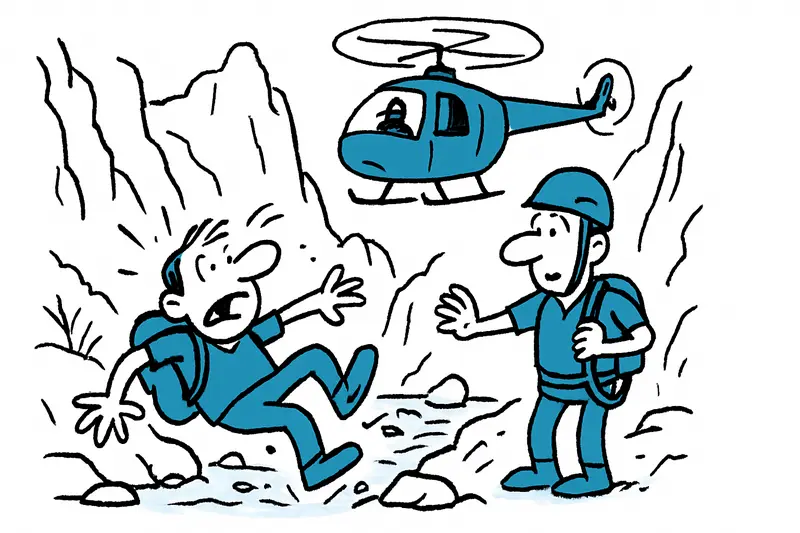
On Tuesday midday, around 12:40, an emergency call alerted rescue teams: an approximately 50-year-old hiker had fallen in the Torrent de Pareis and injured his back from a drop of around three metres. The recovery unfolded in a typically Mallorcan way — person versus terrain and rocks, with technical support: teams secured the injured man, stabilised him and lifted him out of the gorge by helicopter. Destination: Son Espases hospital. Later, around 14:15, the same helicopter flew another injured person from Valldemossa with a leg injury to the same hospital. Similar incidents are described in From Mountain to Hospital: What the Rescues at Puig de Galatzó and Torrent de Pareis Reveal About Mallorca's Hiking Tourism.
The scenario is familiar. You stand in the Sa Calobra car park, breathe the smell of dry stone and pine, hear the occasional rattle of a bus on the MA-2141 — and underestimate the harshness of the gorge. The Torrent de Pareis is beautiful and brutal at once: narrow passages, loose rocks, steep drops. One wrong step, a wet patch, a moment of inattention, and nature writes its bill.
My critical observation: We talk a lot about rescue when something happens. Less about prevention. Public discussions focus on spectacular recoveries and praise for the emergency teams — rightly so. What hardly takes place is a sober stocktake: How are hiking routes marked? When and how is information about footing, required equipment or closures communicated? Who bears responsibility for private individuals who enter the gorge without a map, water or a headlamp?
What is missing in the public discourse: an honest overview of incidents, differentiated by cause (loss of orientation, weather, inadequate equipment). Authorities could, without assigning blame, create clearer rules of use for particularly dangerous sections. Even more important: a binding information campaign about the two faces of the Tramuntana — beautiful to the eye, demanding for body and mind. For instance, see Heatstroke in the Torrent de Pareis: Rescue Raises Questions About the Safety of Hiking Groups.
Concrete proposals that are not only nice-sounding but feasible: First, better and standardized information boards at access points like Sa Calobra with clearly visible symbols (difficulty level, estimated duration, minimum equipment). Second, a digital supplement: QR codes at car parks that link to a short, standardized checklist and current notices (weather, closures, emergency numbers). Third, designated rescue meeting points with coordinates and mobile reception notes — that saves minutes that decide prognosis and treatment. Fourth, more support for volunteer mountain rescue groups and their training; local knowledge of the paths is worth gold. Fifth, a simple, understandable statistic of the operations, without sensationalism but with a learning character — what went wrong, how can we do better next time?
On the everyday level, a lot already helps: a look at AEMET, and the piece Heatstroke in the Torrent de Pareis: When Will Heat Protection Become Mandatory?, carrying enough water, sturdy footwear, a map or offline GPS, and an honest assessment of one's fitness. Before setting off take a photo of the starting point, note the time, inform fellow hikers — small things that give rescuers orientation.
The mountain rescuers and the Bombers (firefighters) do remarkable work; helicopter flights like yesterday's are expensive and risky. We should not expect them to always be the answer. Prevention is cheaper for everyone — physically, financially, emotionally. The island lives off hiking tourism, but it also has a duty to people who enter its mountains: clear rules, better information, coordinated rescue plans.
Conclusion: The fall in the Torrent de Pareis is both a warning signal and a wake-up call. Not to sow fear, but to remind that respect for the terrain and preparation are not games. Mallorca has the helpers; now it needs more focus on prevention. Otherwise spectacular helicopter missions will remain the norm — and that is expensive, burdensome and avoidable.
Frequently asked questions
When is Mallorca's best time to visit for warm weather and beach days?
What should I pack for a Mallorca trip?
Are there family-friendly beaches in Mallorca with safe swimming and easy access?
How can I get around Mallorca without renting a car?
What are some must-do experiences to get a true sense of Mallorca?
Can you swim in Mallorca outside the peak summer season?
Is Mallorca prone to sudden weather changes, and how should I plan?
Where can I check current weather and sea conditions for a day by Mallorca’s coast?
Similar News

Train accidents in Spain: Why the list of disasters seems longer than the answers
From Adamuz to Urda: In a short time, one serious railway accident follows another. Who asks why this is happening — and...

Who will bake the bread tomorrow? Ca'n Xiscos, Pina and the question of the village center
Pina's only bakery is up for sale. For many residents it is more than a shop — it is a meeting place and a social networ...
Flu season in Mallorca: Why getting vaccinated now is wise
Flu vaccinations have been available in the Balearic Islands since October 19. Anyone in Palma who smells roasted chestn...
Blue Shark Ashore: What the Incident on Menorca Means for Our Beaches
A roughly two-and-a-half-metre blue shark was spotted near Son Parc and Arenal d’en Castell. Rescue teams acted quickly ...

Mallorca's Gastro Night: Awards for Traditional Bakers, Top Chefs and Island Favorites
At the fourth edition of the Premis Gastronòmics, around 1,000 guests celebrated the island's cuisine on Palma's seafron...
More to explore
Discover more interesting content

Can Cap de Bou

Townhouse Lleo 72
