
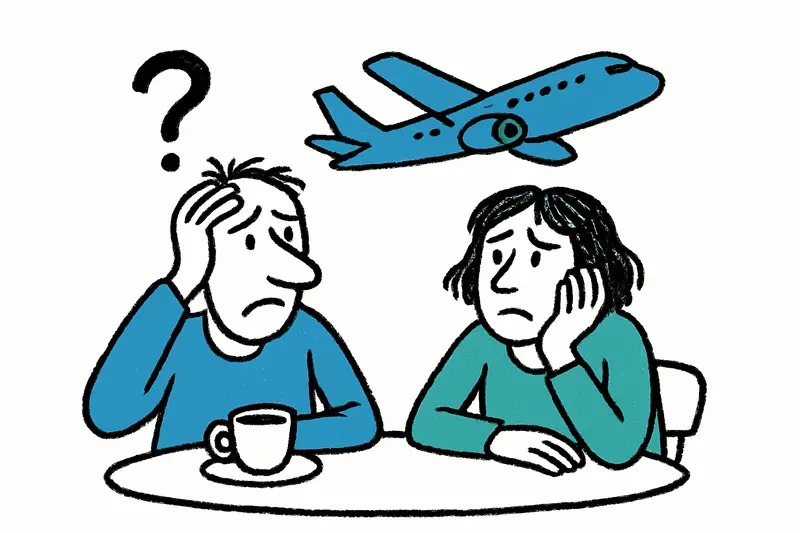
Eight hours in the air, no destination: What the Ryanair odyssey says about our trust in flight schedules
A Ryanair flight from Alicante to Newquay circled, landed in Dublin, attempted Bristol — and returned to Alicante. Why do journeys like this become a nightmare for passengers?
Eight hours in the air, no destination: What the Ryanair odyssey says about our trust in flight schedules
Key question: When are airline decisions still reasonable — and when do travelers become supplicants?
On the evening of Saturday, October 24, people were due to fly from Alicante to Newquay. Instead, they experienced a loop of delays and diversions: departure roughly an hour later than planned (18:23 instead of 17:25), an unsuccessful landing attempt in Newquay because of storms named Austen and Boelo, a diversion and landing in Dublin at 20:52, 1 hour and 40 minutes of maintenance onboard without being allowed to disembark, an attempted continuation to Bristol and finally the decision: return flight to Alicante, landing at 02:16 after almost eight hours in the air. The Boeing 737-800, nine years old and based in Alicante, brought the passengers back; Ryanair arranged hotel accommodation.
Critical analysis
Technically, much of this sounds logical: severe weather with gusts up to 114 km/h in Cornwall can make a safe landing impossible. But the sequence of decisions raises questions. Why were passengers not allowed to disembark in Dublin, even though the aircraft was able to land there? Was it examined whether alternative transfers or charter buses from Ireland would have been quicker? And why did the ground time in Dublin last so long that the further diversion to Bristol failed?
Such situations are assessed by pilots, ground staff and fleet planners; yet the traveler is left out. For many, the impression arises that operational constraints — for example that the aircraft is based in Alicante and that a different airport schedule the next day would have been disrupted — took priority over a quick, transparent solution for the people on board, as in other long-night cases like the Ryanair flight from Cologne/Bonn that landed late in Palma.
What is missing from public debate
The discussion often focuses only on "weather" and "delays." Rarely discussed are the organizational alternatives: How well are airlines connected with local hotel and transport partners, how quickly can replacement aircraft be mobilized, and what internal rules determine whether passengers may disembark at a stopover? Above all, the information chain is neglected: exactly where does communication fail from the airline to flight crew to waiting passengers?
Everyday scene from Mallorca
On Sunday morning in Palma, on Passeig Mallorca, two travelers in a café talked about the experience. They described the droning engines, the initial murmurs on board and later the long silence, broken only by the occasional click of a toilet door, a reminder of a Ryanair toilet-related diversion. On the way to the airport they saw the buses waiting for their departures and wondered why a convoy of buses for the stranded passengers wasn’t organized immediately. These questions are not just theoretical on Mallorca: many of our neighbors commute with low-cost airlines and know the nerve-wracking experience from personal experience.
Concrete proposals
- Transparent decision protocols: Airlines should at least briefly explain to passengers which options were considered (disembark at the stopover, change flights, transfer by bus, return to the base airport). This is not a matter of trade secrets; it is customer communication.
- Local cooperation agreements: Airports like Alicante, Dublin or Bristol could have framework contracts with airlines for emergency accommodation and bus shuttles that kick in immediately. This reduces waiting times and stress.
- Mobile information centers: Instead of hours of silence on board, regular concrete updates could be provided via app and speakers – not just "we are working on it," but: "Option A checked, Option B discarded for reason X, current measure Y."
- Better capacity planning at bases: If an aircraft is based at a home airport, the airline should simultaneously check how replacement capacity for upcoming shifts can be procured without losing sight of current passengers.
- Practical passenger rights: Travelers should be informed early about EU air passenger rights regulation: reimbursement, compensation, assistance with accommodation and meals. A printed short information sheet in the seat pocket would be helpful.
Punchy conclusion
Weather does not automatically excuse communication failures. Storms can prevent flights; they must not leave travelers in silence and uncertainty. On Mallorca, between café aromas and bus stops, people know: good organisation only proves itself when things go wrong. Airlines and airports must learn from such nights — fewer excuses, more procedures that truly look after people.
Frequently asked questions
How should airlines communicate during delays or diversions?
What are travelers' rights for meals and accommodation during long delays?
Should I disembark at a stopover during a disruption?
What role do ground staff and base airports play in handling disruptions?
How can travelers stay informed during a delay on a Mallorca trip?
What packing essentials help when travel disruptions happen?
Planning a Mallorca trip to minimize disruption risks?
How do Palma de Mallorca Airport and local partners handle emergency accommodation and transport?
Similar News

When Holiday Cards Turn into Cash: Three Arrests After Pickpocketing in Valldemossa
The Guardia Civil arrests three men: In Valldemossa, tourists' bank cards were stolen and cash withdrawn at ATMs. How co...
More Seats, More Uncertainty: How Mallorca's Winter Flight Schedule Affects Summer 2027
Airlines are significantly increasing winter capacity to Mallorca – but rising kerosene prices, SAF costs and delayed go...
Barítimo: Marítimo returns to Palma's waterfront
The long-closed Marítimo on the Paseo Marítimo is set to reopen as "Barítimo": 198 seats, primarily Mallorcan cuisine, j...

At 27 Degrees and Turrón: Why Mallorca Is Selling Christmas Already
Almonds are harvested in August, and by late October turrón is already on the shelves. Key question: Are retailers simpl...
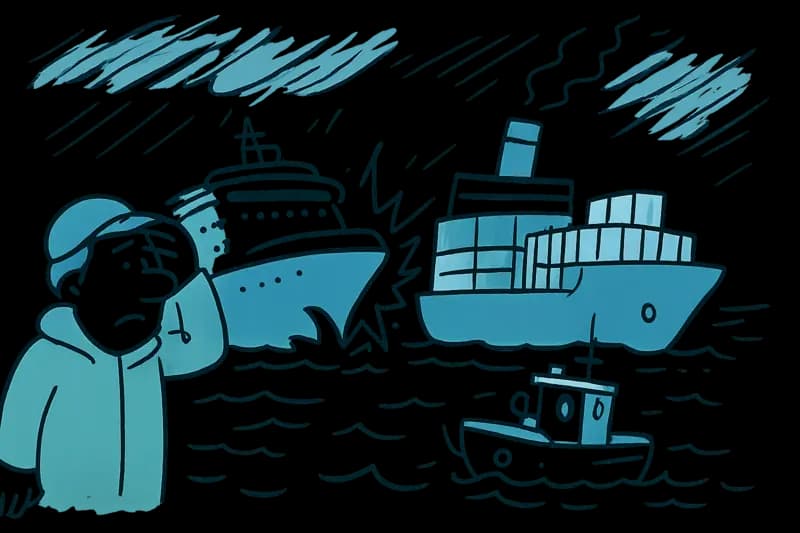
Storm accident involving 'Mein Schiff 3' in Bremerhaven – a wake-up call for ports, including Palma
A severely damaged cruise ship, more than 3,300 people on board and a port that reacted because of a storm: why the coll...
More to explore
Discover more interesting content

Can Cap de Bou

Townhouse Lleo 72
