
Playa de Palma without street vendors: What’s behind the sudden disappearance
Playa de Palma without street vendors: What’s behind the sudden disappearance
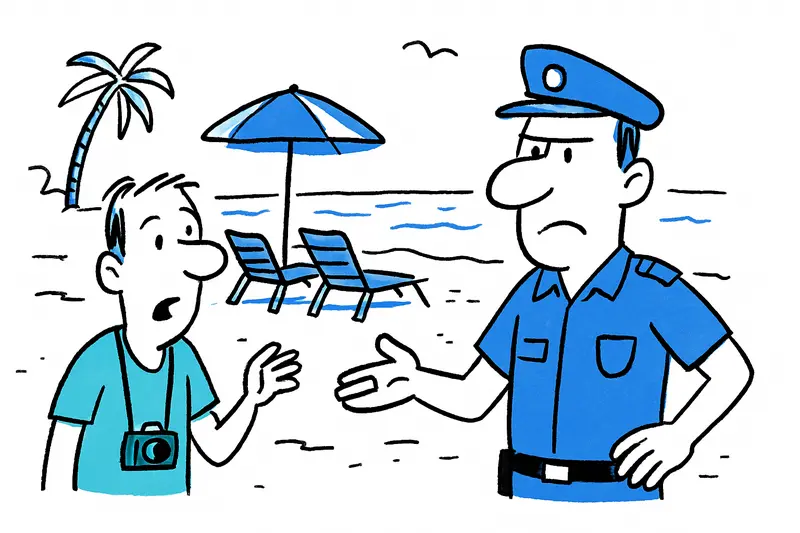
The usual street sellers and massage offers have suddenly disappeared from Playa de Palma. Who pulled the strings, and what are the consequences of the police crackdown for tourists, vendors and residents? A reality check from Balneario 9.
Playa de Palma without street vendors: What’s behind the sudden disappearance
A reality check from Balneario 9
Key question: Why has Playa de Palma suddenly become quieter — and is police action alone enough to solve the problem sustainably?
On a hot morning at Balneario 9 it is immediately noticeable: no masseuse, no seller with sunglasses in a box, no shell game operator chatting up tourists on the promenade. Instead there is the rattle of sunbed frames, the cry of seagulls and the distant hum of an ice-cream van. A German resident recently remarked that he had "not seen a single vendor." This is not a coincidence, but the echo of several major interventions by the local police in recent weeks.
The facts are clear: the police have carried out repeated checks at Playa de Palma and confiscated tens of thousands of items — from counterfeit jerseys and handbags to sunglasses — several of these operations even led to confrontations, as reported in Tumults at Playa de Palma: When Controls Threaten the Beach Scene.
At the same time, since May 2025 a regulation has been in force under which buyers can also face fines; the amounts range depending on the case from roughly €100 to €750.
Analysis: restoring order or driving people out?
The police intervention appears, at first glance, decisive; Palma gears up: 170 new police officers for Playa de Palma – solution or placebo? But the question is whether pure repression solves the problem or simply shifts it elsewhere. Controls erase the visible scene; they do not automatically remove the root causes — precarious living conditions, a lack of legal alternatives and tourist demand.
There is also a vacuum: when vendors disappear, demand remains. Restaurants and official beach vendors may benefit in the short term. In the medium term, however, new, less visible networks could form — with even less oversight of quality and working conditions.
What is often missing in the public debate
Conversations quickly focus on sanctions and order. Much less often do they consider the perspective of the people who earn a living on the beach — or the role of the market. It is also rarely discussed how tourists should be informed about the risks: many buyers do not know that they can also be committing an offense. There is a lack of clear, multilingual information at the entrances and exits of the promenade and in hotels.
Everyday scene from Mallorca
Imagine the promenade at sunrise: delivery vans manoeuvre, workers arrange the sunbeds in the morning, café owners set out their chairs. Previously, sellers mingled with strollers, shouting out their offers; an earlier incident even saw vendors position themselves between the police and a detained man, as described in Playa de Palma: When Vendors Stop an Arrest — What System Is Behind It?. Today it is more likely to be uniforms of the Policía Local and enforcement officers with clipboards that shape the scene. Residents notice the change: some praise the calm, others miss the colourful atmosphere the promenade long had.
Concrete approaches to solutions
Consistent action against illegal offers is important — but it must not be the only measure. Proposals that should be on the table include:
- Legal sales zones: Temporary, licensed areas on the promenade where small vendors can operate with registration. This creates control instead of displacement.
- Multilingual information: Signs and leaflets in German, English and Spanish, information packs in hotels and at bus stops explaining which offers are legal and what penalties may apply.
- Social and labour integration: Cooperation with NGOs and social services to create alternative income paths, training or advisory services for those affected.
- Coordinated controls: Police, ordinance officers and harbour/tourism authorities should coordinate their operations and establish transparent reporting channels so that measures remain verifiable.
- Tourist information campaigns: Information campaigns in travel agencies and via online check-in about the risks of buying illegal goods — not as a threat, but as a protective notice.
Concise conclusion
The empty walkways at Balneario 9 show that tough action works in the short term. Whether Palma benefits from this in the long term is unclear. A ban alone does not create a fair market or solve social problems. A combination of enforcement, clear information and offers for those who have operated at the margins of the law is sensible. Only then can Playa de Palma remain a place where locals, residents and visitors alike find peace and their rights respected — a change already noted this season in Ballermann in Transition: More Quiet, but Street Vending Remains the Main Problem.
Frequently asked questions
When is the best time to visit Mallorca for warm weather and fewer crowds?
Can you swim in Mallorca year-round?
What are the top outdoor activities to try in Mallorca?
How should I dress for Mallorca throughout the year?
Is Mallorca suitable for families traveling with kids?
What’s the best way to get around Mallorca?
What should I pack for a Mallorca trip?
Are there safety tips or local etiquette to know in Mallorca?
Similar News

When the Wallet Becomes a Danger: Attack in Peguera and Lessons for Mallorca
In Peguera, two women are said to have stolen the wallet from a 75-year-old German couple. When the victim intervened, t...
Plata stays Plata: Young people take over, Llonguets remain
A small bar on Carrer de l'Argenteria will continue: Tolo Serra hands the place over to young Mallorcans at the end of t...

Unnoticed in the Luggage Compartment: How a Boy Traveled More Than 100 Kilometers in a Team Bus
A minor traveled in the undercarriage of a team bus for more than 100 kilometers until his cries for help were heard. A ...

Cap Vermell Grand: Second Michelin Key – a Gift for the East
The Cap Vermell Grand in Capdepera has been awarded its second Michelin key. For the region this elevates the luxury off...
Eurowings lets four aircraft carry names – a friendly idea that also reaches Mallorca
Eurowings is launching a campaign: four Airbus A320s are to carry the first names of people who help others in everyday ...
More to explore
Discover more interesting content

Can Cap de Bou

Townhouse Lleo 72
