
Deadly Recklessness 30 Years Ago: What We Must Learn from the 1993 Bus Accident
Deadly Recklessness 30 Years Ago: What We Must Learn from the 1993 Bus Accident
Thirty years ago a young Swiss man died after an accident on the upper deck of a coach. Time for an honest assessment: Who protects holidaymakers on Mallorca’s roads?
Deadly Recklessness 30 Years Ago: What We Must Learn from the 1993 Bus Accident
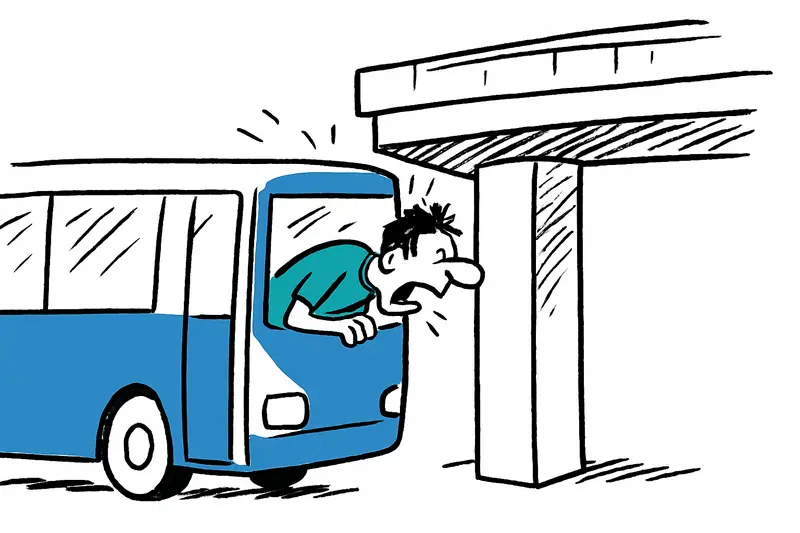
On 1 May 1993 a day in Mallorca ended for a 22-year-old Swiss man named Markus almost as soon as he had landed. Only minutes after arriving at Son Sant Joan airport he boarded a coach that was taking the group toward Magaluf. While passing under the Coll den Rabassa bridge a mistake that could be described as a foolish slip had deadly consequences: Markus opened the upper emergency hatch and leaned out of the top deck; his head struck the concrete bridge, and the injuries that followed were so severe that the autopsy later confirmed a skull impact as the cause of death.
The hard fact: this was not a natural event, but an accident that arose from a seemingly trivial moment — heat, bravado, perhaps the desire for fresh air after a flight. The bus, a Scania registered in Murcia, was carrying around fifty compatriots who were happily beginning their holiday. The driver heard a hit on the roof, stopped and called the emergency number 112; the Guardia Civil and emergency services arrived. The scene, as eyewitnesses later described it, was a shock to everyone present, and similar modern incidents such as Serious accident near Porto Cristo show these risks persist.
Key question
How safe do guests and employees feel on Mallorca’s roads — and what must authorities, tour operators and coach companies do concretely so that a single thoughtless moment does not cost another life?
Critical analysis
The 1993 incident reveals several weaknesses: first, the human factor — inattentiveness, uninformed travellers, alcohol or heat can amplify risky impulses. Second, technical and organisational gaps: emergency hatches that can be opened from the inside without locking mechanisms, coaches with open upper hatches combined with low bridges, and a lack of standardized passenger information are a dangerous mix. Third, chains of responsibility: who informs newcomers about behaviour on board? Who ensures that tour operators adhere to safety standards?
Public debate often focuses only on the sensational side — tragic images, a single perpetrator or victim story; incidents reported together in recent years, such as Three serious accidents in one night, underline the need to look beyond headlines.
What is missing from the discussion
When thinking about such accidents I find two things missing. First: a sober inventory of which accident scenarios recur — not just spectacular, one-off cases. Second: a focus on the everyday safety of industry employees. Bus drivers, guides and hotel receptionists are often the first points of contact for guests; they need clear guidelines and support, not mere reminders to “be careful”. Instead, much of the discussion revolves around image, costs and tourism figures.
Everyday scene from the island
Imagine the drive from Son Sant Joan toward Magaluf on a July afternoon: the roar of the Balearic motorway, the smell of hot asphalt and pine resin, tourists speaking different languages, air conditioners struggling against the heat. A coach rolls out of the terminal, the upper hatch is open — someone leans out, laughs, takes a photo. No one seems to consciously notice that a low bridge is coming up. This scene repeats daily at many points across the island, and recent episodes like the Dangerous braking maneuver on the Ma-20 show how quickly routine trips can become emergencies.
Concrete solutions
The island needs practical rules, not just appeals. Proposals that can be implemented immediately:
- Technical safeguards: Design emergency hatches so they cannot open unintentionally while the vehicle is moving. Mechanical or electronic locks could become mandatory.
- Passenger information: Short multilingual briefings after boarding, clearly visible pictograms on seats and hatches, and warnings about low bridges along certain routes.
- Route and bridge assessment: Coach companies must check routes for potential hazards; reduced speeds and additional warning signs at particularly narrow spots would be sensible, as lessons from incidents such as the Crash on the Ma-10 illustrate.
- Training and responsibility: Drivers and tour guides need mandatory training in risk recognition and de-escalation. Tour operators should be contractually obliged to meet safety standards and to demonstrate this through control mechanisms.
- Emergency management and aftercare: Standardized protocols for initial response, psychosocial support for witnesses and those affected, and transparent procedures for investigations.
Conclusion
Markus’ death 30 years ago is more than a sad anecdote from the island’s early years of mass tourism. It is a reminder and a warning: many accidents can be prevented if we take technology, information and routine work seriously. Mallorca’s roads and coaches need not be a conflict between freedom and safety. Small, concrete measures — better locks, clear instructions, training — can prevent carelessness from becoming a death sentence. The island has the opportunity to learn from the past. It would be negligent not to take it.
Frequently asked questions
When is Mallorca's best time to visit for pleasant weather and fewer crowds?
What should I pack for swimming and sun in Mallorca?
Which towns or beaches are must-see on a first visit to Mallorca?
What’s Mallorca’s weather like across the seasons?
Are there family-friendly activities to enjoy in Mallorca?
What should I know about Mallorca’s beaches?
Is public transport reliable for getting around Mallorca, or should I rent a car?
When do markets and local events take place in Mallorca?
Similar News
When the Wallet Becomes a Danger: Attack in Peguera and Lessons for Mallorca
In Peguera, two women are said to have stolen the wallet from a 75-year-old German couple. When the victim intervened, t...
Plata stays Plata: Young people take over, Llonguets remain
A small bar on Carrer de l'Argenteria will continue: Tolo Serra hands the place over to young Mallorcans at the end of t...
Unnoticed in the Luggage Compartment: How a Boy Traveled More Than 100 Kilometers in a Team Bus
A minor traveled in the undercarriage of a team bus for more than 100 kilometers until his cries for help were heard. A ...

Cap Vermell Grand: Second Michelin Key – a Gift for the East
The Cap Vermell Grand in Capdepera has been awarded its second Michelin key. For the region this elevates the luxury off...
Eurowings lets four aircraft carry names – a friendly idea that also reaches Mallorca
Eurowings is launching a campaign: four Airbus A320s are to carry the first names of people who help others in everyday ...
More to explore
Discover more interesting content

Can Cap de Bou

Townhouse Lleo 72
