
When a Mallorca Plane Blocks the Runway: What the Gatwick Failure Means for Us
When a Mallorca Plane Blocks the Runway: What the Gatwick Failure Means for Us
An Airbus A320 from Palma came to a stop on Gatwick's only open runway after landing due to a failed nose-wheel steering system. Operations temporarily collapsed — a warning sign for airports, airlines and travelers.
When a Mallorca Plane Blocks the Runway: What the Gatwick Failure Means for Us
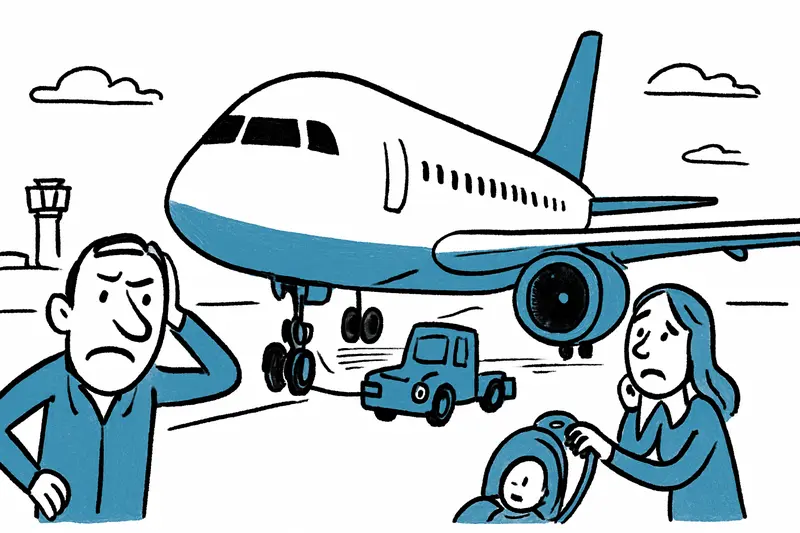
In the early hours, an Airbus A320 flying from Palma to London stopped on the runway after landing. Cause: a failed steering mechanism on the nose wheels; the aircraft could not taxi and had to be towed later. Because Gatwick had only one runway available at night, the blockage led to numerous diversions, emergency alerts over low fuel on incoming flights, and massive delays, as seen in the Aborted Takeoff in Basel: Panic on Board – and What It Means for Mallorca Travelers, and a wake-up call for engineers.
Key question
How well are airports and airlines really prepared when a single aircraft puts the only available runway out of service?
Critical analysis
A single faulty aircraft set off a chain of problems at the night airport. The immediate cause lay in the aircraft's ground steering; the consequences were determined by the environment: limited infrastructure (only one runway open), scarce ground recovery equipment, reduced capacity reserves at alternate airports, as with the Delayed Mallorca–Berlin Flight: Landing in Hanover, Continued by Bus, and strict aviation fuel rules. In practice this means: once infrastructure redundancy is lacking, small technical faults quickly escalate into system failures.
From a technical perspective, nose-wheel steering systems are standardized but not immune to failure. From an operational perspective, such failures are normally mitigated by checklists, technical teams and prompt recovery. In this case, however, one factor compounded another — and the timing (night, maintenance work on the main runway) made the situation worse, similar to the Drone over Palma: Menorca refueling stop and the question of Mallorca's airspace safety.
What is missing from the public debate
Public discussion often focuses on delays and ruined holidays, but rarely on structural questions: Why are major airports so dependent on single-track operations? What is the availability of specialized tow and recovery vehicles outside normal service hours? What obligations do airlines have toward passengers when multiple rotations are cancelled? Incidents like the Tire Blowout in Seville: What the Incident Means for Mallorca Travelers raise these questions. And: are there practical standards that prevent non-critical maintenance from reducing runway capacity so far that a single failure triggers chaos?
A everyday scene from the island
In Palma on Passeig Mallorca, early in the morning, two young holidaymakers sat in a street café with steaming espresso cups on the table. A notification flickered on their phone: their return flight via Gatwick delayed, possible diversion. A mother from Santa Catalina was already packing the stroller changing bag for a day of uncertainty; a taxi driver on Avinguda Gabriel Roca shook his head: “This happens more often in summer — too little margin.” Such small scenes show: the effects of these disruptions are felt directly here on the island — not only at the other end of the runway.
Concrete solutions
1) Infrastructure resilience: Airports should schedule construction and maintenance so that main capacities are never reduced all at once. If one runway is closed, an emergency plan must exist that accounts for the risk of a single-point failure.
2) Rapid recovery capacity: Airports, especially busy ones, need round-the-clock specialized recovery teams and equipment for different aircraft types. Mobile towing modules that can handle multiple aircraft classes reduce blockage times.
3) Coordinated diversion strategies: Airlines and control centers should have binding agreements with neighboring airports to quickly accommodate diverted aircraft in case of closures or blockages. This preserves fuel reserves and prevents on-board emergencies.
4) Transparent communication: Fast, clear information for passengers is not only courteous, it also eases pressure on staff and authorities. Standards for assistance (accommodation, meals, rebooking) during large-scale disruptions must be binding.
5) Test operational redundancy: Airports and airlines should regularly run scenario tests (tabletop exercises and simulations) that play through exactly these cases — including night operations and reduced infrastructure.
Why these questions matter for Mallorca
Mallorca depends heavily on scheduled connections to European hubs. A disruption far away, like at Gatwick, immediately affects booked stays, transfers and the local service economy. Travelers and providers here must be aware: disruptions are not just “over there” — they have repercussions for roads, taxis, hotels and family plans on the island.
Conclusion
The incident highlights not just a one-off technical fault but a systemic deficit: where infrastructure is scarce, failures become costly. The demand is not revolutionary: more redundancy, better recovery technology, reliable diversion plans and clearer passenger communication. If airports and airlines take this lesson seriously, the next Mallorca flight won't be invulnerable — but the chance that a single defect will cripple operations will be much smaller.
Meanwhile life on the island went on: the sea sparkled, the espresso machine in the café at Plaça d'Espanya purred, and travelers checked their connections again — a quiet reminder that mobility also implies fragility.
Frequently asked questions
What is the best time to visit Mallorca for beach days?
How does the weather vary across Mallorca seasons and what should I pack?
Are there family-friendly activities on Mallorca that don’t require a lot of walking?
Is it safe to swim in Mallorca's coastal waters, and what water conditions should I expect?
What are some must-see natural spots on Mallorca that aren’t too strenuous to reach?
How do I travel between Mallorca’s popular towns like Palma and Alcúdia?
What should I know about Mallorca's beaches and sun protection?
Are there local tips for enjoying Mallorca's markets and food without crowds?
Similar News
Eurowings lets four aircraft carry names – a friendly idea that also reaches Mallorca
Eurowings is launching a campaign: four Airbus A320s are to carry the first names of people who help others in everyday ...

From the Reality Studio to the Pitch: Aleks Petrovic Makes Mallorca His Base
The former participant in numerous TV shows moves from Dubai to the island and launches a project with FC Germania Mallo...

When the Phone Falls Silent: Concern for Sarah Joelle in Mallorca — and What It Reveals
After days without a response, the TV personality's unreachability in Mallorca sparked concern. Shortly afterwards an al...
Ultraluxury on the Ground: Four Seasons Jet in Palma — a Reality Check for Formentor and the Island
A high-priced flight crosses Mallorca and its guests stay for days at the Formentor resort. What does the island get bes...

Death of a Witness and the Justice Backlog: Why the Kegel Brothers Trial Matters in Mallorca
A witness in the Playa de Palma fire case has died, and the trial against eight German holidaymakers has been delayed un...
More to explore
Discover more interesting content

Can Cap de Bou

Townhouse Lleo 72
