
Poisoning suspicion in Palma: Questions that remain
Poisoning suspicion in Palma: Questions that remain
A 45-year-old woman was arrested and then released after a poisoning suspicion involving her husband. A reality check on the evidence, the role of public attention and missing protection structures on the island.
Poisoning suspicion in Palma: Questions that remain
Key question: Is a suspicion – supported by medical findings and a complaint – enough to publicly negotiate private conflicts, or does the case reveal gaps in investigations, legal protection and public debate?
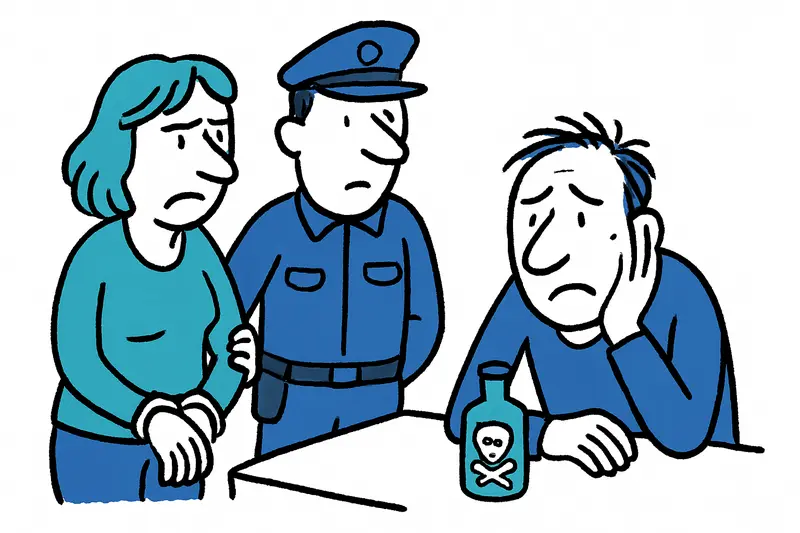
At the beginning of the year a man was suddenly taken seriously ill to hospital. Doctors found an excess of benzodiazepines in his blood, a sedative medication. The ill man contacted the National Police and accused his wife; investigators provisionally detained the woman. A court later ordered her release, but with a court-ordered contact and restraining order. The investigations are ongoing, and similar local incidents have also prompted public debate, for example Arrest in Palma: Suspicion of Subsidy Fraud Raises Questions About Controls and the Neighborhood.
That's the sober core. Around it, however, swarm questions that should be answered not only by legal experts: How stable are traces in cases of medication poisoning? What role do domestic power relations and public interest play when an accused person is known as an influencer? And how well does the system protect potential victims and at the same time the innocent from media pretrial conviction?
Critical analysis
Medically, an increased concentration of a sedative can be detected; that is a fact. But the origin of such substances is often hard to clarify. Benzodiazepines are prescription-only, kept in households and can – depending on the account – end up in drinks accidentally or intentionally. Forensic evidence must separate causality and intent: Was it deliberate adulteration, misuse by third parties, a mistake or alleged self-medication? The investigation file decides here; as outsiders we follow the progress of the inquiries, and procedural controversies in other Mallorca cases underline how complex such inquiries can be, as shown in Suspected Contract Killing in s'Arenal: The Release That Leaves Questions Unanswered.
Another point: The involvement of a publicly active person changes perception. Influencers are under audience pressure; their private sphere is more vulnerable to speculation. This makes it harder to remain factual – on the street, in cafés and neighborhoods people whisper about the person, especially when social networks pick up the case.
What is missing in the public debate
First: Patience with the criminal process. The presumption of innocence is legally anchored, but quickly becomes a farce in the media. Second: a sober clarification of how drug forensics works and its limitations. Third: a view of domestic conflicts as a social problem, not just a criminal case. Victim and perpetrator roles are not always clear; support systems for both sides are often lacking here, a gap also evident in reporting on cases such as Fatal Discovery in Son Macià: A Case Raising Questions about Protecting Older People.
A daily scene from Palma
Anyone who walks through the old town in the morning — chefs loading delivery vans at the Mercat de l'Olivar, the rattle of scooters, the smell of freshly brewed coffee on Calle Sant Miquel — quickly notices: Mallorca's neighborhoods are closely intertwined. An incident there has double impact: people know each other, they judge quickly. Conversations on the plaza, glances in the pharmacy, the rustle of newspaper pages — all of this shapes the perception of a case before a court issues a verdict.
Concrete solutions
- Strengthen medical-forensic traceability: pharmacies and doctors should work closely with laboratories in suspected cases to narrow down the origin and dosage of substances.
- Expand visible protection offers: contact points for people in domestic crises (Nielsen-like counseling rooms in communities) and better information about protection orders in court.
- Awareness of digital pressure: publicly active people need advice on how to deal with online harassment and private crime without jeopardizing legal support.
- Integrate police work and victim protection: investigations must quickly secure traces while protecting victims and the accused from carelessness (e.g. through standardized interview and securing protocols).
Punchy conclusion
The case reminds us: suspicion is not a verdict. In Mallorca, where neighborhood rumors quickly become common parlance, clear, transparent procedures are needed — from evidence preservation to psychosocial support. Only in this way can it be prevented that a possible criminal suspicion becomes a media execution and real needs for protection are drowned out by the noise.
We are monitoring the progress of the investigations and remind: anyone seeking a pause in a café in Palma sees more than headlines — people here live in complex relationships, and the legal system must examine carefully and fairly before drawing final conclusions.
Frequently asked questions
What happens in Mallorca when someone is suspected of poisoning but the case is still under investigation?
Can benzodiazepines be detected after a suspected poisoning in Palma?
Why can it be difficult to prove poisoning in Mallorca cases involving prescription medication?
What kind of legal protection can a court order in a Mallorca domestic conflict case?
How does being an influencer affect a criminal case in Palma?
What should people in Palma know about the presumption of innocence in a high-profile case?
Where do people in Palma usually notice local rumours spreading after a serious case?
What support is available in Mallorca for people caught in domestic conflict situations?
Similar News

Carriages Without Horses: Palma Plans E-Carriages – a Reality Check
Palma plans to switch to electric carriages in 2027. The prototype was shown near the cathedral. What is the technology ...

Record season, empty coffers: Who really benefits from the tourism boom?
Full hotels and more flights: the numbers sound impressive — yet many locals feel no benefit. A reality check with an ev...

Pool ordered for €46,000 – €23,000 paid, no work carried out: A fraud case in Palma
A homeowner in Palma transferred €23,000 for the construction of a pool. Weeks later it emerged that no building applica...

Summer greetings from the Pitiusas island: Gottschalk and Krüger enjoy the sun on Ibiza
A friendly photo of Thomas Gottschalk and Mike Krüger on Ibiza evokes memories of their shared film years and shows that...
Occupied in a Few Days: When Property in Mallorca Turns into a Dispute
Six young men were arrested in Palma after homeowners returned and could no longer open their own door. A case that rais...
More to explore
Discover more interesting content

Can Cap de Bou

Townhouse Lleo 72
