
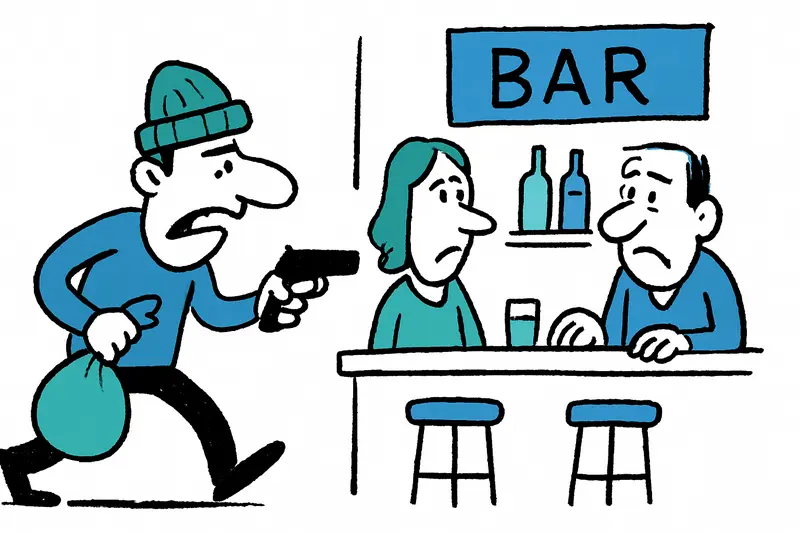
Express burglars in Santa Catalina: Quick, loud, unsettling
Within three days two bars in Santa Catalina were robbed. The perpetrators acted in seconds, escaped, and left business owners doubting protection and justice.
Express burglars in Santa Catalina: Quick, loud, unsettling
Two venues hit within days – the questions are: Was it coincidence, and what needs to change?
In Santa Catalina, between the market and the cobbled side streets, delivery vans ring in the morning, bakeries smell of freshly baked bread, and staff sweep away the traces of the night. In that routine two burglaries tore the neighborhood out of its usual calm: first the traditional venue Sa Ronda was hit, three days later the bar Cosmópolis. Local operators report that in both cases the perpetrators entered in the very early morning hours and took cash — at Sa Ronda roughly €2,100, at Cosmópolis about €700.
Key question: How does the speed of these acts fit with the work of security forces and the safety practices of the venues — and why does this leave business owners feeling powerless? This question runs through conversations with innkeepers and residents that we conducted in the side streets around the Plaça de Santa Catalina.
Critical analysis: Noteworthy is not only the clustering — two incidents in 72 hours — but the modus operandi, a pattern also detailed in Raid in Palma: Specialized keys, disguises — and many unanswered questions. In one case a sliding door is said to have been pried open and the perpetrators were so fast that operators estimate the crime lasted well under a minute. In the second incident burglars opened a door. Both times the perpetrators wore hoods and had covered hands, making forensic analysis difficult. The police showed up on site and are now evaluating surveillance footage. Statements from authorities that solving the case is 'only a matter of time' are reassuring, but they meet the displeasure of those affected: business income is existential for small eateries, and experience shows that after arrests many suspects are quickly released again citing lack of funds, a dynamic highlighted in Eight Break-ins in One Week: Arrest in Palma — and What's Still Missing.
What is missing so far in public discourse: The debate often revolves around individual cases, not the structural vulnerability of small hospitality businesses. There is a lack of sober calculation: How secure are simple sliding doors, what end-of-shift behaviors reduce risk, how fast do alarms need to be so that a response actually takes effect? The question of neighborhood structures also receives little attention: Can suppliers, night workers, and residents become an early-warning system? At the level of law enforcement there is often a lack of transparency about case proceedings — this creates frustration, a point raised in coverage of other series such as Burglary Spree on the MA-12: How Safe Do Santa Margalida and Muro Still Feel?.
Everyday scene: Around half past six, when the market traders in Santa Catalina set up their stalls, waitstaff talk to each other about the night. A waitress nervously tugs at her apron and says that when locking up the bar in future she will no longer leave the tip jar out in the open. An older delivery driver stops briefly, looks at the vans, and says: 'We see a lot, but we talk too little with each other.' Such scenes show: security begins not only at the police station, but at the cash register and the counter.
Concrete solutions: For gastronomy and the neighborhood I recommend pragmatic steps that can take effect immediately: 1) Change cash management: keep daily cash only temporarily in firmly anchored heavy safes or push more electronic payments; 2) Improve mechanical security: sturdy locking systems, additional bolts on sliding doors, door reinforcements; 3) Alarm and lighting technology: loud acoustic alarms directly connected to police or private security services and motion lights at entrances; 4) Optimize CCTV: position cameras so faces are not obscured, secure recordings remotely; 5) Neighborhood patrols: an informal network of operators, market people and couriers for suspicious reports via group chat; 6) Rapid reporting and evidence preservation: photos, witness lists, descriptions of escape routes help investigators; 7) Preventive cooperation with the municipality: more street lighting, regular police presence at critical times.
At the level of justice and politics, longer-term measures help: uncomplicated victim support, faster processing of minor offenses, and recidivism programs that do not rely solely on imprisonment but also on social work and reintegration, as discussions following recent arrests have shown in pieces such as Nighttime Break-ins in Palma: Arrest Stops the Spree — But How Safe Is the Old Town Really?.
Conclusion: The experience of the last days in Santa Catalina shows two things: Burglars often act quickly, one night a minute is enough to hit livelihoods. And the response must not be merely technocratic. A bundle of better protection, neighborhood defense, and reliable, transparent law enforcement is needed. The people behind the counters don't want a marathon of flashing lights; they want their work respected and their income not to become a risk. Santa Catalina is loud and lively in the morning — that image does not fit an island of routine burglaries. The challenge is to resolve this contradiction before routine becomes resignation.
Frequently asked questions
Why are burglaries in Santa Catalina, Mallorca so worrying for local bars and restaurants?
How do express burglaries in Mallorca usually happen?
What can bars in Mallorca do to reduce the risk of a break-in at night?
Is Santa Catalina in Palma safe for going out at night?
What should staff do after discovering a burglary in Mallorca?
Why do burglars target cash-heavy businesses in Palma and Mallorca?
Can neighborhood groups help prevent burglaries in areas like Santa Catalina?
What security weaknesses do sliding doors create for Mallorca businesses?
Similar News

Rental Car Theft in El Arenal: What This Incident Reveals About Our Gaps
A teenager steals a running rental car in El Arenal, flees on foot, climbs over walls and is caught by the Guardia Civil...

Red Rope in Palma's Library: What Helps Against Selfie Tourism — and What's Missing
Palma's city library cordoned off an area with a red rope to keep selfie tourism away from reading and working activitie...

Fort San Carlos: Museum, Harbor Dispute — and a Conflict That Demands Answers
The military museum at Fort San Carlos sits right on Palma's harbor, with unexpectedly quiet rooms filled with cannons a...
Old Town Under Pressure: When a Doorway Becomes a Sleeping and Shower Place
For months a woman has been living with a parasol, a clothes rack and personal belongings next to the social welfare off...

When Shopping Weighs Heavier: Mallorca Demands a Tax Pause on Food and Fuel
Rising prices are putting pressure on households and agriculture. The Balearic Islands are calling for temporary tax rel...
More to explore
Discover more interesting content

Can Cap de Bou

Townhouse Lleo 72
