
Severe Neck Injury in Port d'Alcúdia: What Our Island Structures Must Do Now
After the severe neck injury on Carrer Acacias, questions are growing in Port d'Alcúdia about whether neighbors, authorities and support services need better networking. An analysis of gaps, often overlooked factors and concrete steps.
Severe Neck Injury in Port d'Alcúdia: Morning Silence and Many Open Questions
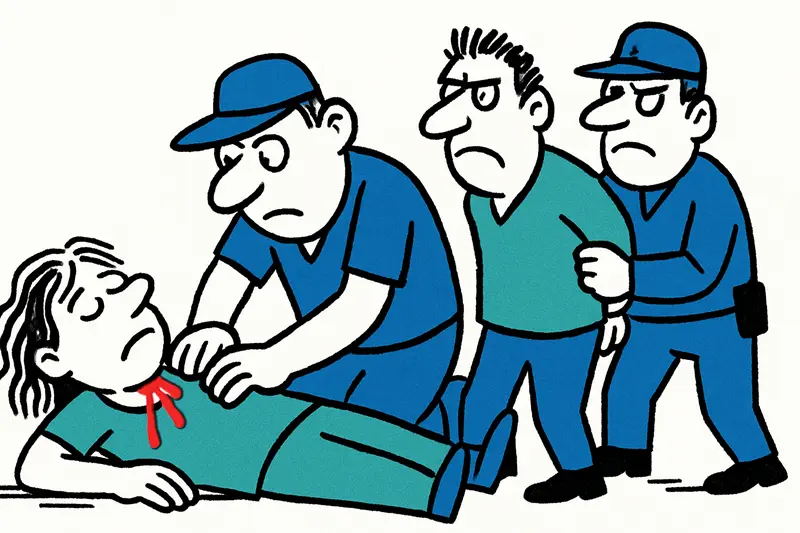
It was just after eight, the seagulls cried over the harbor, the scent of espresso drifted from a café onto Carrer Acacias — then that abrupt, alien sound: screams, sirens, neighbors peering from their doors. A 49-year-old woman was emergency-stabilized with a deep cut to the neck and taken to the hospital in Inca. Her condition is now reported as no longer life-threatening. Initial coverage is available in a local report Severely injured in Port d'Alcúdia: When life explodes behind closed doors.
The key question: Could anyone have intervened — and if so, how?
The calm the next morning feels almost eerie. Cups clink in the street, regulars at the corner café whisper, a craftsman nods, yet real answers are missing. The central question is not only criminal: How well are our local structures prepared for forms of domestic or neighbor-related violence? In a small town with narrow streets and many community ties like Port d'Alcúdia, networks feel close — and precisely for that reason sometimes deceptively secure.
Aspects that rarely make it onto the table
When discussing such incidents, several aspects are often overlooked: language barriers in migrant communities, feelings of shame, fear of authorities and the resulting reluctance to seek help. Neighbors may hear arguments but not know whom they can turn to in confidence. There is also the spatial density: cramped apartments, seasonal housing for seasonal workers and multi-generational households amplify stress factors. And then there are seasonal shifts — in high season the social network is stretched differently than in winter.
Police, emergency services and the role of prevention
The Guardia Civil has taken over the investigation, witness statements are being collected, traces secured. That is important, but prevention does not end with quick operational efficiency. The question arises whether police and emergency services receive regular training in intercultural communication and in recognizing domestic violence. Are health centers and schools sufficiently networked to identify warning signs early? Often it remains a case-by-case reaction instead of having a local, permanent safety and support network. Similar concerns about local safety have also been raised following traffic incidents, for example Head-on crash near Alcúdia: One dead, four injured – Is the MA-3460 safe at night?.
Concrete, actionable opportunities
From the incident, concrete steps can be derived that could strengthen Port d'Alcúdia: low-threshold counseling services in multiple languages, highly visible information campaigns (also in places where seasonal workers live), regular training for rescue and police personnel to detect patterns of violence early and for intercultural awareness. Anonymous crisis hotlines and mobile counseling centers would be a sensible addition, especially during the summer months. Victims can also be directed to the official helpline 016 for immediate assistance official helpline 016 for victims of gender-based violence. Networking is also important: the municipality, health centers, social organizations, churches and clubs should agree on clear reporting and action pathways; similar systemic questions were raised after another incident in the municipality Fatal accident in Alcúdia: Who is responsible — and what needs to change?.
Strengthening the neighborhood — without stigmatizing
Another simple but often underestimated point is encouragement to report observations. Not out of curiosity, but as a protective measure. Sometimes small clues — a door slamming loudly at night, a cry for help — can prevent an escalation. This should be combined with education on how to respond safely and sensitively. In migrant communities, trust helps: trusted contact persons, multilingual flyers, local information evenings.
What is happening now and what we can demand
The investigations are underway; the Guardia Civil is asking for witness information. Many neighbors still want clarity, but also structural improvements. Authorities can quickly provide informational material and make local counseling services more visible. In the medium term, training and network meetings should be established — so that next time communication and support channels do not fail again.
Port d'Alcúdia is a town where people know each other — that is a strength. But proximity does not automatically protect against violence. Deliberately built bridges between people, authorities and support services are needed. Only in this way can a shocking incident become an impetus for better prevention and increased protection.
Note: Out of respect for the victim we report only confirmed facts and do not publish any names. The editorial team will keep you updated on new findings.
Frequently asked questions
What should I do if I witness a violent incident in Mallorca?
How can neighbors in Mallorca respond to suspected domestic violence?
What help is available in Mallorca for victims of gender-based violence?
Why do domestic violence cases in places like Port d'Alcúdia sometimes go unnoticed?
Is Port d'Alcúdia prepared to handle domestic violence safely and quickly?
What kind of prevention would help reduce violence in Mallorca communities?
Who is investigating the serious injury case in Port d'Alcúdia?
Should I report disturbing noises or cries from a neighbor’s home in Mallorca?
Similar News
After Being Admitted to Hospital Again: Heinz Hoenig and the Questions We Should Ask in Mallorca
Long-time Mallorca resident Heinz Hoenig was admitted to hospital again. A clear “what next?” is missing from the covera...
Yellow Alert: Is Mallorca Prepared for the Next Rain Band?
Aemet has issued a yellow alert for the south, southwest and the island's interior. Thunderstorms and heavy rain are for...
Kegel brothers trial postponed: Why Mallorca must wait for a verdict
The trial of 13 German holidaymakers will not begin until May 2028. The long wait raises questions — for victims, defend...
Chaos on Palma's Runway: Why the Summer at the Airport Was So Disrupted
This summer laid bare where Palma airport is faltering: only just over half of departures were on time and seven percent...
Cocaine Offer on Ham Street: Why the Open Trade Should Ring Alarm Bells
In the middle of Pare Bartomeu Salvà a tourist was offered a packet of cocaine as part of a sunglasses deal. A short int...
More to explore
Discover more interesting content

Can Cap de Bou

Townhouse Lleo 72
