
Provisional fixes instead of repairs: Problems at the Son Gotleu Health Center
Provisional fixes instead of repairs: Problems at the Son Gotleu Health Center
Staff and patients complain about damaged windows, repeated air-conditioning failures and a neglected exterior at the Son Gotleu health center in Palma.
Provisional fixes instead of repairs: Problems at the Son Gotleu Health Center
Key question: How much longer must patients and staff wait for basic maintenance?
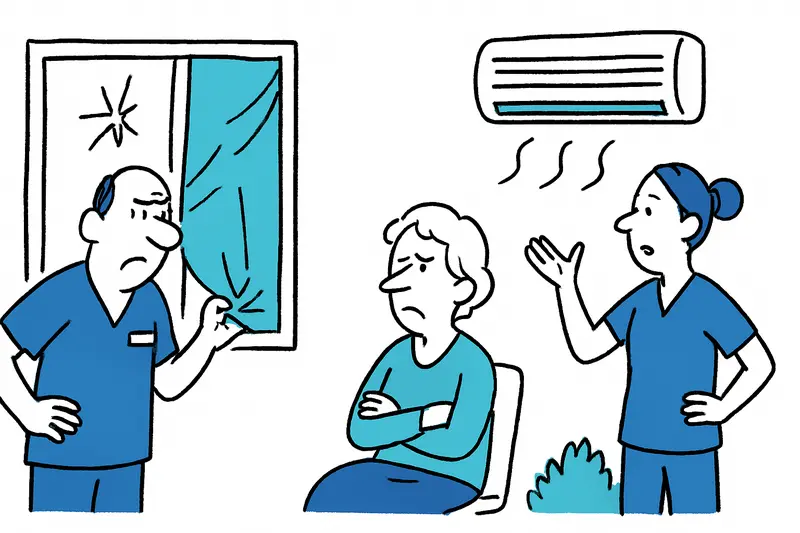
In front of the building in the Son Gotleu neighborhood early in the morning, cardboard leans against doors, passersby grab a coffee, children play on the sidewalk — and inside, cardboard has been taped over shattered windows for months. Employees of the health center report that individual windows have not been properly repaired for months and are instead covered with cardboard or makeshift materials. Such temporary solutions are not merely an aesthetic problem: they directly affect working conditions and patient wellbeing.
The staff's frustration centers on several points: one window in a consultation room appears to have been damaged for almost a year, despite the fault being reported repeatedly. In addition, there are repeated failures of the air-conditioning — a real problem on days with high humidity for chronically ill and elderly visitors. The exterior of the center is also described as run-down, with flaking paint, missing signage and dirty entrance areas.
Officials cite an unapproved cost estimate as a formal obstacle. This points to bureaucratic procedures: when estimates, tenders or permits stall, repairs are left undone. At the same time, a lack of transparency is noticeable: those affected can hardly trace how long a problem has been open or who would be responsible for fixing it. A similar problem with missing approvals and equipment was reported in New health center in Consell: finished but not ready — what's missing now.
Critical analysis: This situation is not an isolated case but symptomatic of structural weaknesses in the maintenance of municipal health infrastructure; Alarm at S'Escorxador Health Center: When Safety Becomes a Matter of Negotiation documents similar problems. Two mechanisms combine here. First, administrative processes are often lengthy — bids are reviewed, new estimates requested, funding options checked. Second, regular maintenance is neglected; repairs are patched over temporarily instead of being properly invested in on time. This leads to extra work, dissatisfaction and potential health risks.
What is missing in the public debate: maintenance plans are rarely discussed concretely. The debate often focuses on new projects or staffing numbers, not on what buildings and equipment need on an ongoing basis. The voices of those who work on site daily are also missing: medical assistants, cleaning staff and reception employees know the weak points best, but they rarely have a voice in decision-making bodies.
An everyday scene: an elderly man enters the center on a humid afternoon, the wind whistling slightly around the window that has been temporarily covered. In the waiting room, consultations change with the door open because the air-conditioning is failing; the hum of machines mixes with the rattle of a roll-up door. Such scenes are unfortunately not uncommon in Mallorca — they show that routine problems can undermine trust in care facilities. Other local incidents, such as Crash in Son Gotleu: Five Injured — How Safe Are Palma's Intersections?, show broader safety concerns in the neighborhood.
Concrete solutions: 1. Short term: Immediate, professional emergency repairs instead of cardboard solutions; temporary, certified air-conditioning units for waiting rooms; a publicly accessible list of open defects with estimated completion times. 2. Medium term: A dedicated maintenance fund for Palma's health centers to cover small to medium repairs without lengthy tender procedures; binding maintenance contracts for technical systems (heating, ventilation, air conditioning). 3. Long term: Transparent responsibility rules between the municipal administration, health authorities and operators, plus regular audits of building infrastructure and an on-site contact point for staff complaints.
It is also important to involve staff and patients: a simple feedback app or an analog reporting point in the center could make defects visible more quickly and clarify responsibilities. Regular on-site inspections with representatives of the administration, staff and residents would also help to set priorities.
Conclusion: The provisional solutions described at the Son Gotleu health center are not trivial. They are a wake-up call to take maintenance seriously — not as a cost factor, but as part of healthcare provision. When repairs wait for years, patients, staff and ultimately the municipality pay the price. Those who promise healthcare in Mallorca must also reliably maintain buildings and technical systems.
Frequently asked questions
Why are patients at the Son Gotleu Health Center in Palma dealing with cardboard-covered windows?
Are air-conditioning problems common in Mallorca health centers during humid weather?
What maintenance problems have been reported at the Son Gotleu Health Center in Palma?
Why do repairs at public health centers in Mallorca sometimes take so long?
Is Son Gotleu a health center in Palma that has had repeated repair complaints?
What do poor building conditions mean for patients in a Mallorca health center?
Which Mallorca health center has been criticised for unfinished repairs and poor upkeep?
What would improve maintenance at health centers in Palma, Mallorca?
Similar News
Injured captain, big plans: Germania Mallorca before the away match in Consell
The newly founded FC Germania Mallorca travels to Consell on Saturday. Captain Bastian Müller is out injured, but coach ...
Palma, Palma de Mallorca, Palma‑Mallorca: What is it really about?
The debate over the city's name is more than grammar: it concerns identity, law and branding policy. A sober reality che...
Warning to Bathers: Nipping Fish in Cala Major and Other Coves — a Reality Check
In Cala Major and several beaches around Mallorca, bathers report painful “nips”. Who are the animals, why are they gett...

Rental Car Theft in El Arenal: What This Incident Reveals About Our Gaps
A teenager steals a running rental car in El Arenal, flees on foot, climbs over walls and is caught by the Guardia Civil...
Red Rope in Palma's Library: What Helps Against Selfie Tourism — and What's Missing
Palma's city library cordoned off an area with a red rope to keep selfie tourism away from reading and working activitie...
More to explore
Discover more interesting content

Can Cap de Bou

Townhouse Lleo 72
