
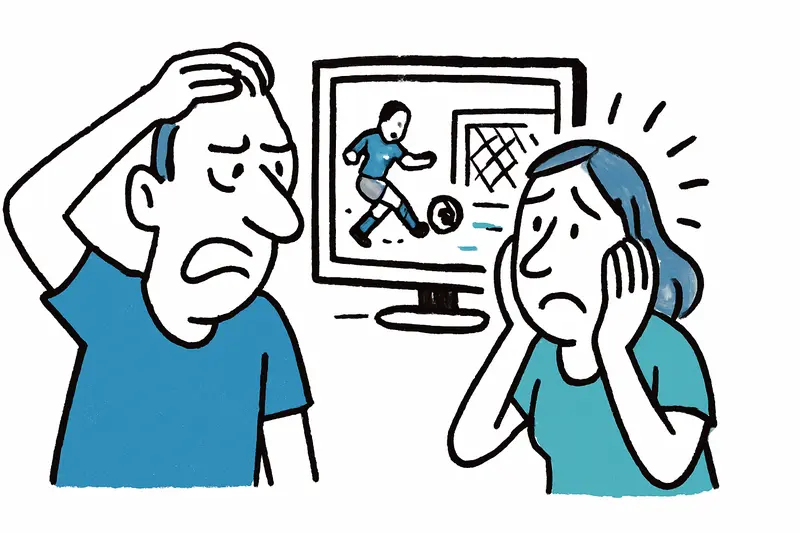
Late goal conceded in the 86th minute: RCD Mallorca eliminated from the Copa del Rey
Late goal conceded in the 86th minute: RCD Mallorca eliminated from the Copa del Rey
RCD Mallorca lost 0-1 in La Coruña and is out of the Copa del Rey. The decisive goal came in the 86th minute. A brief reality check for the club and its fans.
Late goal conceded in the 86th minute: RCD Mallorca eliminated from the Copa del Rey
A defeat that raises more questions than it answers
RCD Mallorca have been knocked out of the Spanish cup. Playing away in La Coruña on Wednesday evening, they only managed a 0-1 result, with the decisive goal coming in the 86th minute. A possible equaliser in added time never materialised – the dream of progressing is over.
Key question: Why does the performance fail to be sufficient in decisive moments to survive in a knockout competition, a pattern seen in league defeats like Too late to ignite: RCD Mallorca lose narrowly 1-2 in Bilbao? This question hangs like an unpleasant taste after the match in the streets of Palma, in the tapas bars on Plaça Major and along the harbour promenade.
Critical analysis: On paper the cup tie still looked open, as earlier in the competition when Copa del Rey: RCD Mallorca narrowly beats Numancia 3-2, but the game in La Coruña revealed familiar weaknesses. Conceding a late goal often points to problems organising set pieces, a lack of concentration at the end of a tight game, or physical exhaustion, as when Mallorca narrowly loses to Villarreal – late goal decides. Without a detailed match analysis not every adjustment can be named, but three problem areas are obvious: defensive behaviour in the final quarter of an hour, the attacking penetration without finishing, and the squad depth when things get tight.
What is missing from public debate: Too often the discussion only revolves around results and fan moods. Rarely is the middle ground crossed to address structural issues: training intensity for end-of-game efficiency, medical load management in a hectic calendar, or how youth development is concretely integrated into the first team. Also lacking is a sober consideration of whether tactical concepts are specifically adapted for cup matches or whether the team simply carries its usual league system through.
Everyday scene on Mallorca: On Wednesday evening the usual relaxed Sunday-like atmosphere was missing in many bars – regulars at the bar on Carrer de la Concepció stared intently at their phones, conversations fell silent, the clinking of glasses sounded suddenly distant. Young people on the Paseo Marítimo discussed the scene of the late goal while taxi drivers were still dropping off guests from the stadium. Moments like these show: football on the island is more than sport, it is a shared rhythm that makes us pause for a moment.
Concrete solutions: First, targeted training for end phases: small-sided games, special drills for the final 20 minutes and set pieces under pressure. Second, load management: medical checks and rotation so players are fresh in decisive moments. Third, tactical variability: a plan B for tight matches where set pieces are defended more safely and attacking substitutions are prepared earlier. Fourth, structurally using youth development: deliberately integrating talents from the academy to bring fresh courage and pace. Finally, psychological support: mental coaching for situations in which concentration and calm matter.
A look ahead: Tonight on the island Atlético Baleares play Atlético Madrid at Estadi Balear; the match is sold out. Evenings like that show that the passion for football on Mallorca lives on – regardless of one club's result. For RCD Mallorca, however, the elimination is a wake-up call: not every defeat is just bad luck, often there is a system behind the pain.
Concise conclusion: A goal in the 86th minute is not a coincidence but a symptom. Those who want to succeed in cup competitions must practise the final minutes deliberately, plan squad depth and seriously link youth development to the first team. On Mallorca the answers will be sought in the coming days – in coaches' offices, on training pitches and at regulars' tables alike.
Frequently asked questions
Why was RCD Mallorca eliminated from the Copa del Rey?
What usually goes wrong for Mallorca in tight matches?
Can you swim in Mallorca in the spring?
What should I pack for a football match in Mallorca?
What does a late goal mean in a knockout match like the Copa del Rey?
Why do Mallorca fans talk so much about football in Palma?
How can Mallorca improve in the final minutes of matches?
Is RCD Mallorca’s cup exit a sign of bigger problems?
Similar News

Mistaken identity with fatal consequences: Brutal assault in S'Aranjassa — what's missing in the follow-up?
At S'Aranjassa a visitor to a finca was tied up, beaten and thrown out of a van. Three men have been arrested, including...

High heel slips, car accelerates: accident on Camí de Son Hugo
A woman lost a high-heeled shoe on the forecourt of the sports facility at Camí de Son Hugo. The car accelerated, mounte...

Phone Scam: How Two Hotel Employees at Playa de Palma Lost Thousands of Euros
One morning in September, two reception employees at Playa de Palma were pressured by alleged alarm-company staff — in t...
When the Wallet Becomes a Danger: Attack in Peguera and Lessons for Mallorca
In Peguera, two women are said to have stolen the wallet from a 75-year-old German couple. When the victim intervened, t...
Plata stays Plata: Young people take over, Llonguets remain
A small bar on Carrer de l'Argenteria will continue: Tolo Serra hands the place over to young Mallorcans at the end of t...
More to explore
Discover more interesting content

Can Cap de Bou

Townhouse Lleo 72
