
Reality Check: How Palma's Airport Might Actually Look in 2050
Reality Check: How Palma's Airport Might Actually Look in 2050
Key question: Can Son Sant Joan remain climate-neutral, resilient and at the same time functional for tourism by 2050 — without drastic restrictions? A critical look at technology, politics and everyday life in Palma.
Reality Check: How Palma's Airport Might Actually Look in 2050
Key question: Can Son Sant Joan remain climate-neutral, resilient and at the same time functional for tourism by 2050 — without drastic restrictions? This question is not an academic thought experiment; it already affects passengers, commuters, residents and employers on Mallorca today — as reported in Palma Airport: Module D Closed – Between Modernization and Morning Chaos.
Critical analysis: Technology is not enough without politics and money
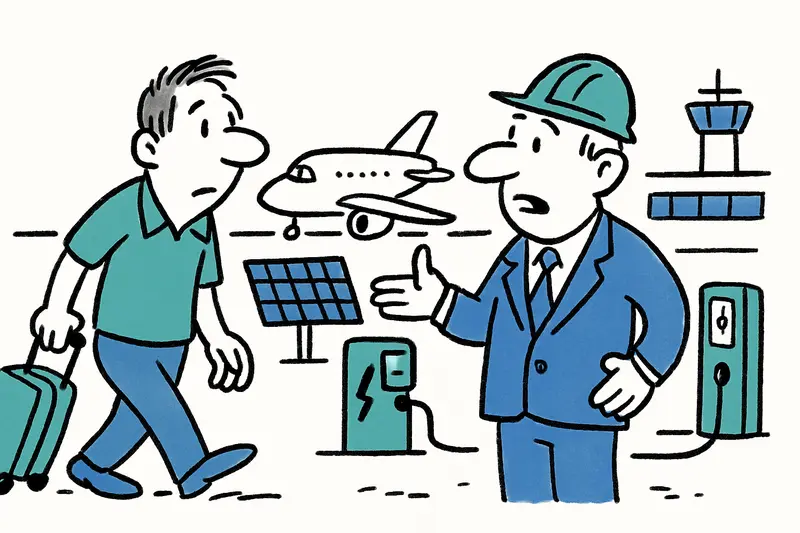
In front of the terminal, on a sunny morning on the Passeig Mallorca, suitcases roll over the cobblestones, cafés smell of café con leche, and over the bay you can hear the drone of approaching aircraft. The scene could be described by any travel guide — and this is precisely where abstract future discourse meets everyday life. Technical options such as photovoltaics, charging stations for electric vehicles, shore power at gates or sustainable fuels are not new. But they are expensive, require space and above all: clear decisions from operators, airlines and politicians.
The goal described by experts like André Schneider — to make airports energy centers and multimodal hubs — is feasible. But three bottlenecks threaten to block the plan: 1) financing models that so far have focused on growth instead of climate investments, a contrast to proposals like Mallorca 2035: Between Bed Reductions and a Return to Small-Scale Farming; 2) lack of coordination between the airport operator, airlines and air traffic control; 3) the social dimension: residents, employees and the island economy must be involved in the transformation, otherwise resistance will arise that delays projects.
What is missing in the public discourse
The debate often focuses on high-tech solutions and aircraft propulsion. Too little attention is paid to how infrastructure planning plays out locally: water consumption for new cooling or hydrogen facilities, land conflicts between energy installations and nature conservation, the necessary qualification of ground handling staff or the question of who bears the follow-up costs if an investment fails. Also underrepresented is the discussion about governance: Should the airport take on the role of regional energy supplier alone, or is a joint platform with municipalities and island utilities needed?
Concrete approaches — pragmatic and local
A roadmap that must start now contains six practical points:
1. Roadmap with milestones: short-, medium- and long-term goals (e.g. shore power at 30% of gates by 2035; photovoltaics on parking structures by 2030) and binding evaluation periods.
2. Financing mix: EU climate funds, green airport bonds, targeted ticket levies or local eco-taxes combined with private investors who earn returns through energy and logistics services.
3. Space-smart energy production: solar roofs, floating photovoltaics in separate water basins, and the use of marginal spaces instead of valuable ecosystems. Test small pilot projects for power-to-x (green hydrogen) in advance.
4. Capacity management instead of blind expansion: adaptive slot models, seasonal controls and incentives to shift to less busy times — this eases peaks without building permanent excess capacity, as seen in Palma: Elevated connections at the airport aim to ease crowding.
5. Protection against physical and digital risks: increased resilience against heavy rain and storm surges (near-natural retention areas, elevated equipment rooms), alongside a comprehensive cyber security program and redundant communication channels.
6. Participation and labor market strategy: training programs for employees, municipalities' right to have a say and transparent information formats for residents — only then will viable compromises on noise, air and traffic be achieved.
Everyday scenes and the social cost
Anyone who takes the bus from Plaça d’Espanya to Palma in the morning sees taxis at the airport, luggage carts and travelers in flip-flops. This familiarity must not be destroyed by abrupt action. Seasonal schedule shifts also show how service patterns change (Fewer Takeoffs, More Seats: What Really Changes at Palma Airport in December). Measures must be socially balanced: if ticket prices rise significantly, the service sector and many employees are hit harder than luxury tourists. Therefore, social compensation mechanisms belong in every cost plan.
Conclusion: Decisions today, shape tomorrow
The uncomfortable truth is clear: without changed business models, binding plans and broad local involvement, climate neutrality remains a label, not a reality. Palma can be a modern mobility and energy hub by 2050 — but only if politicians, the airport, airlines and citizens act together and concretely now. Otherwise, the island may remain touristically lively with 25 °C and morning sunshine, but it will lose the chance to make the travel industry sustainable.
Short, clear appeal: No technological miracle will appear if rules, funding flows and local compromises are not set today. That is uncomfortable — and precisely why it is the most important task of the coming years.
Frequently asked questions
Will Palma Airport be climate-neutral by 2050?
What changes could make Mallorca Airport more resilient to climate risks?
Will Mallorca Airport be expanded or better managed instead of just growing?
Could Palma Airport become an energy hub as well as a transport hub?
How might airport changes affect residents and workers in Mallorca?
What is the best time of year to fly through Palma Airport if schedules are changing?
What should passengers expect at Palma Airport in winter or during quieter months?
What would Palma Airport need to stay functional for tourism by 2050?
Similar News

Magaluf: Watchtower Alarm – Lifeguards Pull Unconscious Beachgoer from the Water
After a drama in the late afternoon, two lifeguards at Magaluf beach rescued an unconscious 44-year-old man. He was stab...

Turquoise in the City: How dangerous is the color play of the Sa Riera?
The Sa Riera in Palma suddenly turned turquoise — a pretty motif, but behind the effect lies a discharge of saline waste...

Jeckliner at Sunnesching: Cologne spirit sets sail from Palma
In September 2027 the Mein Schiff 2 briefly becomes a floating carnival stage: four days with Cologne bands, comedy and ...
Finally Home: Mike and Leyla Heiter Buy Villa with Sea View in Mallorca
The reality TV couple Mike and Leyla Heiter have bought a house in Mallorca with a roof terrace and sea view. An Instagr...

Arrest after series in Palma: Who protects apartments from repeat offenders?
The National Police arrested a man in Palma who investigators say may have broken into several apartments. In one incide...
More to explore
Discover more interesting content

Can Cap de Bou

Townhouse Lleo 72
