
When the 'Rising Sun' Anchors off Mallorca: Luxury, Privacy — and Uncomfortable Questions
When the 'Rising Sun' Anchors off Mallorca: Luxury, Privacy — and Uncomfortable Questions
The 130-meter yacht 'Rising Sun' is once again visible off Mallorca. Guests like Oprah Winfrey and Kris Jenner enjoy privacy — and the island faces questions about environmental impact, regulation and everyday life.
When the 'Rising Sun' Anchors off Mallorca: Luxury, Privacy — and Uncomfortable Questions
An observation from the promenade and the debate rarely held in the harbors
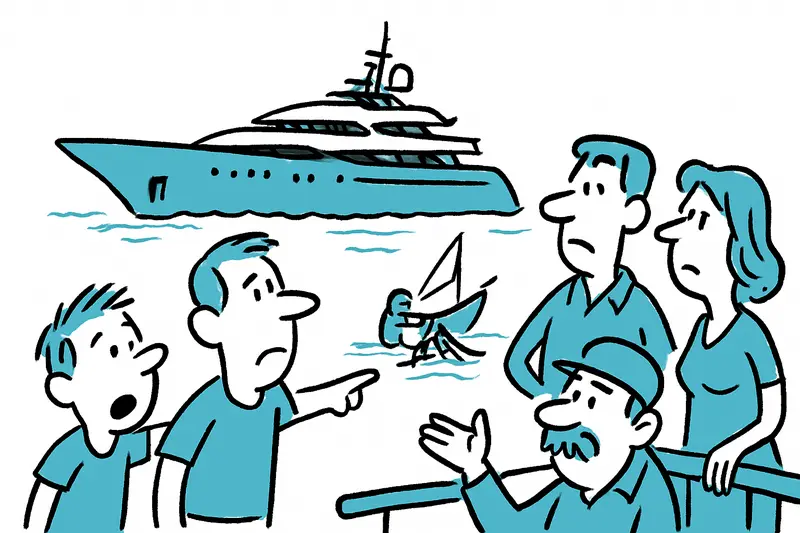
Off the coast lies a ship that draws relaxed looks from several streets of Palma. On the Passeig Marítim passersby stop — a place where, in recent reports, the 79‑meter Yasmine of the Sea was berthed — at the seawall in Port d'Andratx fishing boats cast their nets, children point at the tall silhouette of the yacht — the 'Rising Sun', owned by entrepreneur David Geffen, just over 130 meters long and again with prominent guests on board.
According to available information, personalities such as Oprah Winfrey and Kris Jenner are expected to spend several days on the ship. Such attention mirrors other influencer visits like Kylie Jenner in Mallorca. What sounds like a leisurely summer idyll has two sides: sun decks and privacy on the one hand, concrete impacts on coastal nature, port operations and neighborhoods on the other.
Key question: How do we reconcile the arrival of superyachts with the protection of marine areas and the everyday life of island residents?
The answer is not simple. On the Balearic Islands such yachts regularly call during the high season — not only because the Mediterranean is warm, but because discretion, service and space are available. A ship of this size offers suites, a fitness area and a cinema; it becomes a floating luxury home. For guests this is a privilege. For the island it creates a strip of challenges.
The ecological side becomes visible upon closer look. Large ships often drop anchor in clear bays where underwater meadows of Posidonia grow. These meadows are crucial for the coast, for fish and for water quality. Anchoring can damage them. Added to this are fuel consumption during maneuvering, potential wastewater and onshore logistics: delivery vehicles, additional crew, extra boat movements. Not every bay is equally well prepared, and not every municipality has the resources to continuously monitor protective measures.
There are economic effects. Spending on provisions, services in marinas and occasional restaurant visits bring money into the coffers of local businesses. You can see it in delivery trucks early in the morning in Port Adriano or in the tankers off Palma, and in nearby marinas such as Puerto Portals where vessels like the Black Pearl have been moored. But the distribution is unequal: the local fisherman on the quay rarely benefits directly from the stay of a luxury yacht; his concerns are different — fixed berths, access to traditional fishing grounds, parking pressure in the villages.
What is missing in the public debate? Transparency. Who approves which berths and under what conditions? How is it controlled that wastewater is not illegally discharged? Which contributions flow into the maintenance of the marine areas that serve as a backdrop? These questions are rarely answered with conviction, while images of celebrities in the sun quickly circulate online, and local coverage has raised similar questions for vessels such as the Explora II in Palma.
A morning in Cala Mayor makes this clear: delivery vans maneuver, tourists drink coffee, while on the horizon a yacht larger than many hotels draws gaze. The scene is relaxed, almost normal. The question of whether it should remain that way, however, remains open.
Concrete approaches that could be implemented locally include: expanding fixed moorings outside sensitive Posidonia zones, mandatory use of Posidonia-friendly mooring systems, stricter controls by port authorities and clearer fee regulations that finance conservation projects. Publishing short reports on berth permits, environmental conditions and inspections could also help — transparency builds trust.
At the local level it makes sense to bring stakeholders together: municipalities, port operators, conservation organizations, representatives of fisheries and marina operators. An external expert in marine ecology can help delineate sensitive zones more clearly. Practically, a faster reporting system for anchor movements would also be useful, allowing communities to notice unwanted maneuvers early.
Finally a small scene: evening on the paseo. Streetlights cast a warm glow, taxis roll by, and on the sea the silhouette of a ship blinks. One wants to allow guests privacy and for Mallorca to feel like a quiet retreat. At the same time the island is not just a backdrop. It is home to people, to seagrass meadows and to professions that cannot do without rules.
Conclusion: Luxury yachts like the 'Rising Sun' are part of summer on Mallorca. They bring benefits and burdens. The island can handle both, but only with clear rules, more transparency and technical as well as organizational effort. Otherwise the privacy of celebrities risks becoming a problem for the public coast — and that would be bad for both locals and visitors.
Frequently asked questions
How do luxury superyachts like the Rising Sun affect Mallorca's coastline and nearby communities?
What is Posidonia, and why do yacht anchoring practices matter for Mallorca's underwater meadows?
What practical steps could Mallorca implement to regulate luxury yacht berths and protect the marine environment?
How does the presence of luxury yachts in Palma’s Passeig Marítim affect residents and the town during the season?
Are there transparency concerns about who approves yacht berths and how wastewater is handled in Mallorca?
What is meant by Posidonia-friendly mooring systems, and why should they matter for Mallorca?
When is Mallorca at its best for sailing or visiting if you want to avoid peak crowds?
Who should Mallorca bring together to manage the presence of luxury yachts and protect coastal ecosystems?
Similar News
Magaluf: Watchtower Alarm – Lifeguards Pull Unconscious Beachgoer from the Water
After a drama in the late afternoon, two lifeguards at Magaluf beach rescued an unconscious 44-year-old man. He was stab...

Turquoise in the City: How dangerous is the color play of the Sa Riera?
The Sa Riera in Palma suddenly turned turquoise — a pretty motif, but behind the effect lies a discharge of saline waste...

Jeckliner at Sunnesching: Cologne spirit sets sail from Palma
In September 2027 the Mein Schiff 2 briefly becomes a floating carnival stage: four days with Cologne bands, comedy and ...
Finally Home: Mike and Leyla Heiter Buy Villa with Sea View in Mallorca
The reality TV couple Mike and Leyla Heiter have bought a house in Mallorca with a roof terrace and sea view. An Instagr...

Arrest after series in Palma: Who protects apartments from repeat offenders?
The National Police arrested a man in Palma who investigators say may have broken into several apartments. In one incide...
More to explore
Discover more interesting content

Can Cap de Bou

Townhouse Lleo 72
