
Nosebleeds Above the Clouds: Pressure Problem on Palma–Copenhagen Flight – How Safe Are We On Board?
Nosebleeds Above the Clouds: Pressure Problem on Palma–Copenhagen Flight – How Safe Are We On Board?
On a flight from Palma to Copenhagen the aircraft made a safety stop in Hamburg due to cabin pressure problems. Several people suffered nosebleeds. What do we know — and what don't we?
Nosebleeds Above the Clouds: Pressure Problem on Palma–Copenhagen Flight – How Safe Are We On Board?
An unscheduled stop in Hamburg, several affected people and an open investigation: questions remain.
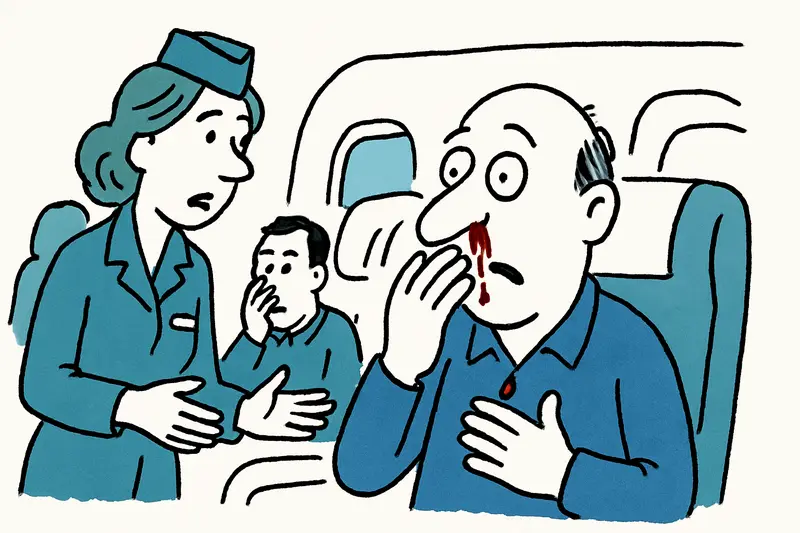
An aircraft en route from Palma de Mallorca to Copenhagen had to divert to Hamburg after several people on board suddenly began to suffer nosebleeds. According to the airline, there were problems with the cabin pressure; the crew then initiated a rapid descent. Four passengers and one crew member received medical attention on the ground. Another aircraft from Copenhagen later picked up the travelers.
Key question: How great is the risk to travelers when pressure fluctuations occur in the cabin — and how well are such incidents investigated?
From a technical perspective, a pressure difference in the cabin can have various causes: defective components in the pressure regulation system, a failure of sensors or valves, or human error. The airline's brief statement does not reveal more at present. It remains unclear whether oxygen masks were deployed, whether the flight crew saw warning indications on their displays, or whether there were any warning signs before the rapid descent. These gaps create fear among those affected and speculation among outsiders.
What is often missing in public discourse is a traceable chain of information. Travelers have a right to know whether the incident was due to a one-off defect, maintenance shortcomings, or human error; lack of clear information has contributed to public frustration in cases such as "An Outrage" at Palma Airport: Why Did Passengers Disembark — and the Plane Fly Off Empty?
On Mallorca, on a hot morning at Passeig Mallorca, some café-goers sit reading the headline, sipping their café con leche and thinking about their upcoming return trip. Son Sant Joan airport is busy: tour groups haul suitcases, parents call to their children, the announcement system drones through its routines. Such scenes make clear: fear of flying affects not only tourists but also many locals who commute regularly.
Concrete, practical steps to reduce the likelihood of such events:
• Better communication after incidents: a more precise initial information from the airline to those affected, followed by a technical interim report as soon as the first checks are completed. This reduces rumours and panic.
• Standardised medical follow-ups: anyone who experiences health symptoms on board should not only be treated on site but also receive subsequent medical checks — especially older people or passengers with pre-existing conditions.
• Publicly accessible maintenance and service history: Airlines and maintenance providers could present the frequency and nature of critical interventions in a way that regulators and, where appropriate, consumers can understand without disclosing trade secrets.
• Simulation and crew training: scenarios with sudden loss of pressure and rapid descents must be practised regularly, as incidents such as Frightening Seconds over Palma: Two Flight Attendants Injured underline. Handling medical incidents on board should also be a focus, as seen in When Mental Health Crises Disrupt Air Travel: Lessons for Mallorca After the Nuremberg Incident.
• Clearer rules for replacement transport and care: in this case a replacement flight came from Copenhagen; such procedures should be defined in advance and run automatically so that people are not left in the dark or waiting a long time for information — incidents like Delayed Mallorca–Berlin Flight: Landing in Hanover, Continued by Bus show the range of outcomes when alternate arrangements are needed.
In conclusion: a single incident does not automatically mean a structural safety problem. But the response — rapid, comprehensible information, thorough investigation and visible improvements — is the yardstick of a reliable aviation culture. Next time someone sits at the gate they will not only look at the departure time but also at whether the answer to the key question has been convincingly provided.
Those affected or anyone who made observations can contact the official authorities and the airline. And someone strolling along Passeig Mallorca tomorrow may hear the distant roll of an aircraft over the bay and briefly wonder: how well prepared are we if the instruments suddenly behave differently?
Frequently asked questions
What can cause cabin pressure problems on a Palma de Mallorca–Copenhagen flight?
How safe are flights when cabin pressure changes occur?
What information should travelers expect after a pressure-related incident?
What steps can airlines take to reduce risk after such incidents?
If you experience symptoms on a flight, what should you do?
How can travelers in Mallorca report observations about an incident?
What does a thorough aviation investigation look like in Europe after a cabin-pressure incident?
What is Mallorca's weather like for planning a trip?
Similar News
Mini-tsunamis in Mallorca: Harmless natural phenomenon — or an underestimated danger?
Two harbor towns in Mallorca recorded unusual water level fluctuations. An analysis: How rissagas form, who is at risk —...
Stinging jellyfish in Cala Banyalbufar: Why everyone suddenly fled the water
In Cala Banyalbufar, Pelagia noctiluca washed up in droves. A personal account of why this is no coincidence, what is of...
New low-pressure trough brings rain — and the heat remains: What's missing in Mallorca?
A short, intense window of showers hit Mallorca, yet the air remained muggy and warm. Key question: Why does rain hardly...
Klaus-Michael Kühne has died: The entrepreneur who gave Mallorca a second home
He first arrived on the island at 60; later the holiday house became Castell Son Claret – a hotel, a music venue and an ...

Buying Instead of Moving Away? Why Every Fourth Property Owned by Balearic Residents Isn't Located Here
Almost a quarter of the apartments purchased by Balearic residents are located on the Spanish mainland. A concise analys...
More to explore
Discover more interesting content

Boat Tour with BBQ along Es Trenc Beach

Private transfer from Mallorca Airport (PMI) to Pollensa
