
Currents, Jellyfish, Nipping Fish: How Safe Are Mallorca's Beaches Really?
Currents, Jellyfish, Nipping Fish: How Safe Are Mallorca's Beaches Really?
The sea off Mallorca is beautiful — but not harmless. A clear guiding question, critical analysis, an everyday scene from Cala Major and concrete proposals: what is missing to make swimming safer.
Currents, Jellyfish, Nipping Fish: How Safe Are Mallorca's Beaches Really?
Key question: Are we doing enough to ensure locals and visitors recognize dangers in the water in time and react correctly?
Mallorca has dozens of coves, long beaches and on some days water so clear you can see your feet. That very familiarity is deceptive: rip currents, jellyfish and curious fish make swimming not risk-free. Anyone who wants to check calmly whether the island's handling is adequate must look more closely — not just at the flags, but at organizational and information gaps. For context on current bathing conditions see Can you still safely swim in the sea around Mallorca? A look at water quality in 2025.
Critical analysis
The color signals on the beach are simple and useful: green, yellow, red — plus a white field with purple jellyfish motifs. However, Fewer Blue Flags in Mallorca: What Does That Say About Our Beaches? highlights changes in official awards. But their effect depends on three factors: the presence and visibility of the flags, visitors' understanding of the languages and whether a lifeguard is present at all. In many hot spots like Playa de Palma or Cala Major the tourist density is high and languages are diverse. A single flag is not enough if it is hidden behind sun umbrellas or if guests don't know what "yellow" practically means (only knee-high water? no diving?).
With rip currents — especially along rocky coasts in the north — I often observe people swimming against the current and quick panic develops. The common recommendation, to drift sideways and not fight the current, is correct. But it helps little if visitors haven't learned it and there is no understandable warning posted on the beach.
Jellyfish are another problem. Many people react reflexively in the wrong way: they rinse the area with tap water, rub it or try alleged home remedies. That often worsens the irritation. The usual advice (no freshwater rinse, cold relieves) exists, but is rarely displayed prominently and in multiple languages. See Sea off Mallorca: When the Underwater Meadow Disappears for reporting on how warmer water and Posidonia loss are changing jellyfish and fish patterns.
What is missing in the public discourse
There is a lot of reporting on individual incidents, but too little on systematic prevention: Where exactly do rip currents occur regularly? Which beaches are monitored and how? Is there comprehensive data on jellyfish sightings? A recent case was Tragedy in Son Bauló: Small Cove, Big Questions — How Safe Are Mallorca's Unassuming Beaches?. Another stubborn issue: the voluntary feeding of fish at tourist beaches. That changes animal behavior and increases small bite incidents — this is often downplayed instead of addressed.
Hardly anyone talks about the staffing levels of rescue teams in high season and about clear, easy-to-find first-aid points at every larger playa. Visible first-aid stations and simple information boards are missing more often than one might think.
Everyday scene: Afternoon in Cala Major
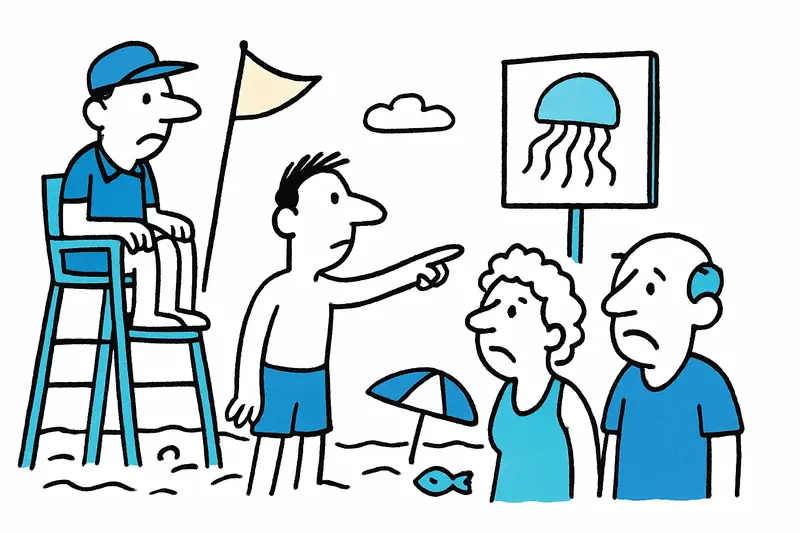
It's 4 p.m., the sun is still high, children run along the shore and vendors shout across the sand. At the end of the bay a few guests are avoiding a jellyfish. The lifeguard tower is manned, the flag is yellow, yet ten meters away an Italian tourist has set up his towel so that the flagpole light is barely noticeable. An older couple looks at the sea, puzzled — they speak neither Spanish nor English. Moments like these show: the technology and rules are there, but daily implementation falters.
Concrete solutions
1) Clear, multilingual beach information boards: Explain not only the colors but steps to take: What to do in a rip current? How to recognize a jellyfish? Where is the nearest first-aid station?
2) Increase visibility of flagging: Second flagpoles, preferably at each end of large beaches. Mobile illuminated flags for evening hours.
3) Digital warning infrastructure: An official app or web map with current reports on jellyfish, wave height and staffing levels of rescue teams — maintained by the municipality and coastal protection.
4) On-site awareness campaigns: Short, simple information in hotel lobbies, boat rental offices and at beach entrances: how to behave with jellyfish stings or nips. Small pictograms help overcome language barriers.
5) Rule against feeding: Announcements and signs at sensitive spots to prevent feeding; consider fines where necessary. This reduces aggressive approaches by fish.
6) First-aid standards: Each larger playa should have a clearly marked first-aid kit (including cold packs), tweezers and instructions for treating jellyfish stings and small bites.
Concise conclusion
Mallorca's beaches are beautiful and many safety rules exist. The challenge lies in everyday practice: visible information, linguistic clarity and reliable staff presence. Less sensational reporting and more structured prevention would make life simpler and safer. A small notice on the beach, a second flag, an app notification — these are not big miracles, but often exactly the things that can save a day at the beach.
Frequently asked questions
Are Mallorca's beaches safe for swimming, and what should I watch for?
What do the color flags on Mallorca beaches mean and how should I respond?
How can I protect myself from jellyfish and fish stings on Mallorca's beaches?
What practical steps could improve beach safety on Mallorca?
What safety details should I know about Cala Major Beach?
What should visitors know about safety at Playa de Palma?
Is there a plan to provide real-time safety updates for Mallorca beaches?
What should I do if I encounter a rip current on a Mallorca beach?
Similar News
So Many Tonnes: What Mallorca's Garbage Boats Accomplish — and What's Missing
23 boats patrol in summer, and 36.8 tonnes were recently pulled from the water. The fleet is shrinking — is that still e...
No Identification Documents on the Steep Slope: Body near Tolleric Raises Questions
The body of an elderly man was found over the weekend in a wooded area near the cliffs of Tolleric. He had no identifica...
Arrest at the Port: Three Suspected Pickpockets Left Mallorca After Series of Thefts
The National Police stopped three men at Palma harbour who are accused of several thefts at the airport. How could the g...
Palma's Rental Bike Boom: More Bikes, More People, More City Life
Since Bicipalma was opened to non-residents, the system has noticeably grown. Students, residents and tourists bring lif...

Palma–Lyon in Winter: Two Weekly Flights Bring Fresh Momentum
From October Transavia France will connect Palma and Lyon in winter as well: Wednesdays and Saturdays, around 17,000 sea...
More to explore
Discover more interesting content

Boat Tour with BBQ along Es Trenc Beach

Private transfer from Mallorca Airport (PMI) to Pollensa
