
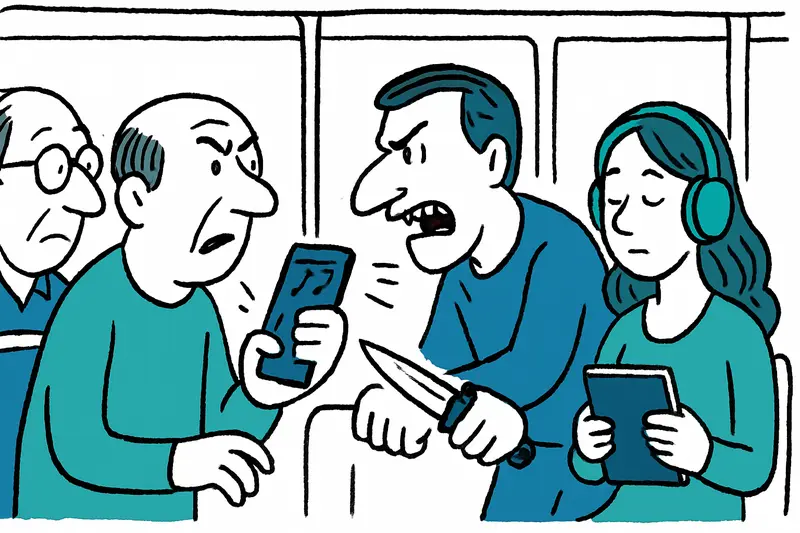
Dispute over Loud Music on Bus: Man Stabbed in Palma – A Reality Check
Dispute over Loud Music on Bus: Man Stabbed in Palma – A Reality Check
A confrontation over loud music on an EMT city bus in Palma escalated: A passenger was apparently stabbed twice, and a man was arrested. Why do everyday situations turn so violent here — and what is missing to make bus rides safer again?
Dispute over Loud Music on Bus: Man Stabbed in Palma – A Reality Check
A morning in Palma, behind the windows of a packed city bus: voices, radio, traffic noise from Plaça d’Espanya to Avinguda Jaume III. It was here that an argument over loud music from a mobile phone escalated. According to initial findings by the National Police, a passenger was apparently stabbed twice during the ride. A suspect of Colombian origin was arrested.
Key question
How can a trivial conflict on an urban bus so quickly turn into life-threatening violence — and what lessons must Palma learn from it?
Critical analysis
At its core the incident is simple: two men, a dispute over volume, the use of a stabbing weapon. But the details reveal a larger problem. Public transport is a confined environment: narrow rows of seats, limited escape routes, emotions escalate faster than in open spaces. Drivers are often alone and have limited options; incidents such as the Son Gotleu bus collision underline the risks. Witnesses say the injured man managed to get off the bus at a stop; the doors opening made his escape possible. Afterwards, investigators reportedly found a weapon hidden under a car tire and later discovered what appeared to be bloodstains on the suspect's clothing as well as sharp cutting implements when he was arrested.
What is missing from the public debate
The debate usually falls into two corners: harsher penalties or soothing everyday life. Both approaches fall short. We rarely talk about bus drivers' working conditions, prevention in the urban environment, or low-threshold intervention offers for people who quickly turn to violence. The question of how easily knives and similar items can be obtained is hardly discussed — nor how visitors and residents can be better informed about expected behaviour on public transport.
Everyday scene from Palma
Imagine the stop at Plaça Major: tourists with rolling suitcases, pensioners with shopping bags, teenagers with headphones. Someone turns the phone up, another feels disturbed. A brief glance. Then voices rise. Bus drivers look in the rearview mirror, take a breath, try to mediate. Here, mediation ended before it could begin.
Concrete solutions
1. Visible rules and enforcement: Clear notices in buses about volume limits, combined with a simple reporting route via the driver's cabin or an emergency button. 2. Presence: More patrols during peak times by municipal order forces or police, not to surveil but to be a de-escalating presence. 3. Training for drivers: Courses in conflict avoidance and safe procedures, plus incident protocols. 4. Prevention work: Campaigns in schools, hostels and tourist centres about respectful behaviour in public spaces. 5. Weapon discovery: Systematic follow-up on locations where suspected weapons are hidden and cooperation with residents for tips.
Points for the judiciary and investigators
The investigation must clarify whether this was a spontaneous escalation or premeditated. The public prosecutor will examine evidence, witnesses and the traces found. Transparency in procedures is important for the public, but without prejudgment. Victims need quick access to medical and psychosocial support; witnesses should be informed how to give their statements securely.
Conclusion – a strong signal
An argument over loud music should not end in blood. The incident is a wake-up call for Palma's administration, transport operators and society: we need better prevention, more presence and clear procedures so that bus rides become part of everyday life again rather than a risk. Otherwise, after every stop the question remains: who will get off next?
Frequently asked questions
What safety tips should I consider when using Mallorca’s city buses?
Why is violence on public transport a concern in Palma?
What should I do if I feel unsafe on a Palma bus near Plaça Major?
What measures are being discussed to prevent knife violence on Palma’s public transport?
When is the best time to visit Mallorca to avoid crowds and heat on public transport?
What should I pack for a day in Palma, considering weather and travel?
How can visitors help keep Palma buses safer?
What support is available after a transport incident in Palma for victims and witnesses?
Similar News
Arrest at the Port: Three Suspected Pickpockets Left Mallorca After Series of Thefts
The National Police stopped three men at Palma harbour who are accused of several thefts at the airport. How could the g...
Palma's Rental Bike Boom: More Bikes, More People, More City Life
Since Bicipalma was opened to non-residents, the system has noticeably grown. Students, residents and tourists bring lif...
Palma–Lyon in Winter: Two Weekly Flights Bring Fresh Momentum
From October Transavia France will connect Palma and Lyon in winter as well: Wednesdays and Saturdays, around 17,000 sea...
Budget holidays in Mallorca: What thriftier tourists really mean
Visitors are spending less: shorter stays, fewer restaurant visits, fewer excursions. A reality check for Mallorca's eco...
Mallorca gets winter link to Lyon: Transavia France flies from October
Transavia France will launch a winter direct connection Palma–Lyon from late October: twice weekly, around 17,000 seats ...
More to explore
Discover more interesting content

Boat Tour with BBQ along Es Trenc Beach
Private transfer from Mallorca Airport (PMI) to Pollensa
