
Small Extra, Big Questions: Ryanair's New Carry-On Rule and What It Means for Mallorca
Since August Ryanair allows a slightly larger free carry-on. For travelers to Mallorca that's convenient — but the change raises questions about enforcement, fees and transparency.
Small Extra, Big Questions: What the New Rule Really Changes
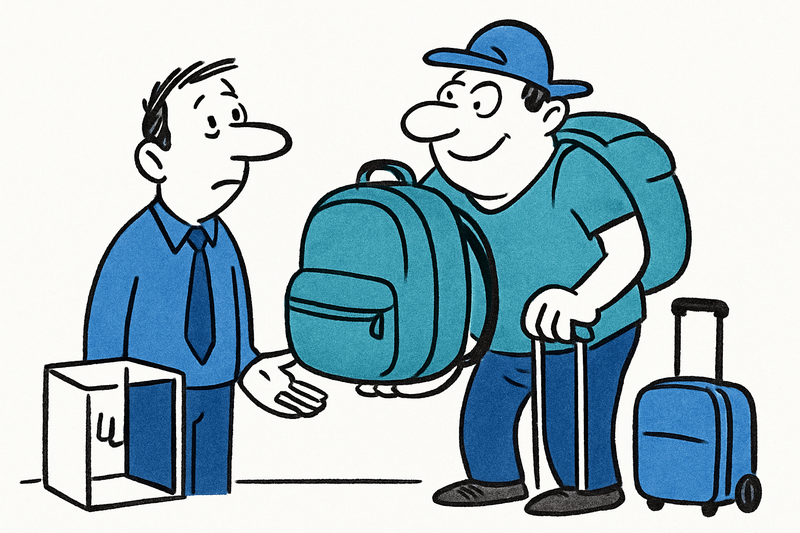
Since early August travelers flying with Ryanair to Mallorca have a small advantage: the free carry-on is now allowed to measure 40 x 20 x 30 centimeters – five centimetres more in height than before. At first glance that sounds like a tiny improvement. At second glance, when flip-flops and the beach towel are packed into the backpack, you notice: four litres more volume (from 20 to 24 litres) can make a lot of difference in summer, as reported in Pequeño extra, grandes preguntas: la nueva regla de equipaje de mano de Ryanair y lo que significa para Mallorca.
The central question: relief or cosmetic change?
The real guiding question is: does the new rule make travel more relaxed — or is it mainly a cosmetic move that doesn't change the low-cost airline's business model? On site in Palma you can see the daily confusion at the gate: travelers with small wheeled suitcases squeeze through, bags are forced into measuring frames, and in the end some still end up at the check-in counters.
According to reports, Ryanair has replaced the measuring devices at airports; see Nuevos marcos de medición de equipaje de mano en el aeropuerto de Palma: ¿Más claridad o solo teatro en la puerta?. That's practical, because without suitable equipment the new size would be hard to enforce. But anyone who has stood at Son Sant Joan airport on summer Sunday afternoons knows the scene: sweat-soaked tourists, stressed staff, a dose of hectic activity and the endless queue at the gate. In such situations staff often decide how strictly measurements are performed. That creates inequalities between airports and flights.
What the public rarely hears
There is more behind the change than friendliness: EU rules are being adjusted, and airlines are reacting preemptively, as explained by the European Commission's air passenger rights guidance. However, one aspect is often left out: enforcement practice. Do staff at smaller regional airports measure as strictly as those in Dublin or London? And how transparent are the fees if someone has to pay extra? Local reporting has highlighted stricter checks and staff incentives in Palma and the surrounding region, see Controles de equipaje de mano en Ryanair: entre eficiencia y molestias en el aeropuerto de Palma.
Moreover, this small relaxation does not change the core: Ryanair continues to earn from surcharges. For 55 x 40 x 20 cm, up to ten kilos, passengers pay between about six and 36 euros — depending on whether you book early or pay at the gate. Those charges are detailed in Ryanair's baggage policy and fees. Checked baggage up to 23 kilos costs up to 50 euros. For many regular visitors to Mallorca carry-on remains a bingo game with the gate staff.
Concrete problems and solutions — a proposal for Mallorca
The situation can be improved without major technical investments. Some concrete suggestions:
For travelers: Measure and weigh before departure — preferably already in the hotel room, while the sea roars outside and buses head to Playa de Palma. Packing cubes and a small hand scale save nerves and money at the gate. Priority and 'Priority Boarding' are worth it if you want to guarantee that your bag comes on board.
For airports: Clear signs and free, easily accessible measuring stations before security would reduce chaos. A short note on the departure monitor ("Free size: 40x20x30 cm") would help many tourists in a rush.
For authorities and airline oversight: Uniform rules and mandatory training for ground staff would reduce unequal treatment between airports. Transparent fee lists on the booking page would also be more sensible than surprise payments at the gate.
Outlook: more than five centimetres
Whether the change at Ryanair represents a turning point is unclear. Other airlines could follow if the EU actually requires larger minimum sizes. On Mallorca, however, practice matters: more clarity at Son Sant Joan airport, better communication from airlines and a few practical tips for travelers would turn this small extra into a real benefit.
Until then: measure, pack smart and stay a little relaxed — because in the end the same scene often plays out: beach, sun, a lukewarm gin and tonic and the satisfied realization that the backpack did fit after all.
Frequently asked questions
What is Ryanair's new free carry-on size for flights to Mallorca?
Does the new Ryanair carry-on rule make flying to Mallorca easier?
How strict are Ryanair carry-on checks at Palma airport?
What should I pack in a small carry-on for a Mallorca beach trip?
When is Ryanair carry-on trouble most likely at Mallorca airport?
How much does Ryanair charge for bigger bags on Mallorca flights?
What can Mallorca airports do to reduce carry-on confusion at the gate?
Is it worth paying for Priority Boarding on a Ryanair flight to Mallorca?
Similar News
From the Reality Studio to the Pitch: Aleks Petrovic Makes Mallorca His Base
The former participant in numerous TV shows moves from Dubai to the island and launches a project with FC Germania Mallo...
When the Phone Falls Silent: Concern for Sarah Joelle in Mallorca — and What It Reveals
After days without a response, the TV personality's unreachability in Mallorca sparked concern. Shortly afterwards an al...
Ultraluxury on the Ground: Four Seasons Jet in Palma — a Reality Check for Formentor and the Island
A high-priced flight crosses Mallorca and its guests stay for days at the Formentor resort. What does the island get bes...
Death of a Witness and the Justice Backlog: Why the Kegel Brothers Trial Matters in Mallorca
A witness in the Playa de Palma fire case has died, and the trial against eight German holidaymakers has been delayed un...

Champagne Reception, Red Carpet and Mini Originals: The Pre-Nit del Art at Gallery Mensing
Almost 400 guests, champagne, pop-art feats by Tom Boston and a raffle for the Parkinson's foundation: Gallery Mensing t...
More to explore
Discover more interesting content

Can Cap de Bou

Townhouse Lleo 72
