

Tire Blowout in Seville: What the Incident Means for Mallorca Travelers
A burst tire in Seville led to an emergency landing — for Mallorca, the incident raises bigger questions about maintenance, diversion practices and local emergency planning. What travelers and officials should pay attention to now.
Tire blowout in Seville: Emergency landing and what it means for Mallorca
Late on Friday afternoon events on the Seville apron moved quickly: after takeoff a Boeing 737-800 carrying almost 190 people turned back because an inner tyre on the left rear landing gear apparently burst. The incident was reported in Reventón de neumático en Sevilla: qué significa el incidente para los turistas hacia Mallorca. Smoke on touchdown caused brief alarm and uncertainty, but there were no injuries. Still, the incident disrupted operations, forced other aircraft to divert and set off a chain reaction — a chain that reaches as far as Palma.
Key question: How resilient is our flight network — and how well prepared are we for disruptions?
The disturbing memory remains: the hissing, the smell of burning rubber, the flicker of emergency lights. But the central issue is less the drama than the system question: how quickly do Mallorca travelers notice when a plane fails somewhere in southern Spain? And how robust are the procedures to ensure that a technical fault does not become a holiday collapse on the island?
More than a burst tire — aspects that are often overlooked
Many focus on the spectacular images. Less attention is paid to why a tyre bursts in the first place. Causes can include foreign objects on the runway, material fatigue, or gaps in the maintenance chain. For airlines with tight turnaround times and high fleet utilization, maintenance is often under economic pressure. That does not necessarily increase the risk, but it makes demands for transparent maintenance logs and independent inspections more urgent.
Another, too rarely mentioned point is the local domino effect. A closed runway in Seville means shifted crew routings, missed connections, delayed or cancelled flights to Mallorca. A similar disruption followed an Aborted Takeoff in Basel: Panic on Board – and What It Means for Mallorca Travelers, showing how quickly regional incidents ripple across schedules. For Palma this means: full transfer buses along the Passeig Marítim, improvised hotel beds, and more waiting guests at Son Sant Joan airport. The quiet arrivals hall, the soft rattle of suitcases and the scent of café con leche can turn into chaos within hours.
Concrete opportunities: What authorities, airports and airlines should do now
Rather than waiting for lengthy investigation reports, the opportunity is to act. Three concrete steps would strengthen the resilience of the connection network:
1. More transparency in maintenance and inspections: Responsible bodies must have access to reliable maintenance data. Not loudly publicized, but verifiable — especially for aircraft types with high utilization. Better data helps planners anticipate risks.
2. Local strandings management: Son Sant Joan should maintain standing agreements with hotels, car rental companies and bus operators. Allocations for quickly diverted passengers, fast transfer solutions and a clear point of contact at the airport reduce chaos and protect the travel experience, especially given recent concerns reported in Alarm among Uber drivers in Mallorca: Safety apparently put at risk.
3. Better communication and clear compensation pathways: Passengers need reliable information, not rumours. Mobile alerts, coordinated briefings for transfer services and transparent rules on rebooking and overnight stays prevent frustration and improvised solutions at the arrivals gate.
What travelers can practically do
Those flying to Mallorca can prepare several things themselves: check flight status shortly before departure, keep chargers and documents handy, and choose travel insurance that covers cancellations and rebookings. Staying calm often helps more than panic — and sometimes a second coffee in the departure lounge.
The incident in Seville is a reminder that air traffic is not automatic but a chain of people and technology. When mechanics, air traffic controllers or ground staff come under pressure, guests in Mallorca will feel it in the end. The good news: the plane landed safely. The lesson now must be: review processes, sharpen responsibilities and equip emergency plans with practical solutions — so that a hiss at takeoff does not become a nightmare for an entire holiday.
In the end there remains the memory of an evening with an unusual sound and the smell of smoke — and of the calm afterwards, when the doors opened and people, orderly and relieved, stepped into the warm Andalusian air. In Mallorca we should ensure that such an event remains an exception.
Frequently asked questions
Will a plane incident in Seville affect flights to Mallorca?
What should I do if my Mallorca flight is delayed or diverted?
How common are flight disruptions to Mallorca in busy travel periods?
Can a tyre failure on a plane be dangerous for passengers?
What are the best practical tips for flying to Mallorca during disruption risk?
What happens at Palma airport when many passengers are diverted at once?
Is travel insurance useful for Mallorca flights?
How does an airport disruption in Spain end up affecting Mallorca holidays?
Similar News
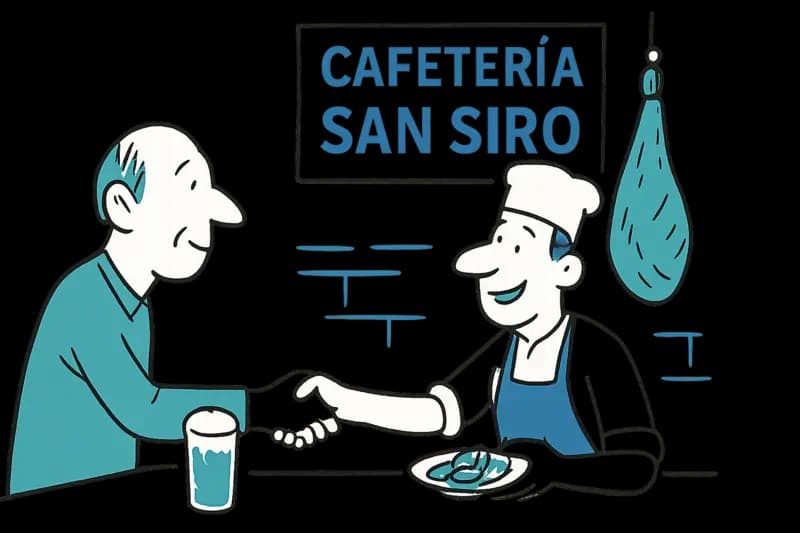
Cafetería San Siro: A Meeting Place on Schinken Street Since 1966
In the middle of Schinken Street, Cafetería San Siro has been offering Mallorcan hospitality for more than six decades —...
From Ballermann to Prison: What the Verdict Against the Femina Operator Means for Palma
The Munich Regional Court convicted a German operator for subsidy fraud. What does the verdict mean for the Femina Club,...
Underpass Verge de Lluc: 19-year-old fights her way out of flooded car – a warning sign for Palma
A 19-year-old recently escaped swimming from her car after the Verge de Lluc underpass held up to one and a half meters ...

When the Floodgates Open Again: Why Palma's Floods Aren't a Coincidence
A sudden heavy downpour around 5 p.m. brought Palma to a standstill: flooded streets, full basements, panicked commuters...
Playa de Palma: Life-saving at Balneario 11 – Lifeguards Act Quickly
A German holidaymaker suffered cardiac arrest at Playa de Palma. Lifeguards resuscitated her on the beach; emergency ser...
More to explore
Discover more interesting content

Can Cap de Bou

Townhouse Lleo 72
