
Mallorca-bound carrier Ryanair provokes Argentine national team: Provocation or PR mistake?
Mallorca-bound carrier Ryanair provokes Argentine national team: Provocation or PR mistake?
A low-cost carrier's social media post is causing international outrage. The key question: Is a company allowed to poke fun at national pride—or does that only create more problems?
Mallorca-bound carrier Ryanair provokes Argentine national team: Provocation or PR mistake?
Key question: Is a commercial airline allowed to attack national pride with mockery just to generate attention?
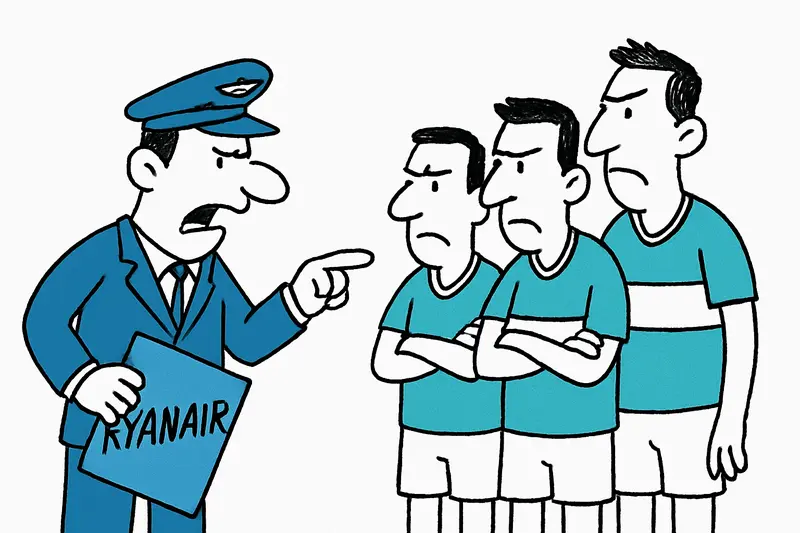
A few days ago, a mocking comment appeared on an official account of a European low-cost carrier, in which the company made fun of the Argentine national football team. The trigger was a photo showing a Spanish professional at an airport, taken at a time when his sporting future was being discussed. The post referred to previous title decisions and thus deliberately alluded to a sensitive, emotionally charged football history.
Shortly after, the major Argentine airline responded with a sharper retort: it recalled times when the national team won major titles and published a picture of the victorious team on the return flight after a World Cup victory. The dispute made waves because this is not just about football derby taunts, but about public relations, brand responsibility and the question of how far provocation under the guise of humor can go.
Critical analysis: The action follows a familiar pattern. On social media channels, provocative posts are deliberately placed to generate reach. That can bring short-term response, but cost trust in the long term. For an airline that transports people every day, this means: anyone who insults customers or alienates entire fan groups risks damage to image and business, partnerships and even problems with authorities or sports clubs.
What is missing in the debate: a sober assignment of responsibilities. Who approved the post — marketing team, agency or individual? Which internal rules apply to posts that touch on nationality, sport or culture? The platforms themselves also remain outside the discussion: how do they deal with targeted provocation that does not violate formal community rules but nevertheless stokes hate or tensions?
Everyday scene from Mallorca: On the Passeig Marítim in Palma, where taxi drivers, café employees and waiting travelers follow the news with one eye, the discussion has arrived. In the café next to the park, where the air conditioning rattles and tourists stare at their suitcases, skeptical voices can be heard: 'If an airline does something like this, what do they actually tell their pilots or ground staff?' Such conversations show: on the island, international PR skirmishes meet the daily lives of people who depend on tourism.
Concrete solutions that don't just sound good: 1) Transparency requirement for companies: publish social media guidelines, who approves posts, which topics are taboo. 2) Separation of marketing and customer service: provocative campaigns must not run from accounts that handle service and flights. 3) Mandatory training: all employees with social media access must complete training on cultural sensitivity. 4) Platform control: networks should temporarily label campaign accounts when complaints are made and make the context visible. 5) Rapid response: companies need clear processes for public corrections, concrete apologies and compensation when they have crossed lines.
What politicians, fans and tourism officials should ask: Is a brief apology enough or is structured review required? What role do association rules in sport play when sponsors or service providers deliberately provoke? And how can the local economy and destinations prevent such skirmishes from poisoning the mood during high season?
Concise conclusion: Public attention does not arise in a vacuum. When an airline account targets national pride, it affects not only fans at the consoles but also people at airports, cafés and taxi ranks — here in Mallorca as elsewhere. Provocation may bring clicks in the short term. In the long run, however, it damages trust, business relationships and the peaceful coexistence on an island that lives from arrivals and connections. Companies should ask themselves: Is a viral moment really worth the potential loss of reputation?
Frequently asked questions
When is the best time to visit Mallorca for sunny beach days?
What should I pack for a trip to Mallorca?
Are Mallorca's beaches suitable for swimming with kids?
How can I travel around Mallorca without renting a car?
What are must-see areas or activities in Mallorca?
Is Mallorca good for water sports like snorkeling and kayaking?
What is the weather like in Mallorca through the year?
Are there easy day trips from Palma?
Similar News
Complaint surge at Balearic airports: Who bears responsibility for broken suitcases?
In Palma and on the neighboring islands, travelers report significantly more luggage damage and losses this year. Figure...
Empty Seats, Full Worries – Why Mallorca Excursions and Taxi Rides Suffer This Summer
Buses stand idle, taxi drivers notice guests' caution: What are the consequences of the new frugality for the island's e...
Royal shopping on the Born: Loewe returns — and Palma rejoices
Sofía, Elena and Victoria Federica were seen on the Passeig del Born as Loewe opened its new boutique. A sunny visit tha...
White Circles on the Roadway: Can They Reduce Motorcycle Accidents in Mallorca?
The Spanish road authority is testing white circles near center lines to keep bikers out of the oncoming lane. A look at...
Luggage chaos at Balearic airports: Why complaints are rising so sharply in 2026
This year an unusually high number of travelers at the Balearic airports report damaged, delayed or missing baggage. The...
More to explore
Discover more interesting content

Boat Tour with BBQ along Es Trenc Beach

Private transfer from Mallorca Airport (PMI) to Pollensa
