
Underwater in Puig de Ros: How Sabrina Kleinas Turns Models into Sea Creatures
Underwater in Puig de Ros: How Sabrina Kleinas Turns Models into Sea Creatures
She works where the morning is clearest: Sabrina Kleinas photographs models just beneath the water's surface – in Port Adriano and Mallorca's quiet coves. Insights into technique, light and why the island is ideal for her art.
Underwater in Puig de Ros: How Sabrina Kleinas Turns Models into Sea Creatures
The morning in Puig de Ros smells of pine resin and the sea. On the road to the coast the light shimmers, vans rumble past, a fisherman casts his last line. It is at this hour that the water is best for Sabrina Kleinas: crystal clear, calm enough for a model with fins and fabric to look like they are on another plane.
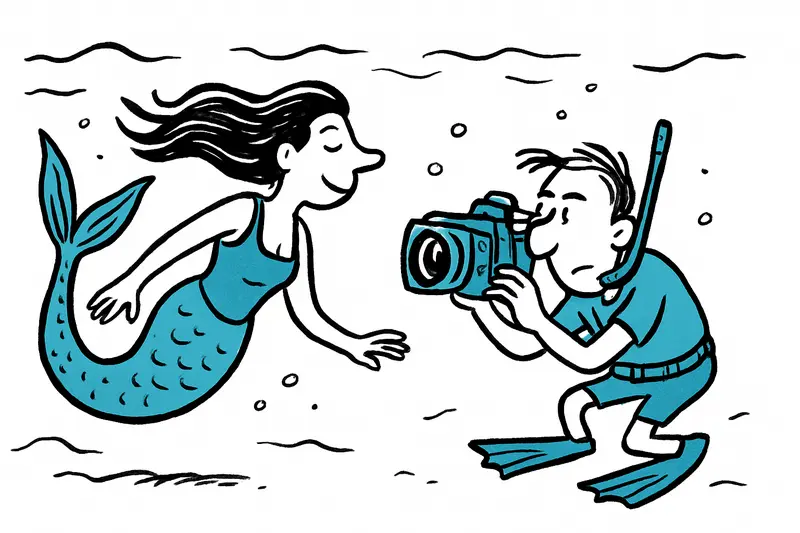
Sabrina is a photographer, German-French, 34 years old, and has lived on the south coast near Llucmajor since 2023. She specializes in underwater shoots and occasionally turns models into proper mermaids or aqua-men. Her workplace is not a studio but coves like Port Adriano and other sheltered spots on the island – depending on the swell that day, and as described for early mornings in A Clear Morning in Port d'Andratx: Light, Espresso and the Sound of the Sea.
Technique and timing play a major role in her sessions. Sabrina usually shoots in the early morning hours, often before 11 a.m., when the water shows the richest blues and turquoises. The images are created just below the surface, at about one meter depth. She works without breathing apparatus, using a weight belt, fins and a diving mask. For the camera she uses a Canon EOS 5D Mark III in a Seafrogs housing – sturdy enough for the rough movements of water and fabric.
What makes the result special are the fine light patterns on skin and fabric, the so-called caustics: the shimmering streaks that the waves cast through the surface. Sabrina deliberately looks for these effects. On the shore someone from the team is often ready to help with dresses, watch for boat traffic and adjust times when the tide reduces visibility.
Modeling underwater is no picnic. Before going to the open sea, Sabrina recommends practicing in a pool. Breath control, calm resurfacing, posing with fins – all of this can be trained in advance. At her shoots you see professionals like Marlene Kröger or Christina Braun, but also newcomers and experimental dancers. Her experience helps create scenes that are sensual and serene at the same time; sometimes models have only a few seconds underwater before they have to surface.
Her path to underwater photography was not direct: originally she completed commercial training and worked in other European cities before making photography her profession in 2014. The idea of working underwater came later and filled a gap: the need for a different light, for a slowed-down way of working, for places where movements appear slower. Mallorca, with its clear water and sheltered coves, proved to be a stroke of luck.
Waves as partner, island as stage
The island itself is part of the work. In Mallorca the light is different than in Paris or Lorraine – harsher, with its own tone that filters through the water. You feel it at every glance at the sea: fishing boats in the distance, the soft creak of yachts in Port Adriano, walkers stopping curiously to watch the strange figures in the water. For Sabrina the local pace also has practical sides: less hustle, more room for preparation, and people who are open to unusual art projects.
Her work is also recognized internationally: a selection of her underwater images recently appeared in a Portuguese edition of a fashion magazine, and her series has found recognition beyond the island. Her second book 'Oxidane' shows numerous works across 144 pages, alongside other photobooks such as Mallorca Seen Anew: A Photobook That Slows You Down. Some of her pieces are also shown at events in Paris.
For Mallorca this is more than a pretty photo: artists who live and work here bring attention beyond beach and paella. They spark interest in the island as a place for creative production – an advantage for galleries, local collaborations and for tourism that seeks cultural offerings rather than purely sunny beaches.
What this can mean for the island
Sabrina is already in talks with diving schools and small local galleries about joint projects; the island also hosts grassroots efforts like With Fins and a Net: How a German Freediver Keeps Mallorca's Coasts Clean. Concrete ideas are on the table: workshops for photography in and on the water, exhibitions in Palma, collaborations with marine conservation groups that could use the imagery as a platform for education. These are simple steps that would enliven the local cultural calendar while introducing young people to photographic technique and breath training.
In the end the image remains of a model gliding weightlessly through Mallorca's clear water, fabric and hair softly tugged by the current. Those who stand on the mole of Port Adriano early in the morning can sometimes see exactly this spectacle – and realize: the island offers more than postcard motifs. It is a studio if you just look.
A small note: Anyone interested in a workshop or a shoot can find Sabrina on social platforms under her artist name and inquire there about dates and requirements.
Frequently asked questions
What is underwater photography like in Mallorca, and when is the best light for it?
How should models prepare for underwater shoots in Mallorca?
What makes Mallorca’s sheltered coves good for underwater shoots?
When is the best time of day for underwater photography in Mallorca?
Why is Puig de Ros a notable spot for underwater shoots near Mallorca?
Why is Port Adriano a popular location for underwater photography in Mallorca?
How does living near Llucmajor influence Mallorca underwater photography opportunities?
Can Mallorca underwater photography lead to exhibitions in Palma?
Similar News

Bierkönig Murder of 1997: More than 50 Tips — Opportunity or Distraction?
After a TV broadcast, numerous tipsters came forward in the case of the triple murder in S'Aranjassa. Senior public pros...

103 km/h in the pedestrian area: Highly tuned e-scooter seized in Palma
On September 23, police in the Sant Miquel pedestrian zone in Palma confiscated a modified e-scooter that reached 103.2 ...

37 Years of Power and a Tunnel: How 'El Pablo' Shaped La Soledat — and What's Missing Now
The renewed arrest of alleged drug boss Pablo C. M. raises questions: How could a clan deceive streets, homes and author...

Palma blocks parking spaces for tourists – what's behind it and who pays the price?
The city of Palma has declared 1,027 ORA parking spaces in the center as residents-only spaces by official notice. A cal...

Fatal accident near Son Llàtzer: When a medical episode at the wheel turns the road into a danger
In a collision near the roundabout at Son Llàtzer hospital, an approximately 80-year-old car driver died. The suspicion ...
More to explore
Discover more interesting content

Can Cap de Bou

Townhouse Lleo 72
