
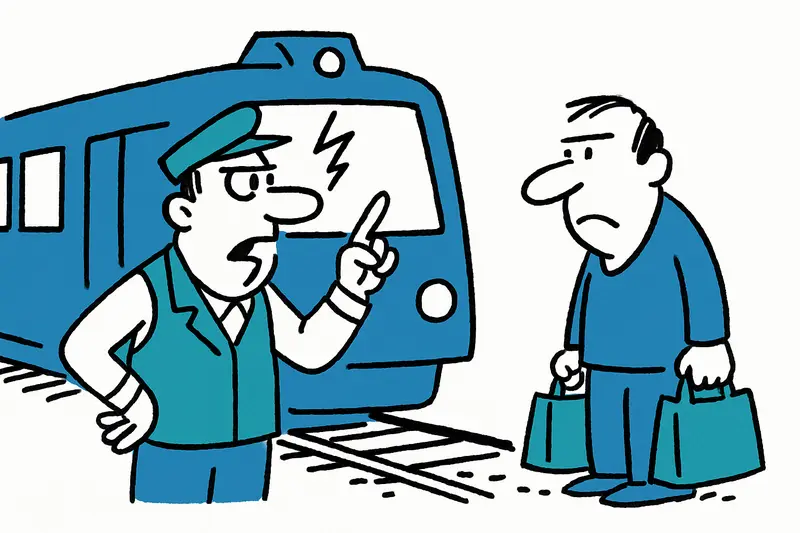
Strikes on the Horizon: How Safe Is Mallorca's Railway Really?
Strikes on the Horizon: How Safe Is Mallorca's Railway Really?
Employees of SFM report repeated incidents: contact with overhead lines, a platform collision, and a track section out of service for weeks. The works council threatens strike action. An assessment of the situation and what needs to be done now.
Strikes on the Horizon: How Safe Is Mallorca's Railway Really?
Key question: What risks are flying under the radar - and who is responsible?
In recent weeks, employees of the island railway have repeatedly sounded the alarm: in Marratxí a railcar is said to have come into contact with the overhead line and a fire was narrowly avoided; a few days ago there was damage after a collision with a platform; elsewhere a track section was out of service for more than ten days. In addition, there are reports of numerous temporary speed restrictions during the summer and that new trains are currently not allowed to run at full line speed. Such reports unsettle commuters and staff alike (with broader concerns about public-service industrial action reported elsewhere, see Strike Warning in the Public Service: Could the Balearic September Come to a Standstill?).
The central question is simple but uncomfortable: are these isolated incidents or does a structural safety problem exist in the network? And: are the measures taken so far sufficient to truly protect passengers and personnel?
Critical analysis: causes, patterns, responsibility
The incidents point to several possible weaknesses: first, a maintenance backlog. If tracks are defective for days or repeated restrictions are imposed, this indicates too few maintenance personnel (see More Staff for Mallorca's Trains: Is That Really Enough?), a shortage of spare parts or postponed repairs. Second, prioritization: if investment announcements for new projects are louder than reports about ongoing maintenance, long-term expansion plans may overshadow day-to-day safety (for example, Night trains in Mallorca: Good idea — but can it work by 2027?). Third, communication: dozens of complaints, according to the employee representatives, went unanswered – this undermines trust and delays solutions. And fourth, certification and system alignment: the fact that new trains are not allowed to run at the intended speeds suggests missing adjustments to the infrastructure or incomplete testing processes.
The labor inspectorate has apparently already sent a letter to management. That is a sign that the problems are being viewed beyond internal disputes – and that a neutral review is necessary.
What is missing in the public debate
There is a lot of talk about investment sums and major projects, but less about: clear, verifiable maintenance plans; publicly accessible incident statistics; staffing levels in maintenance; inventories of critical spare parts; and realistic repair timelines. A lack of transparency makes discussions louder, not better.
A daily scene from Palma
Early in the morning at Estació Intermodal you immediately notice when something is wrong: the loudspeakers flicker, incoming trains roll in more slowly, wind whistles through the entrance, and commuters check their phones more often than usual. A woman with shopping bags sighs, "Another delay." Such small things are indicators; behind them larger safety risks can be hiding.
Concrete solutions
1. External safety review: An independent inspection by experts from off the island should neutrally assess technical defects and processes.
2. Public incident register: An anonymized, regularly updated log of all safety-relevant incidents would create transparency and make trends visible.
3. Secure maintenance fund: Parts of the announced investments should be legally earmarked for maintenance and spare parts until visible improvements are demonstrated.
4. Joint safety commission: The works council, technicians, company management and independent experts must meet on a binding basis, set priorities and monitor deadlines.
5. Emergency and training initiative: More routine emergency drills, better passenger information and clearer procedures during disruptions.
6. Short-term measures: Where necessary, temporary line closures or reduced service with replacement transport – accompanied by clear communication and compensation rules for passengers.
Conclusion - a short, clear verdict
The warning signs are there: recurring incidents, unanswered warnings from employees and restrictions on new trains leave no room for downplaying. Mallorca's railway now needs less PR and more concrete action: independent inspections, dedicated funds for maintenance, better communication and genuine participation by employees. This is not a question of convenience but of safety – for commuters, tourists and the people who travel here every day to work (related strike risks at the airport are also looming, see Ryanair Ground Staff Strikes: What Mallorca Needs to Know).
Frequently asked questions
Is Mallorca's railway safe for daily commuters and visitors?
Why are trains in Mallorca running with temporary speed restrictions?
What should I do if my train in Mallorca is delayed or disrupted?
Are Mallorca's rail problems likely caused by poor maintenance?
What is happening at Estació Intermodal in Palma when there are rail disruptions?
What happened in Marratxí on the Mallorca railway?
Could Mallorca's railway need an independent safety inspection?
What can Mallorca passengers expect if railway maintenance problems continue?
Similar News

Magaluf: Watchtower Alarm – Lifeguards Pull Unconscious Beachgoer from the Water
After a drama in the late afternoon, two lifeguards at Magaluf beach rescued an unconscious 44-year-old man. He was stab...

Turquoise in the City: How dangerous is the color play of the Sa Riera?
The Sa Riera in Palma suddenly turned turquoise — a pretty motif, but behind the effect lies a discharge of saline waste...

Jeckliner at Sunnesching: Cologne spirit sets sail from Palma
In September 2027 the Mein Schiff 2 briefly becomes a floating carnival stage: four days with Cologne bands, comedy and ...
Finally Home: Mike and Leyla Heiter Buy Villa with Sea View in Mallorca
The reality TV couple Mike and Leyla Heiter have bought a house in Mallorca with a roof terrace and sea view. An Instagr...
Arrest after series in Palma: Who protects apartments from repeat offenders?
The National Police arrested a man in Palma who investigators say may have broken into several apartments. In one incide...
More to explore
Discover more interesting content

Can Cap de Bou

Townhouse Lleo 72
