
Serious Fall in Santa Ponça: How Safe Are Our Stairwells?
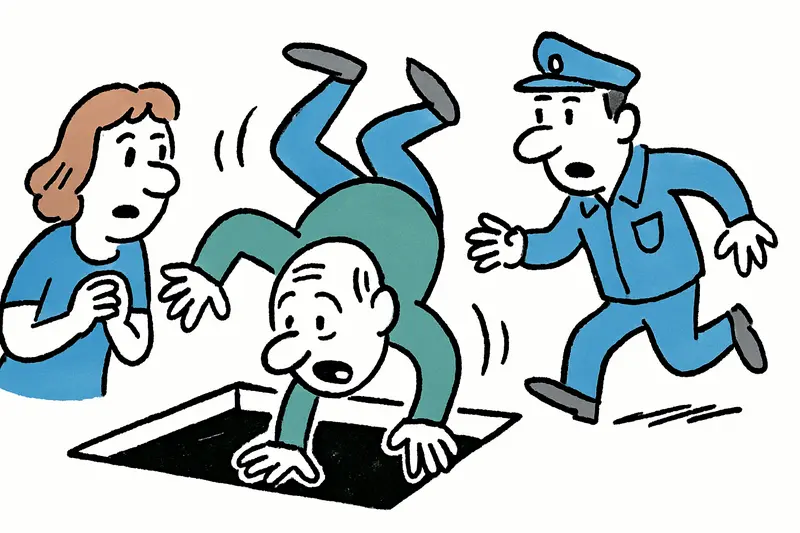
A 55-year-old man was found unconscious in a stairwell in Santa Ponça. The incident raises questions about residential safety, alcohol prevention and neighborhood support.
Serious Fall in Santa Ponça: How Safe Are Our Stairwells?
Yesterday evening at around 9:40 p.m., neighbors in Santa Ponça found a 55-year-old man unconscious in a narrow stairwell of a multi-family building near the seafront promenade, according to local reporting Santa Ponça: hombre cae en pozo de la escalera y resulta gravemente herido. A Guardia Civil officer passing by discovered the injured man, called emergency services and stayed with him until help arrived. Paramedics on site reported severe head injuries and a serious traumatic brain injury. The man was then transported urgently to a hospital in Palma – his condition is critical.
The evening smelled of the sea, but also of beer cans and cigarettes; muffled music could still be heard from one of the apartments. "You often hear something on the street, but for something to happen right inside the building…" says a neighbour who instinctively checks the trash bin once more. Other residents knew the man only vaguely from the building community – nobody expected this to happen.
The central question: accident or systemic problem?
The Guardia Civil has launched initial investigations and currently does not rule out third-party involvement. Official statements, however, mention heavy alcohol consumption as a possible factor, a risk highlighted by the WHO fact sheet on alcohol. This raises a bigger question: was this a tragic isolated incident or a symptom that our housing and neighbourhood structures offer too little protection against such risks?
It is easy to place the blame on the individual – alcohol, inattention, tripping. But the environment played a role: narrow stairwells, poor lighting, slippery steps after a hot summer day, slick soles, missing emergency buttons or cameras. In moments like these it becomes clear how little effort can sometimes prevent a disaster – and how many small factors can combine before something serious happens.
Legal and technical questions
Who is responsible when people fall in communal areas? Owners, property managers and the municipality share responsibilities. Building codes prescribe handrails, lighting and certain dimensions, but practice varies: some stairwells are bright and smoothly tiled, others are dark, have incorrect slopes or worn steps. Maintenance is often cut back due to costs and bureaucracy.
Another point: safety measures such as non-slip coverings, motion detectors, well-positioned handrails or simple emergency buttons are not universally present. Camera surveillance in residential buildings is legally sensitive, as explained in AEPD guidance on video surveillance, but straightforward improvements could save lives without monitoring. The question for local politics is therefore: where is the threshold between obligation and voluntariness when it comes to basic safety in living spaces?
Social causes that are rarely discussed
Less obvious are the social backgrounds: alcohol as a coping mechanism, loneliness among older residents, and weak social ties in anonymous housing complexes. In coastal communities like Santa Ponça, where tourism, commuters and long-term locals mix, gaps in social responsibility often emerge; similar incidents such as Fall at Ballermann: Why a Morning on Playa de Palma Can Turn into an Accident illustrate how varied populations can complicate prevention and assistance. Neighbours hear music, see people pass by, but direct help does not always follow – except in this case, where the turning point was that a police officer happened to be nearby.
The role of nightlife and open bars also plays a part. When drinks are served late and people then return alone to narrow stairwells, risks arise. Prevention measures against alcohol-related harm are often limited to tourist areas – neighbourhoods are frequently left out.
Concrete steps that could help
What could Santa Ponça do in the short and long term? Some pragmatic proposals that go beyond bureaucracy:
Technology and infrastructure: motion sensors, improved stair lighting, non-slip step edges, regular inspections by property managers, simple emergency buttons in larger residential complexes.
Municipal measures: subsidy programs for maintenance of older apartment blocks, clear checklists for landlords and property managers, sensitised inspections by the town hall.
Social and prevention: neighbourhood initiatives for first-aid training, local alcohol-prevention offers, mobile social workers during evening hours and information campaigns that are practical rather than patronising.
A small effort in many places can significantly reduce the likelihood of such accidents. It's not about spreading fear, but about making everyday risks more visible and promoting pragmatic solutions.
What remains
The neighbourhood is in shock. Conversations on the stair landing, questioning looks at the locked front door, the evening light over the promenade – all of it is a reminder that safety does not come solely from institutions but also from residents' solidarity. That a Guardia Civil officer happened to pass by was a bitter stroke of luck; without that chance, the outcome could have been different.
The Guardia Civil asks witnesses to come forward. If you saw anything, please report it. And while we wait for news from the hospital, it is worth taking a look at your own building's stairs: a loose step, missing lighting, beer cans in the hallway – these are small signals we should take seriously. Let us hope together for the victim's recovery and that this accident leads to practical consequences for greater safety in our homes.
Frequently asked questions
How safe are stairwells in apartment buildings in Mallorca?
What should I look for when checking stair safety in my Mallorca building?
Can alcohol make stair accidents more likely in Mallorca?
Who is responsible for safety in communal stairwells in Mallorca?
What safety improvements can help prevent stair falls in Mallorca?
Are stairwells in Santa Ponça a concern for residents and visitors?
What should I do if I find someone injured in a stairwell in Mallorca?
Why do older apartment buildings in Mallorca need more stair safety checks?
Similar News
First Day, First Consequences: What Palma's Rent Freeze Really Means
A new decree stops a planned eviction in Palma — but what really changes for tenants and landlords? A reality check with...
When Housing Becomes a Matter of Survival: Mallorca Between Rental Frenzy and Everyday Life
The case of 87-year-old Maricarmen showed that on Mallorca many people's lives are poised between affordable and uninhab...
Autumn in Mallorca: When Melancholy Gets a Window
Why autumn quietly tightens here — and how to make use of the mood: walks, culture, candles and the light from Palma to ...
Near-miss on Lanzarote: Landing Ryanair Jet and Iberia Takeoff — what really went wrong
On Lanzarote there was a dangerous incident: A Ryanair flight (FR5910) from Dublin landed on runway 03 while an Iberia E...
Eurowings introduces new Premium Business seats on Mallorca routes
From December 1, selected Eurowings flights to Palma and other destinations will feature eight particularly generous sea...
More to explore
Discover more interesting content

Can Cap de Bou

Townhouse Lleo 72
