
Between Signal Horn and Concern: Why 15 of 48 Measures Are Not Enough
Between Signal Horn and Concern: Why 15 of 48 Measures Are Not Enough
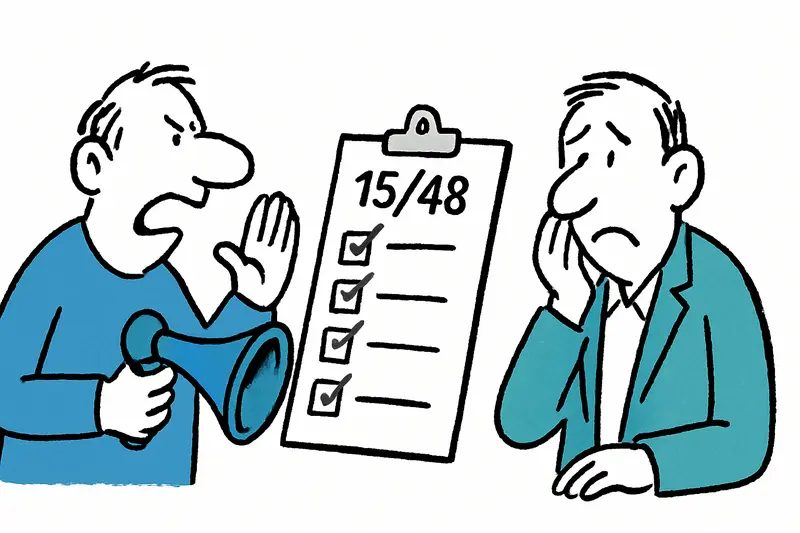
SFM and the works council agreed on 15 of 48 safety proposals. Good news — but what gets left behind? A reality check from Palma station to the workshops.
Between Signal Horn and Concern: Why 15 of 48 Measures Are Not Enough
Key question: Are half‑hearted concessions enough to truly stabilise everyday life, trust and safety in Mallorca's regional rail service?
Early morning in front of Palma station: commuters with coffee cups, a child tugging at their mother's hand, and a train rolling quietly into the hall. From the loudspeaker a tired announcement about delays — nothing spectacular, but enough to raise the question of reliable safety. It is precisely there, between small everyday moments and technical procedures, that the current dispute between the rail company SFM and the works council takes place. Similar debates about whether measures are sufficient appear in 70 Seahorses off Mallorca: Well-intentioned, but is it enough?.
Fact: Management and the works council have agreed on 15 of 48 proposed safety measures. Negotiations continue, the next meeting is scheduled. A separate safety commission has not yet been negotiated. The works council calls the step progress, but remains sceptical because fundamental safety protocols in daily operations are still missing, and questions about staffing levels and operational capacity are explored in More Staff for Mallorca's Trains: Is That Really Enough?.
At first glance this sounds like compromise — and compromises are important. But wait: if fewer than a third of the demands are implemented, you need to look more closely. Which areas were prioritised? Are these symbolic measures or real structural changes? In public statements the details often remain blurred. This is where the critical analysis begins.
Critical analysis
The sticking points are not only the number of measures, but their quality and implementation. Safety in rail operations consists of several interconnected elements: clear deployment plans, regular training, binding reporting channels for incidents, robust duty rosters, technical inspections and fast response chains. If only individual elements are improved without linking the processes, the risk remains.
Another problem: transparency. Passengers and employees have a right to know which measures are being implemented, when inspections will take place and who is responsible. When negotiations take place behind closed doors, mistrust grows — and that in turn weakens acceptance of any later measure, as discussed in Palma takes stock: 7,700 fines — success or just performative toughness?.
What is missing from the public discourse
The discussion often focuses on the rough figure “15 of 48” and on strike or no strike. That suppresses two topics: first, the question of prioritisation — which of the 33 remaining points are acutely safety‑relevant, which are long‑term? Second, there is a lack of perspective on everyday practice: how do drivers, workshop managers or cleaning staff who deal with materials and time pressure every day feel? Their perspective must not only appear in the works council report but must be part of the public debate.
Everyday scenes as a test
A Monday morning in Inca or Manacor looks similar to Palma: commuters, a few elderly people, schoolchildren. If a train suddenly fails at a platform, it feels like a small chaos to everyone involved. Not only because of missing technology, but because procedures do not automatically take effect: who informs the users? Who provides replacement transport? Such moments reveal whether a measure exists only on paper or works in everyday life.
Concrete solutions
- Create a priority list: a transparent ranking of the 48 points based on hazard potential, implementation time and cost. Publicly accessible, with clear deadlines.
- Immediate protocols for daily operations: binding checklists for the start and end of shifts, defined reporting channels for incidents, standardized substitution rules.
- Independent audits: external inspectors to review technical systems and procedures at least once a year.
- Local involvement: regular safety clinics at stations where staff and passengers can report concerns directly.
- Pilot projects for new measures: small‑scale tests (e.g. on the Palma–Manacor line) before rolling out island‑wide.
- Training programs: practical exercises for staff, including emergency scenarios and evacuation drills.
Concise conclusion
Agreement on 15 measures is better than stalemate. But it is not a carte blanche for all‑clear. Safety cannot be "checked off" with individual measures. It requires binding procedures, transparency and passing the daily test in the small moments on the platform. Those who think only in numbers overlook the people who drive, maintain and use the trains. Mallorca deserves trains you can trust — not just promises, but verifiable results.
Frequently asked questions
Are Mallorca trains still considered safe if only part of the proposed measures have been agreed?
What makes rail safety in Mallorca depend on more than just new rules?
Why do passengers in Mallorca care about negotiations between SFM and the works council?
What should commuters in Palma or Inca expect if rail safety concerns continue?
What safety measures matter most for trains in Mallorca?
How can Mallorca passengers tell whether rail safety measures are really being implemented?
Why is transparency important in Mallorca rail negotiations?
What would improve everyday rail safety on the Palma–Manacor line?
Similar News
When the Wallet Becomes a Danger: Attack in Peguera and Lessons for Mallorca
In Peguera, two women are said to have stolen the wallet from a 75-year-old German couple. When the victim intervened, t...
Plata stays Plata: Young people take over, Llonguets remain
A small bar on Carrer de l'Argenteria will continue: Tolo Serra hands the place over to young Mallorcans at the end of t...
Unnoticed in the Luggage Compartment: How a Boy Traveled More Than 100 Kilometers in a Team Bus
A minor traveled in the undercarriage of a team bus for more than 100 kilometers until his cries for help were heard. A ...

Cap Vermell Grand: Second Michelin Key – a Gift for the East
The Cap Vermell Grand in Capdepera has been awarded its second Michelin key. For the region this elevates the luxury off...
Eurowings lets four aircraft carry names – a friendly idea that also reaches Mallorca
Eurowings is launching a campaign: four Airbus A320s are to carry the first names of people who help others in everyday ...
More to explore
Discover more interesting content

Can Cap de Bou

Townhouse Lleo 72
