
Shock in the Tramuntana: Hiker collapses on route between Camp de Mar and Port d'Andratx
Shock in the Tramuntana: Hiker collapses on route between Camp de Mar and Port d'Andratx
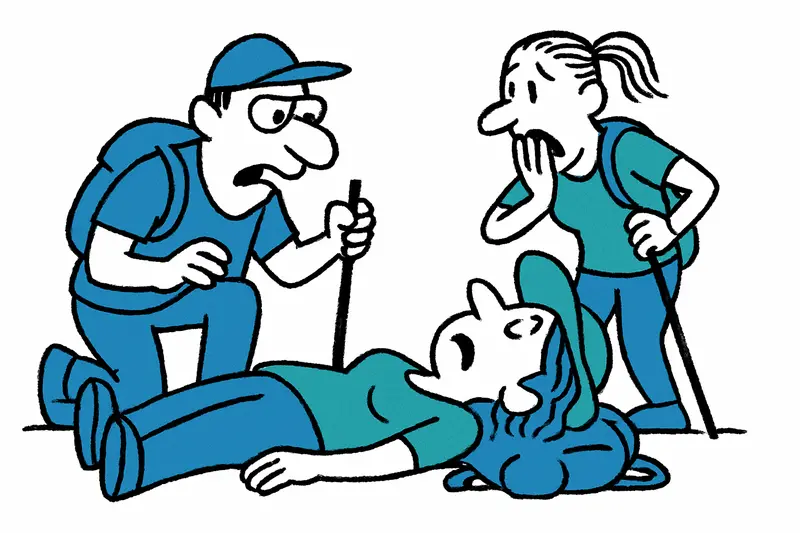
During a hike from Camp de Mar to Port d'Andratx a 65-year-old German holidaymaker collapsed. Emergency services treated her on site before she was taken to the local medical center. A reality check shows: preparation and infrastructure along the trails are still lacking.
Shock in the Tramuntana: Hiker collapses on route between Camp de Mar and Port d'Andratx
On Sunday afternoon, around 2:30 pm, a 65-year-old German holidaymaker suddenly lost consciousness during a hike in southwest Mallorca. The group was on the section between Camp de Mar and Port d'Andratx when the woman first complained of feeling unwell and shortly afterward collapsed. The local police of Andratx and the Balearic emergency service Samu 061 were on site; the patient received first aid on the ground and was later taken to the local medical center in Port d'Andratx for further assessment. Similar incidents have been reported, for example Heat shock on the quay: Swiss tourist collapses in Andratx after hike.
Key question
Have we done enough to ensure that such situations can be treated safely and quickly on popular coastal paths — or are we relying too much on chance and the helpfulness of hiking groups?
Critical analysis
The incident shows two sides: fortunately the rescue chain worked — emergency call, local police, Samu 061 and finally transport to the medical center. On the other hand, it became clear that initial care depended on those present and the first responders on site. The woman was initially too weak to be moved; blood sugar and blood pressure measurements were taken on site. Such checks are important, but they do not replace targeted preventive measures: Does anyone in the group know her medical history, who has medication, who can perform cardiopulmonary resuscitation (CPR) or operate a automated external defibrillator (AED)?
Many hikers walk along Mallorca's coast, often in small, international groups. The idyllic picture of cedars, the scent of pine and the sea can easily hide the fact that shade, water and food reserves, mobile reception and trail markings vary greatly. Especially on intermediate stages like Camp de Mar — where sun-seekers and day-trippers cross the route on weekends — the mix of local walkers and tourists is high, and not everyone is necessarily prepared for alpine-style outings.
What's missing in the public discourse
There is too little talk about how simple and effective preventive measures can be. Not only are more signs needed, but concrete information at starting points about route length, elevation gain, expected walking time, water points and first-aid stations. Mobile coverage maps, information on local defibrillators (AEDs) and clear instructions on what to do in medical emergencies are missing on many paths. Past tragedies underline this need, for example Cardiac Arrest in Caimari: Are Mallorca's Villages Prepared for Medical Emergencies Involving Tourists?, and the responsibility of tour operators and landlords also often remains a side issue: guests receive hiking maps, but rarely a brief risk briefing.
A scene from everyday life
Imagine the path: pine rustle, the scent of sea and olives, children laughing on the beach at Camp de Mar, anglers in the harbor of Port d'Andratx, lines clacking. This is precisely where a severe heatstroke or a low-blood-sugar attack can suddenly become reality. On Sunday the conditions were relatively mild, but the mix of sun exposure, exertion and irregular medication can affect older people sensitively. Other incidents, such as the account of a hiker who spent the night near Puig Major after a wrong turn, illustrate how quickly harmless walks can turn dangerous: Nighttime Wrong Turn at Puig Major: Why a Harmless Walk Can Quickly Turn Dangerous.
Concrete solutions
1) More visible information at trailheads: short risk notices, approximate walking times, water points, difficulty level. 2) Map and mark local AED stations at harbors and popular starting points and note them on signs. 3) Free QR codes at car parks and bus stops linking to an emergency checklist and local service numbers. 4) First-aid workshops for tourism providers, hoteliers and leisure operators — half- or full-day courses for staff who frequently accompany groups. 5) Simple checklists for hiking groups: medications to hand, emergency contact, planned return time left with accommodation. 6) Better coordination between municipalities (Andratx), emergency services and tourist offices on highly frequented routes.
Who pays?
Many measures are inexpensive: QR codes, signs, info flyers. The acquisition of AEDs and their maintenance costs more, but quickly pays off if lives are saved. Municipalities, tourist offices and private operators should consider whether a common fund for such safety measures would make sense.
Those strolling through Port d'Andratx in the late afternoon feel the calm after such a scare: boats rock, voices mix with gull cries, a café owner wipes the counter. Scenes like this remind us that emergencies are part of everyday life — and well-organized prevention makes them less dramatic.
Pointed conclusion
The collapse of the 65-year-old fortunately did not end fatally. That is good. But it's too easy to rely on everything turning out fine again. Mallorca has the opportunity to take the numerous, often small and manageable steps that turn such shocks into responsible experiences: clearer information on the trails, accessible defibrillators, well-coordinated training sessions for people who regularly lead groups. Small steps that together make life safer — and the Tramuntana experience more relaxed for everyone.
Frequently asked questions
What should I do if someone collapses on a hike in Mallorca?
Can you get heatstroke while hiking in Mallorca even when it does not feel extremely hot?
What should I pack for a coastal hike in Mallorca?
Is the hike between Camp de Mar and Port d'Andratx suitable for all walkers?
Where should I look for emergency help on Mallorca hiking routes?
Are coastal walks in Mallorca safe in summer?
What information should be available at Mallorca trailheads?
What can hiking groups do to stay safer in Mallorca?
Similar News
More water than last year: Mallorca's reservoirs breathe easier
September rain refilled the Tramuntana's reserves: overall fill around 35 percent, Cúber at 40.42 percent, Gorg Blau at ...
Three Luxury Hotels in Banyalbufar: Lots of Money, Many Questions
A Danish investor plans three exclusive accommodations in Banyalbufar — including the historic Son Valentí. The announce...
2.1 tonnes of cocaine on sailing yacht off Spain's coast – a reality check for the coastguard
A 14-metre yacht was seized with 2.1 tonnes of cocaine. Who monitors the ports, how does the international hunt succeed ...
Heat Bonus in Mallorca: 100 Euros Extra for Outdoor Staff at MarSenses
MarSenses pays employees who worked outdoors in August an extra €100 as recognition. Lighter uniforms, reduced hours for...
Renovating in Mallorca: What You Really Can Do Without Neighbour Consent
Many think they can do whatever they want in their apartment. That's partly true — but only as long as structural elemen...
More to explore
Discover more interesting content

Can Cap de Bou

Townhouse Lleo 72
