
Signs of Life on the Beach: 47-year-old Tourist Stabilized After Resuscitation at Playa de Muro
Signs of Life on the Beach: 47-year-old Tourist Stabilized After Resuscitation at Playa de Muro
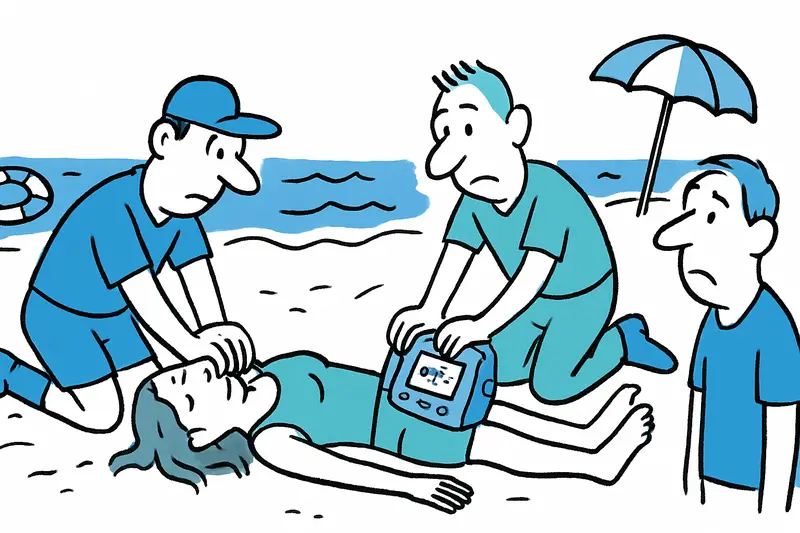
Quick help in the morning: A 47-year-old German woman was found unconscious in the shallow water at Playa de Muro. Rescuers performed CPR, administered oxygen and used a defibrillator; the woman was later transported to hospital.
Signs of Life on the Beach: 47-year-old Tourist Stabilized After Resuscitation at Playa de Muro
Swift action by bathers and rescue teams prevented worse outcomes
It was around 11 a.m. on a hot morning, the air smelling of sunscreen and sea: a holidaymaker discovered a woman motionless in the shallow water of Playa de Muro: Seconds That Saved a Life — and What We Must Learn at the border between Muro and Santa Margalida. What followed was an example of practiced, calm cooperation in the open air.
The finder alerted the nearby lifeguards. When the rescue teams arrived, the 47-year-old German lay unconscious on the shore, with no detectable pulse and no breathing. The lifeguards immediately began cardiopulmonary resuscitation; a semi-automatic defibrillator was connected and oxygen was administered. The device analysed the heart rhythm but did not recommend an electric shock.
Additional rescue units from Can Picafort: Death on the Beach – Was There Enough Protection Against Water Hazards? were requested in parallel; a jet ski, a fast rescue vehicle and the municipal ambulance from Muro supported the operation. For minutes the helpers performed compressions in time until the woman began to breathe on her own again. Her oxygen saturation initially remained low, so care continued until the medical emergency service arrived.
A team from the Balearic emergency service 061 took over further treatment on site, supported by a mobile intensive care unit. According to the operation report, the patient's condition stabilised, she regained partial consciousness and was transported to the Juaneda Playa de Muro hospital for further care.
Muro local police and the Guardia Civil secured the scene and assisted with coordination. Spectators on the beach, who at first stood back in shock, respectfully gave the rescuers space while they worked. The scene left many with the impression: something here works — and quickly.
Such incidents are a reminder of how important well-trained rescuers and available defibrillators on beaches are. A semi-automatic defibrillator automatically decides on a shock and is an indispensable tool in helpers' hands; at the same time simple measures like consistent chest compressions can be lifesaving. Bystanders can help: give loud, clear directions to rescuers, make space and, if in doubt, call the emergency number.
On Mallorca the high season is in full swing, beaches are crowded and the sun is strong. So an appeal: small precautions help prevent emergencies. Stay hydrated, avoid alcohol in the heat, don't swim alone and heed the lifeguards' instructions. If desired, take a first aid course — in a half- to full-day training you learn the essential maneuvers that can keep a person alive until the emergency services arrive.
For the island the quick rescue is good news: it shows that beach guards, rescue services and volunteer helpers can work in a coordinated way even on busy days. For the woman, what matters now is recovery and medical follow-up in hospital. For everyone else, the memory remains of a morning when many people did the right thing — and gave one person a second chance.
Frequently asked questions
What happened during the rescue at Mallorca's Playa de Muro?
How can visitors stay safe on Mallorca beaches during the hot season?
Are defibrillators available on Mallorca beaches?
What can bystanders do to help during a beach emergency in Mallorca?
How do Mallorca rescue teams coordinate on busy beaches?
What is Playa de Muro like during Mallorca’s peak season?
What should you do if you witness someone in trouble in Mallorca waters?
Why is first aid training useful for Mallorca’s beach visitors?
Similar News

Are the Balearic Islands the Southern Border of Europe? A Reality Check on Immigration
The Balearic Islands are again calling for EU aid after a sharp rise in arrivals by sea. Conflicting priorities between ...

"Expensive chaos" and many open questions: What clients can do when a lawyer suddenly stops responding
Several clients complain that a well-known German lawyer in Mallorca has been unreachable for months. Key question: What...

TV tip: 'The Last Problem' — Mallorca as the setting of a classic crime
A classic whodunit on Mallorca: A new miniseries set in spring 1959 brings storm, an isolated hotel and a dense web of s...
Nipping Sea Creatures: Why Bathers in Cala Major and Elsewhere Should Be Cautious
In Cala Major, bathers have reported being nipped by small fish. What is behind it, how can problems be avoided — and wh...
Forced eviction in Santa Catalina: When a 65-year-old slept in her car and showered on the beach — a question of responsibility
The story of Pilar López from Santa Catalina represents a problem affecting many Mallorcans: How can an island with a bo...
More to explore
Discover more interesting content

Can Cap de Bou

Townhouse Lleo 72
