
Six years of construction at the airport: baggage handlers demand protection instead of temporary fixes
Six years of construction at the airport: baggage handlers demand protection instead of temporary fixes
Employees in baggage handling at Palma airport have been working for around six years amid dust, construction machinery and temporary toilets. The USO union reports safety and health shortcomings — and demands swift measures from Aena and the operators.
Six years of construction at the airport: baggage handlers demand protection instead of temporary fixes
Key question: How long do employees at Son Sant Joan airport have to keep working in a half-finished construction site before measures for health and safety are implemented?
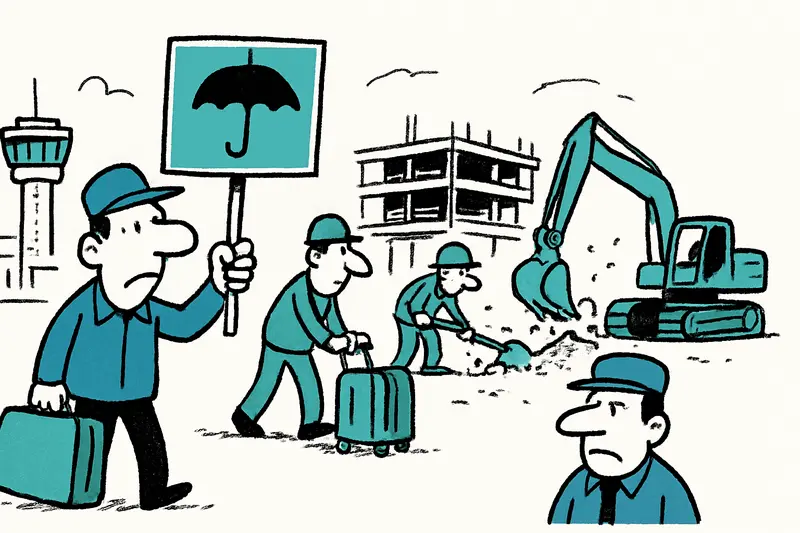
In the morning you stand at the glass façade of the arrivals hall, hear the constant droning of the machines and smell the dry concrete dust that settles like a fine film on jackets and suitcases. That is how colleagues from baggage handling describe their shift: not an idyllic office job, but work in the middle of a major construction site that has been shaping operations for about six years now, as reported in Palma Airport: The construction site that never stands still — and how we cope with it.
The aviation section of the USO union has repeatedly pointed out problems: large amounts of dust, continuous construction noise combined with airport noise, shrinking working areas due to new taxiways and a layout that has forced employees to walk on lanes intended for tractors or service vehicles. For almost two years, staff have shared temporary sanitary containers with construction personnel; the lack of permanent facilities is documented in Palma Airport: More Than Eight Months Without a Canteen — Employees Affected. The union also criticises that fire extinguishers are not always where they should be and that some hydrants are in poor condition.
This is not just about comfort. Occupational health and safety are acutely endangered: respiratory strain from fine dust, stress from constant noise exposure, increased accident risk on cramped traffic areas and restricted escape and rescue routes are not theoretical issues but real hazards for hundreds of people who day after day ensure that holidaymakers get their luggage back.
Critical analysis: At first glance much seems like the consequence of large construction plans, delays and makeshift transitional solutions. In fact, there are patterns: a temporary plan is continued for so long that it becomes the permanent solution. Responsibilities blur between infrastructure owner Aena, the various service providers and the construction companies on site. When vehicles are regularly parked in front of emergency exits or next to baggage belts, it is no longer individual misconduct — it is an organisational problem that needs clear rules and consistent enforcement.
What is often missing in public debate is the perspective of those who do the physically hardest work. Media reports or official statements sometimes name construction plans, investment sums and opening dates. But they rarely show the details: the respiratory masks that are soaked through after half an hour; the colleague who injures their hand on the conveyor belt because a truck is manoeuvring nearby; the break that is missed because a machine was interrupted at lunchtime. These small, recurring burdens add up to real health consequences.
A concrete Mallorca everyday scene: At half past eight on a hot July morning you see, on the way from the bus stop, the security officer who, with an annoyed look, waves a delivery van back. In the background an excavator hammers at the concrete edge, two baggage workers push crates through a narrow passage; they barely speak because the roar of the construction machines drowns out any conversation. A thin layer of light dust lies on the ground, and someone brushes it off with a gloved shoe sole — a gesture that says more than many statements from above.
Concrete proposals that could have immediate effect: 1. Short-term: Establish sealed, filtered passages between the handling area and the construction site; daily cleaning with industrial dust suppressants; limited construction hours to reduce noise peaks during shift changes; mandatory, enforceable parking bans in front of emergency exits and belts with clear sanctions. 2. Medium-term: Permanent sanitary and break facilities within the secured area; regular, independent measurements of fine dust and noise with published results; mandatory training for all service providers on escape routes and safe traffic management. 3. Strategic: Contractual clarification between Aena and operators on who is responsible for occupational safety; establishment of a permanent contact point for employee complaints with binding response times; annual health checks for exposed staff.
Many of these measures are technically not new and cost less than feared. It often comes down to priorities: Is protecting those who work in the shadow of the cranes really secondary to construction progress and operational tempo? Or is it possible to organise construction processes and occupational safety in parallel so that nobody faces excessive risk?
What must happen now: Aena, as owner, must not dissolve responsibility into grids and jurisdictions. In Mallorca one knows such situations: projects that begin as "temporary" and then end up stuck in provisional status for years. The next heatwave, a radio blackout among emergency services or a wrongly parked vehicle in front of an emergency exit — these are not abstract risks but situations in which people can get hurt, as highlighted by Another accident at Palma Airport: Worker falls on construction site — who protects the employees?.
Conclusion: The men and women working in baggage handling deserve more than temporary toilets and improvised routes. Six years of construction are enough to see that action is needed. Visible changes, clear responsibilities and independent controls are required immediately. If no one reacts to the dirt and noise problems in the rush of flight operations, only one thing remains at the end: the bill for deferred responsibility — and it will be paid with the health of the employees.
Frequently asked questions
How long has construction at Mallorca's Son Sant Joan airport been ongoing, and what health risks does that create for baggage handlers?
What short- and mid-term measures could reduce dust and noise for baggage handlers during Mallorca's airport construction?
Who is responsible for worker safety at Son Sant Joan during the construction, and how are employee complaints handled?
Why do temporary fixes at the Mallorca airport construction sometimes become permanent, and what does that mean for workers?
What everyday signs show the impact of long construction on baggage handling at Mallorca's airport?
What are the main health risks for baggage handlers during the Mallorca airport construction?
What long-term safety improvements are proposed for Mallorca's airport workers?
What should travelers know about visiting Mallorca's Son Sant Joan during ongoing construction?
Similar News
Seconds in the Water: 19-year-old Fights Her Way Out of Flooded Car in Palma
A 19-year-old managed to rescue herself from her half-submerged car after sliding under the Verge de Lluc underpass. Res...

Between Dream and Reality: Thorsten Legat and the Challenges of FC Germania Mallorca
The former Bundesliga pro has assembled a colorful squad in a short time. But how realistic is the grand plan for promot...

Arrest warrant at check-in: Why two travelers at Cologne/Bonn Airport suddenly had to pay
At Cologne/Bonn Airport, federal police in mid-September found two German passengers subject to enforcement measures. Bo...
Balearic Islands as a New Route: A Reality Check on Rising Boat Migration
For the first time the Balearic Islands are ahead of the Canary Islands in boat arrivals. What do the numbers really say...
Residents First at Palma's Stops? A Reality Check on Negueruela's Bus Idea
The proposal to prioritize residents with TIB or Tarjeta Única cards when boarding strikes a nerve. But what would a pri...
More to explore
Discover more interesting content

Can Cap de Bou

Townhouse Lleo 72
