
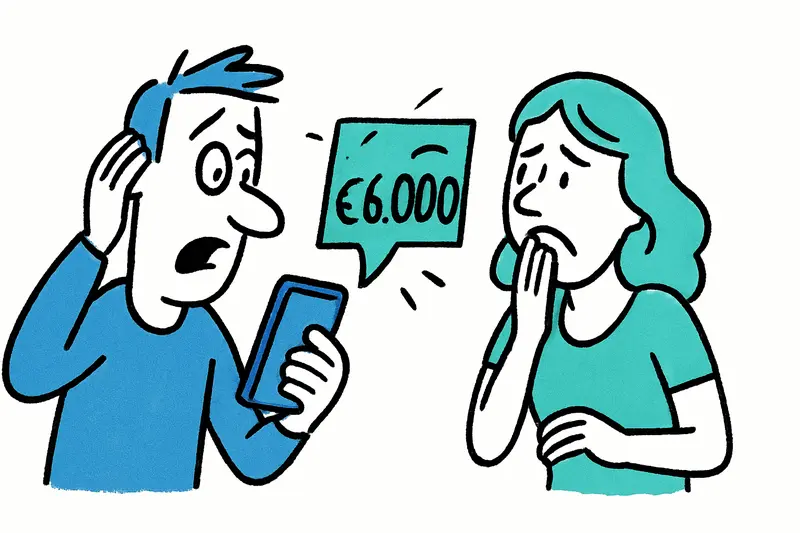
How an SMS Scam Swallowed 6,000 Euros: Reality Check from Palma
The National Police arrested a Spanish couple in Mallorca. They allegedly posed as a bank via SMS and extorted €6,000 from a man in Palma before the money was forwarded to Germany. A reality check with practical everyday tips.
How an SMS Scam Swallowed 6,000 Euros: Reality Check from Palma
Key question: How were criminals able to trick a person in Palma into transferring €6,000 by SMS — and what needs to change so it doesn't happen again?
The National Police this week arrested a couple in Mallorca who are believed to have deprived a man from Palma of a six‑digit amount in euro cents: €6,000 was taken from the victim. The perpetrators posed as his bank and demanded a 'retransfer' to secure allegedly unauthorized transactions. The money was sent shortly afterwards to Germany. Investigators from the economic crimes division are classifying the act as fraud, money laundering and impersonation of a bank.
In short: The trick is old wine in new bottles. It sounds official, it says 'for your security' in the message — and in a second, when many of us are briefly distracted (the tram siren on Passeig Mallorca, the bell of an espresso bar), the message hits its mark. This pattern also plays out in other contact methods, as reported in Phone Scam by Call: Why the Scheme of Alleged Spain Transactions Also Affects Us in Mallorca.
The police describe the sequence as follows: The victim received an SMS warning of an unauthorized transfer and asking him to make a transfer to 'secure' his money. The funds went to an account that was formally assigned to a man who could not read or write. Behind him was apparently a woman who acted as the mastermind, coordinating the account opening and the operations. After receipt of the transfer, the suspects immediately sent the sum abroad, apparently to cover their tracks. Whether there are more victims is currently being investigated. A comparable transfer-to-foreign-wallets pattern was observed in Palma: How a crypto scheme nearly swallowed €68,000 — and why victims became helpers.
Critical analysis: Why does this work? First: psychological pressure. A message that threatens loss or creates urgency reduces reflection. Second: information gaps among users. Many people do not know the exact communication channels of their bank. Third: weaknesses in controls. Even when banks send warning SMS, there is often no simple, layperson-friendly verification path — how can I safely call, which number should I use.
What is missing from the public debate: We talk a lot about technical protections, but hardly about the little everyday habits: Which phone numbers are genuine? Where is the official contact hotline listed? When is a call really from the bank? Official guidance exists, but it does not reach everyone, especially those less familiar with digital procedures.
An everyday scene from here: At the market in Santa Catalina a vendor accepts cash, two tourists argue about a card, an older man sits on a bench in front of the cathedral scrolling through messages. It is precisely in such moments that a panicky SMS can arrive — the mind is already elsewhere.
Concrete solutions (practical, locally implementable):
1. Check in two steps: Before sending money: 1) dial the bank's number from an official document (card, contract) or the bank's website; 2) never click on links in SMS or emails. If unsure, hang up and call the number on the back of your card or on the bank's website.
2. Build a short routine: Have at least one trusted person or a second check for larger amounts — a quick verification by phone or in person, even for €200. It takes 60 seconds and can save €6,000.
3. Account and card limits: Set lower default transfer limits with your bank; larger transfers should require personal authorization.
4. Awareness at busy public places: Banks and municipalities could provide info leaflets at counters and ATMs (short checklist: 'Banks never ask for passwords or request transfers via SMS').
5. Use reporting channels: Report suspicious SMS immediately to your bank and to the National Police. The faster a report is filed, the higher the chance of freezing movements.
What authorities already recommend — and what we should take seriously — is simple: Banks never ask for passwords by SMS or request transfers 'for your security'. Such phrasing is deliberately emotional and intended to create panic.
It is also important that law enforcement and prevention think together: The arrested suspects show how quickly accounts can be instrumentized — often through people who formally appear as account holders but are controlled by others. This makes prosecution more difficult because money flows across Europe; the scale and consequences of such organised operations are discussed in Palma and the Extortionists: How a Phone Call Changes Lives — and What Must Happen Now.
Punchy conclusion: If you live on Mallorca or are visiting, carry your distrust like sunscreen in your bag — always at hand. Distrust is not rudeness, but a protective measure. The police acted in this case, but the best protection remains your own checking routine: hang up, think, verify the number, and if necessary go to the branch in person.
The math is simple: 60 seconds of asking can prevent €6,000. And in a city where cafes quiet down at night and the tram whistles once more, that is a small, effective ritual against this type of fraud.
Frequently asked questions
How can an SMS bank scam work in Mallorca?
What should I do if I receive a suspicious bank SMS in Mallorca?
Do banks in Mallorca ever ask for passwords or transfers by SMS?
How can I protect myself from SMS fraud in Mallorca?
Why are people in Palma targeted by bank scam texts?
What are the warning signs of a fake bank SMS in Mallorca?
Can I recover money lost in an SMS scam in Mallorca?
Where should I report a bank scam SMS in Mallorca?
Similar News
Fewer Airlines, Fewer Destinations: What Palma's Winter Flight Schedule Means for Mallorca
Analysis shows: Winter at Son Sant Joan Airport will be quieter, with significantly fewer airlines and destinations. Who...
German tourist dies in Sa Calobra – a reality check for emergencies on Mallorca's beaches
A 40-year-old tourist died at the Torrent de Pareis. The emergency call, a doctor who happened to be present, a defibril...
Deadly Tractor Accident in Bunyola: What Needs to Be Done Now
In a work accident on an estate near Bunyola, a roughly 40-year-old man lost his life. His wife and a small child were o...
Head-first dive into the shallow part of Cala Fonoll: An accident and the unresolved question of responsibility
A young tourist dove into Cala Fonoll and was seriously injured. Key question: Why are clear warning signs missing at da...
Mistaken identity with fatal consequences: Brutal assault in S'Aranjassa — what's missing in the follow-up?
At S'Aranjassa a visitor to a finca was tied up, beaten and thrown out of a van. Three men have been arrested, including...
More to explore
Discover more interesting content

Can Cap de Bou

Townhouse Lleo 72
